
Bhagavad Gita — Gunatraya Vibhaga Yoga, Shloka 22
Gunatraya Vibhaga Yoga
श्रीभगवानुवाच । प्रकाशं च प्रवृत्तिं च मोहमेव च पाण्डव न द्वेष्टि संप्रवृत्तानि न निवृत्तानि काङ्क्षति ॥ १४.२२ ॥
śrī-bhagavān uvāca | prakāśaṃ ca pravṛttiṃ ca moham eva ca pāṇḍava | na dveṣṭi saṃpravṛttāni na nivṛttāni kāṅkṣati || 14.22 ||

Yang Maha Mulia bersabda: Wahai Pāṇḍava, dia tidak membenci pencerahan (kejernihan), kegiatan, mahupun kekeliruan ketika semuanya muncul; dan apabila semuanya berhenti, dia juga tidak menginginkannya.
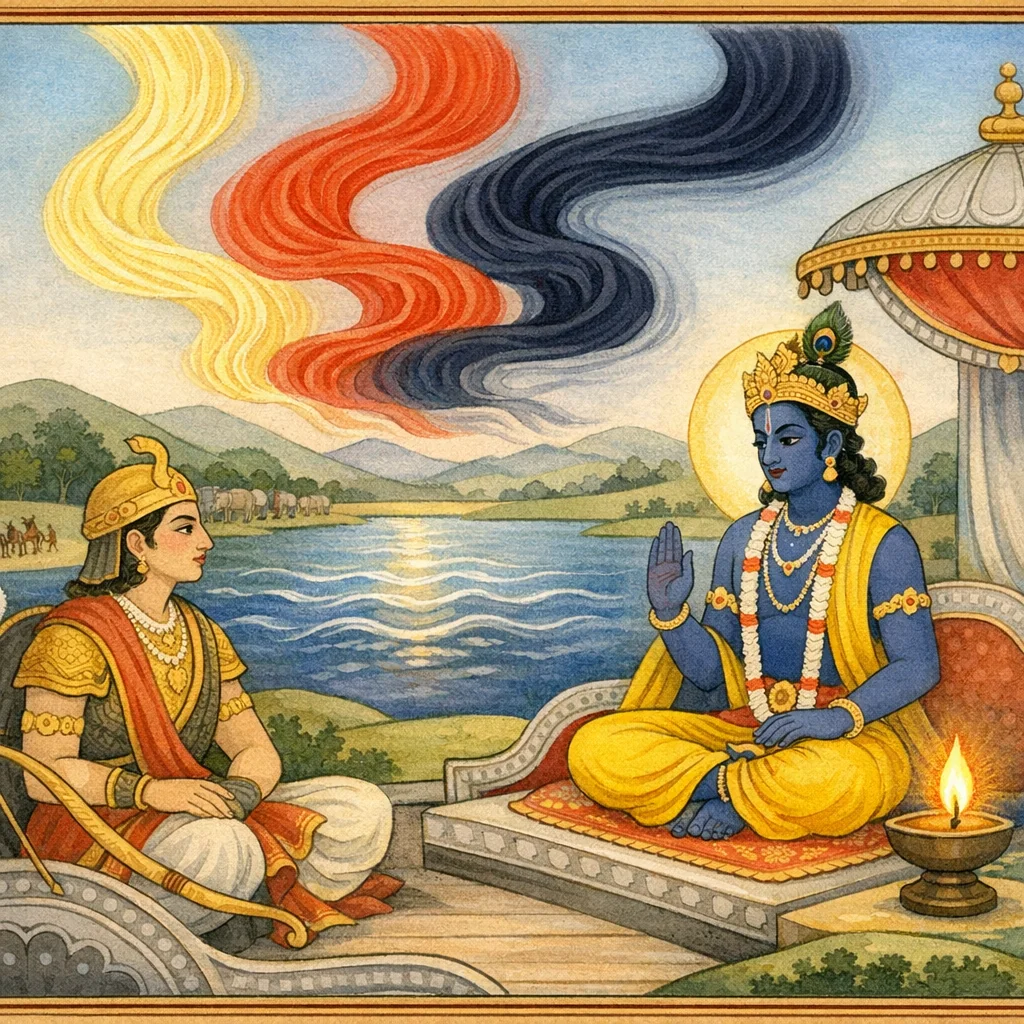
The Blessed Lord said: O Pāṇḍava, he does not hate illumination, activity, or delusion when they arise, nor does he long for them when they cease.
The Lord said: O Pāṇḍava, (one beyond the guṇas) does not dislike illumination, activity, or delusion when they manifest, nor does he desire them when they withdraw.
“Illumination/activity/delusion” are commonly mapped to sattva/rajas/tamas. Traditional commentaries stress non-attachment and non-aversion; academic readings treat this as a phenomenology of balanced awareness rather than indifference to ethics.
FAQs
It describes emotional regulation: the person does not cling to pleasant clarity, does not resent restlessness, and does not panic about confusion—observing shifts without compulsive reaction.
The guṇātīta is presented as distinct from the guṇas’ fluctuations. The verse implies a stable standpoint from which guṇa-states are noticed as events rather than identity.
This is the first direct answer to Arjuna’s request for “marks” (liṅga) of transcendence, beginning a series of behavioral and attitudinal descriptions.
In mindfulness terms, it recommends noticing mental states as transient and avoiding both suppression and indulgence—neither hating what arises nor craving its return.