Adhyaya 206
Agastyārghyadāna-kathana (On the Giving of the Agastya Honor-Offering)
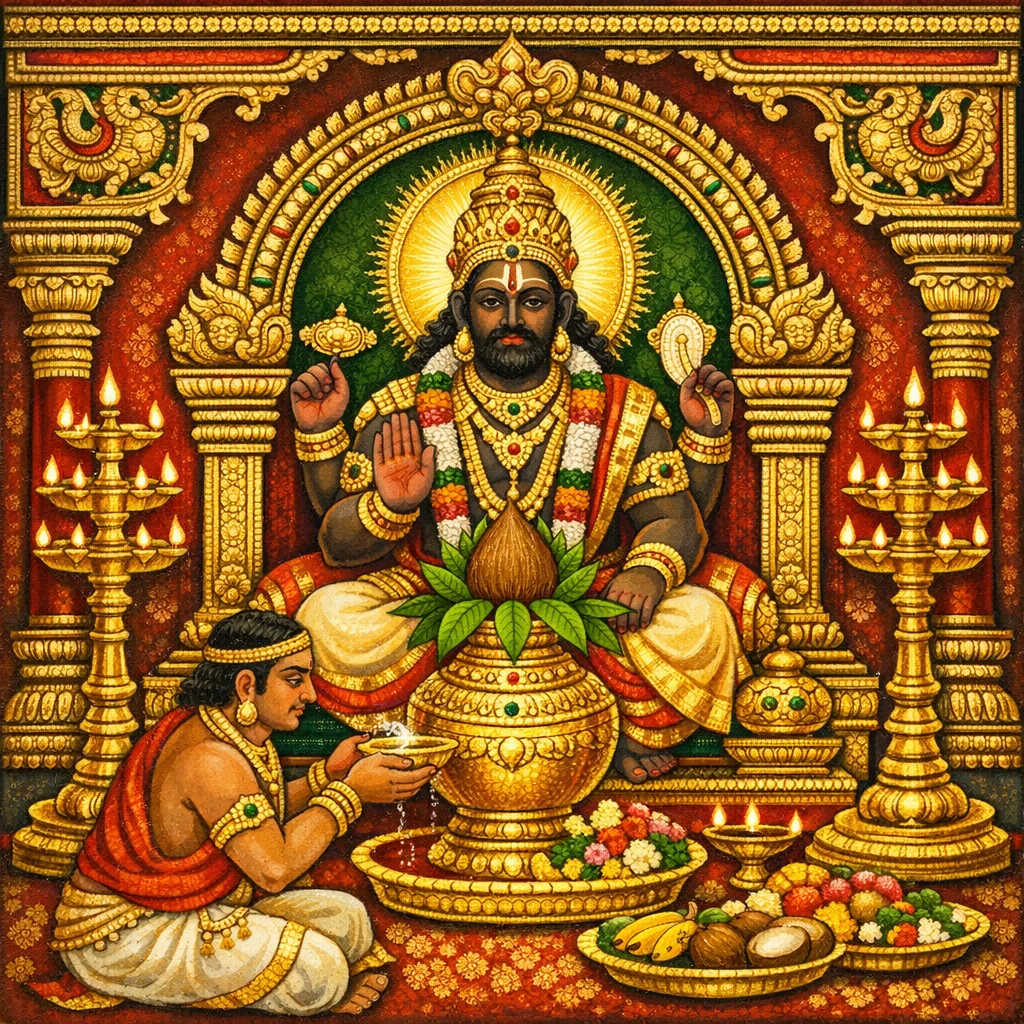
या अध्यायात भगवान अग्नी अगस्त्यांना विष्णुरूप मानून अगस्त्य-केंद्रित व्रतपूजेची विधी सांगतात, ज्यातून हरिप्राप्तीचा संबंध जोडला आहे. तीन दिवस सूर्योदयापूर्वी उपवास, पूजन व अगस्त्याला अर्घ्य द्यावे. प्रदोषकाळी काशफुलांची प्रतिमा जलकुंभ/घटात स्थापून रात्रजागरण करावे. नंतर सकाळी जलाशयाजवळ अर्घ्य देऊन समुद्र शोषणे व आतापी–वातापी संहार इत्यादी पराक्रमांचे स्तवन करून वर व शुभ परलोकाची प्रार्थना करावी. चंदन, माळा, धूप, वस्त्र, धान्य/तांदूळ, फळे, सुवर्ण इ. द्रव्ये, ब्राह्मणाला घटदान, भोजन व दक्षिणा (गाय, वस्त्र, सुवर्ण) यांचे विधान आहे. मंत्रपाठभेद दिले आहेत; स्त्रिया व शूद्रांसाठी वेदमंत्रांशिवाय विधी सांगितली आहे. सात वर्षे अर्घ्यव्रत केल्यास सर्वसमृद्धी, अपुत्राला पुत्रलाभ व कन्येला राजपती लाभ असे फळ कथिले आहे।
Shlokas
No shlokas available for this adhyaya yet.
Frequently Asked Questions
Fasting and worship precede the arghya; at pradoṣa a kāśa-flower image is placed in a ghaṭa/kumbha, followed by night vigil; in the morning the arghya is offered near water, then tyāga (grain, fruit, libation) and charitable gifts/feeding of brāhmaṇas conclude the rite.
Sandalwood, garlands, incense, cloth, rice/grains, fruits, gold (and in an expanded description: five gems, gold and silver, seven grains, curd, sandalwood), plus a pot-gift to a brāhmaṇa and dakṣiṇā including cow, garments, and gold.
The rite explicitly aims at attaining Hari through Agastya-worship (mukti-oriented devotion) while also promising dharma-anchored prosperity—health, fortune, desired boons, lineage, and marital success—thus integrating dharma, artha, kāma, and mokṣa.
It states that for women and Śūdras the rite is ‘non-Vedic,’ i.e., performed without Vedic mantras, indicating an inclusive procedural adaptation while preserving the devotional and charitable structure.
By giving the arghya for seven years, ‘all obtain everything’: a childless woman gains sons and good fortune, and a maiden gains a husband of royal birth; the arghya is also described in some readings as imperishable and mind-fulfilling.