Adhyaya 194
Aśoka-Pūrṇimā and Related Vows (अशोकपूर्णिमादिव्रत)
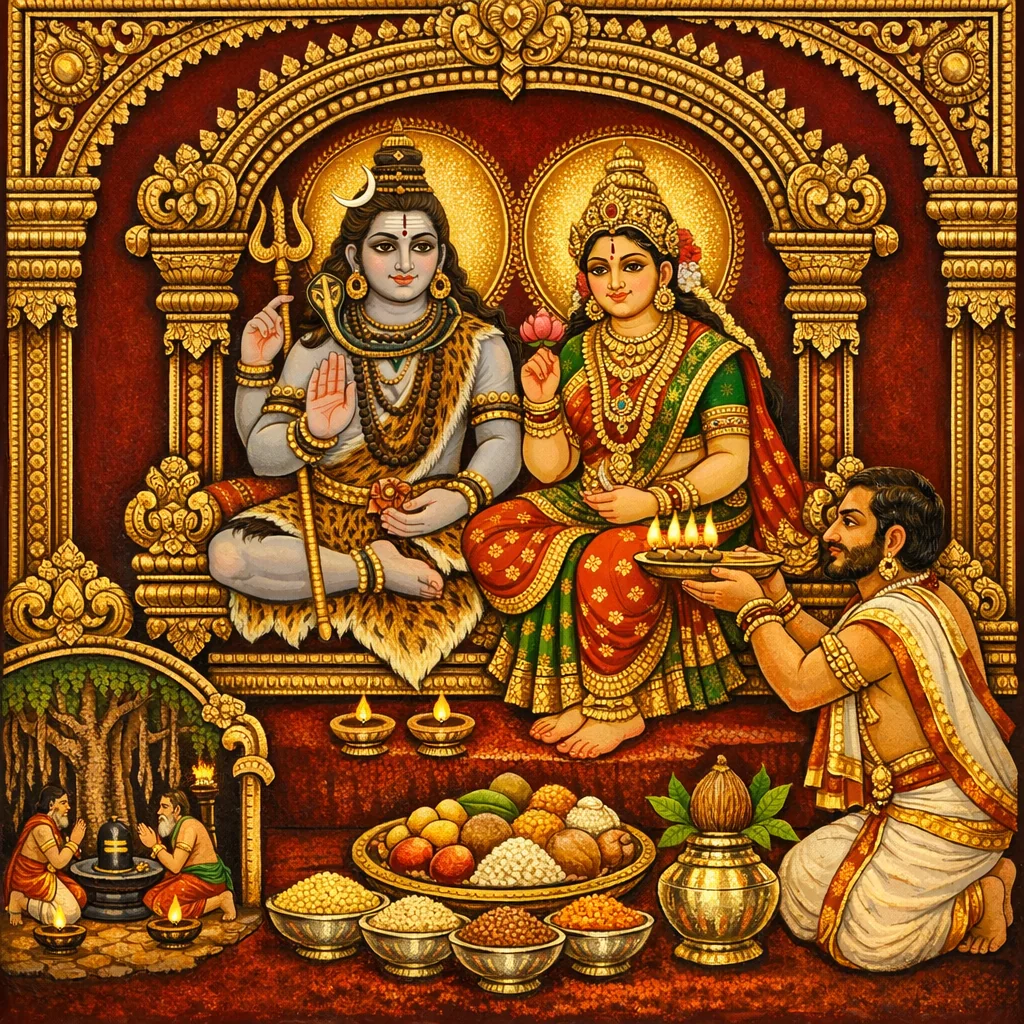
व्रतखण्डातील कालानुशासन पुढे नेत अग्नि ऋषी वसिष्ठांना अनेक व्रतांचे विधान सांगतात. आधी शिवरात्रि-व्रत भुक्ति–मुक्तिदायक आहे असे सांगून, फाल्गुन शुक्ल पक्षातील अशोकपूर्णिमेला भूधर व भुव यांची पूजा करावी; वर्षभर व्रत पाळल्यास भोग व मोक्ष मिळतो. पुढे कार्तिकात वृषोत्सर्ग (बैलाचा उत्सर्ग/दान) व नक्तभोजन (रात्री एकदाच भोजन) यांसह परम वृष-व्रत वर्णिले असून त्याने शिवलोकप्राप्ती होते. पितृ-अमावास्येला पितरांना अक्षय दान, वर्षभर संयम व पितृपूजा केल्याने पाप नष्ट होऊन स्वर्ग मिळतो. शेवटी ज्येष्ठ अमावास्येचे सावित्री-व्रत—स्त्रिया तीन रात्री उपवास करून वटमुळाशी महापतिव्रता देवीची सप्तधान्ये व अलंकारांनी पूजा, रात्रजागरण गीत-नृत्य, ब्राह्मणाला नैवेद्य, ब्राह्मणभोजन व विसर्जन करून सौभाग्य व शुभ समृद्धीची याचना करतात।
Shlokas
No shlokas available for this adhyaya yet.
Frequently Asked Questions
Worship of Bhūdhara and Bhuva in Phālguna’s bright fortnight, sustained as an observance for a year, stated to yield both Bhukti and Mukti.
By performing vṛṣotsarga (release/donation of a bull) and observing naktam (a single meal at night), the practitioner is said to attain Śiva’s state/abode.
It combines akṣayya offerings to the Pitṛs with a year-long fasting discipline and formal ancestor worship, promising sinlessness and attainment of heaven.
A three-night fast by women, worship at a banyan root with seven grains, night adornment and vigil with song/dance, offering naivedya to a brāhmaṇa, feeding brāhmaṇas, self-meal, and ritual dismissal, aiming at Devī’s favor and saubhāgya.