Adhyaya 190
Chapter 190: Akhaṇḍa-dvādaśī-vrata (The Unbroken Dvādaśī Vow)
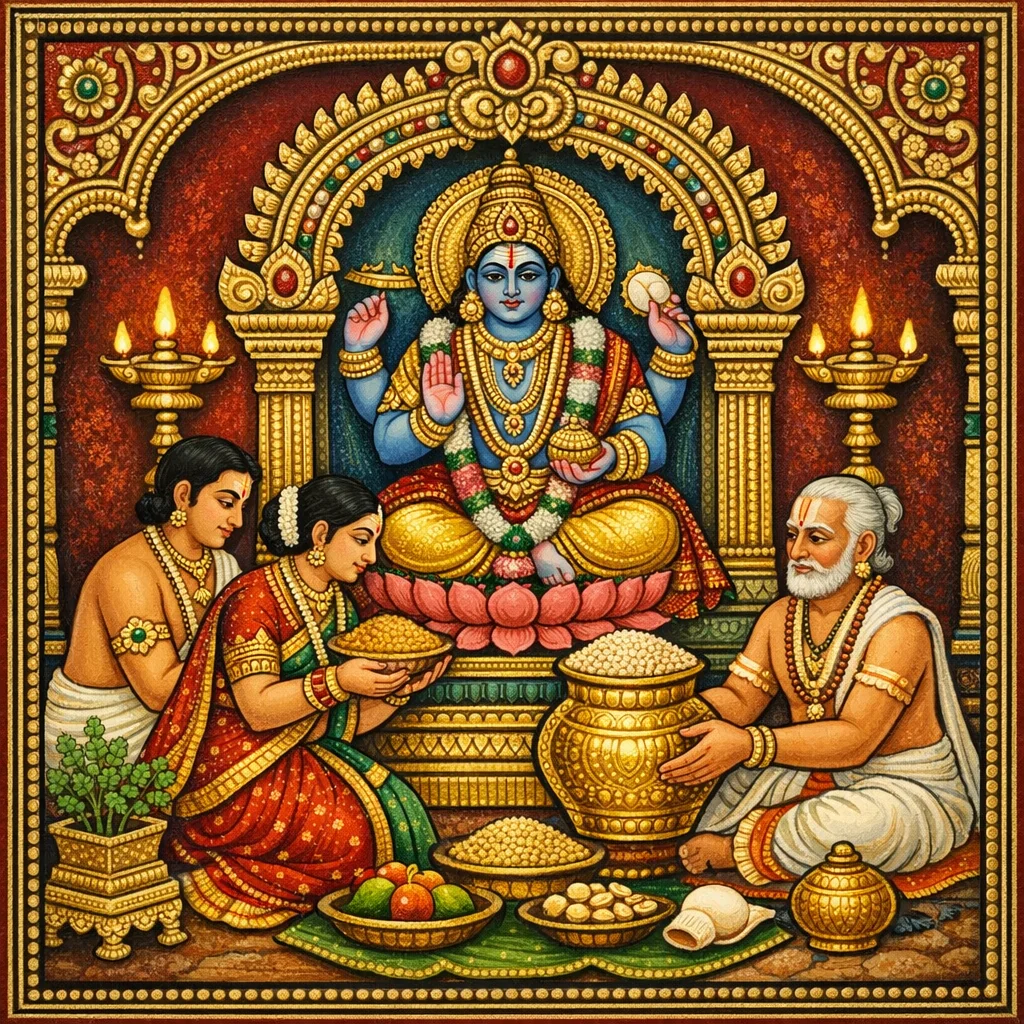
भगवान अग्नी वसिष्ठांना अखंड-द्वादशी-व्रत सांगतात—व्रतांची ‘सम्पूर्णता’ करून त्यांत भंग येऊ नये असा हा उपाय आहे. मार्गशीर्ष शुक्ल द्वादशीला विष्णुपूजन करून पंचगव्य-जळाने स्नान करावे व शुद्धिद्रव्य विधिपूर्वक प्राशन करून उपवास करावा. द्वादशीला दान हे मुख्य अंग—जव व तांदूळ भरलेले पात्र ब्राह्मणास द्यावे. व्रती विष्णूस प्रार्थना करतो की सात जन्मांत साचलेल्या व्रतांच्या अपूर्णता-दोषांना तू पूर्ण कर; पुरुषोत्तमात विश्व अखंड स्थित आहे या तत्त्वावर ही विनंती आधारलेली आहे. पुढे मासिक नियम व चातुर्मास्याचे विधान, तसेच महिन्यानुसार शक्तु (भाजलेल्या ज्वारी/जवाचे पीठ) इत्यादी दान सांगितले आहे. श्रावणापासून कार्त्तिकांत पारणापर्यंत योग्य काळ पाळण्याचा आग्रह असून त्रुटी सात जन्मांपर्यंत परिणाम देऊ शकते; योग्य अनुष्ठानाने आयुष्य, आरोग्य, संपत्ती, राज्य व भोग प्राप्त होतात।
Shlokas
No shlokas available for this adhyaya yet.
Frequently Asked Questions
It is explicitly framed as a rite for vrata-sampūrṇatā—making vows complete and ‘unbroken,’ including repairing deficiencies believed to persist across seven births through Viṣṇu’s grace.
Fasting on bright Mārgaśīrṣa Dvādaśī for Viṣṇu, bathing in pañcagavya-water and partaking of it, and giving a brāhmaṇa a vessel containing barley and rice on Dvādaśī.
The votary’s prayer links personal vow-completion to the cosmic ‘unbroken wholeness’ of the universe identified with Puruṣottama (Viṣṇu), making ritual integrity a mirror of ontological unity.
The course is described as beginning in Śrāvaṇa and reaching pāraṇa at the end of Kārttika, aligning with the Cāturmāsya-related discipline and its closure.
Long life, freedom from disease, good fortune, sovereignty/kingship, and enjoyments (along with similar prosperities) are stated as outcomes.