Dashati 13
Aindra invocation framed through Agni’s role as summoner and protector of the sacrifice
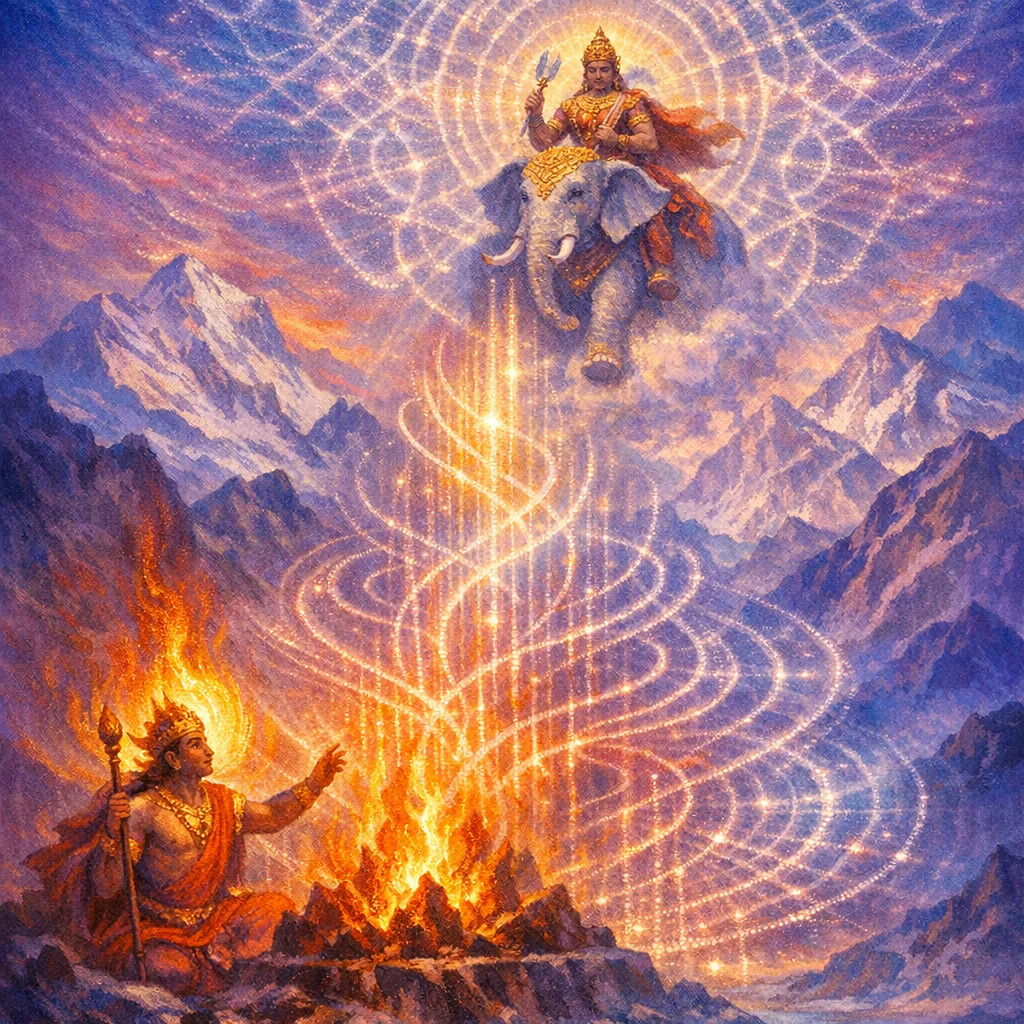
Indra (Aindra frame) with Agni as the operative invoker
Invocatory and auspicious—urgent calling that resolves into reassurance and protection
Rṣi not provided in the input; identification would require matching each mantra to its Rigvedic source-hymn and traditional anukramaṇī data.
ഇത് ഐന്ദ്ര ആഹ്വാനത്തിന്റെ ദശതി: യാഗത്തിൽ ദേവസമൂഹത്തെ വിളിച്ചുകൂട്ടുകയും സംരക്ഷിക്കുകയും ചെയ്യുന്നവനായി അഗ്നിയാണ് മുഖ്യ മധ്യസ്ഥൻ. ‘അമൃതന്റെ പുത്രന്മാർ’ എന്ന ദിവ്യ സഹചാരികൾ സാമഗാനം ശ്രദ്ധിച്ച് കേൾക്കാൻ സമീപിക്കട്ടെ എന്ന് വിളിക്കുന്നു. പാവകനും ദേവജിഹ്വനും ആയ അഗ്നി ദൂതനായി ദേവന്മാരെ യാഗത്തിലേക്ക് കൊണ്ടുവരട്ടെ; ഗായകരോടു ദേവന്മാർ അനുകൂല മനസ് (സുമതി) കാണിക്കട്ടെ; കൂടാതെ ത്രിവരൂഥമായ മൂന്നുതരം സംരക്ഷണവും ശിവമായ ക്ഷേമവും ലഭിക്കട്ടെ എന്നതാണ് പ്രാർത്ഥനയുടെ ലക്ഷ്യം.
Mantras
Mantra 1
अग्ने पावक रोचिषा मन्द्रया देव जिह्वया आ देवान्वक्षि यक्षि च
ഹേ അഗ്നി പാവക, നിന്റെ രോചിഷാ (തേജസ്)കൊണ്ട്, നിന്റെ മന്ദ്രാ ദേവ-ജിഹ്വാ (ആനന്ദകരമായ ദിവ്യ നാവ്)കൊണ്ട്, ദേവന്മാരെ ഇവിടെ കൊണ്ടുവരിക; പിന്നെ നീ അവർക്കു യക്ഷി (യജ്ഞാർപ്പണം) ചെയ്യുക.
Mantra 2
त्वां दूतमग्ने अमृतं युगेयुगे हव्यवाहं दधिरे पायुमीड्यम् देवासश्च मर्त्तासश्च जागृविं विभुं विश्पतिं नमसा नि षेदिरे
ഹേ അഗ്നേ, നിന്നെ—അമൃത ദൂതനെയും, ഹവ്യവാഹനെയും, രക്ഷകനെയും, ആരാധ്യനെയും—യുഗംതോറും ദേവന്മാരും മർത്ത്യന്മാരും സ്ഥാപിച്ചു; ജാഗ്രതനായ, വിഭുവായ, വിശ്പതിയായ നിന്നെ അവർ നമസ്കാരത്തോടെ ആസീനമാക്കി.
Mantra 3
विभूषन्नग्न उभयां अनु व्रता दूतो देवानां रजसी समीयसे यत्ते धीतिं सुमतिमावृणीमहे ऽध स्मा नस्त्रिवरूथः शिवो भव
ഹേ അഗ്നേ, നീ ദീപ്തനായി, ഇരുപ്രദേശങ്ങളുടെയും വ്രതങ്ങളെ അനുഗമിച്ച്, ദേവന്മാരുടെ ദൂതനായി രണ്ടു രജസ്സുകളിൽ (അന്തരിക്ഷ-ദിവ്യാവകാശങ്ങളിൽ) സഞ്ചരിക്കുന്നു; ഞങ്ങൾ നിന്റെ ധീതിയും സുമതിയും തിരഞ്ഞെടുക്കുന്നതിനാൽ, ഞങ്ങളോടു ശിവനായി, ത്രിവരൂഥ (ത്രിവിധ സംരക്ഷണം) സഹിതം മംഗളകരനാകുക.
Frequently Asked Questions
Because Agni functions as the ritual messenger (dūta) and conveyer: he brings the gods—Indra included—to the sacrifice and enables offering (yajana).
In traditional interpretation (e.g., Sāyaṇa), they are divine associates/attendants of the gods who come to the sacrifice; ritually, they represent the wider divine company invited to hear the chant.
It is a plea for comprehensive safeguarding; commentators explain it as protection in three ways (often mapped to three domains of affliction or to the threefold ritual order), concluding with the request that Agni be śiva—benign.