Dashati 6
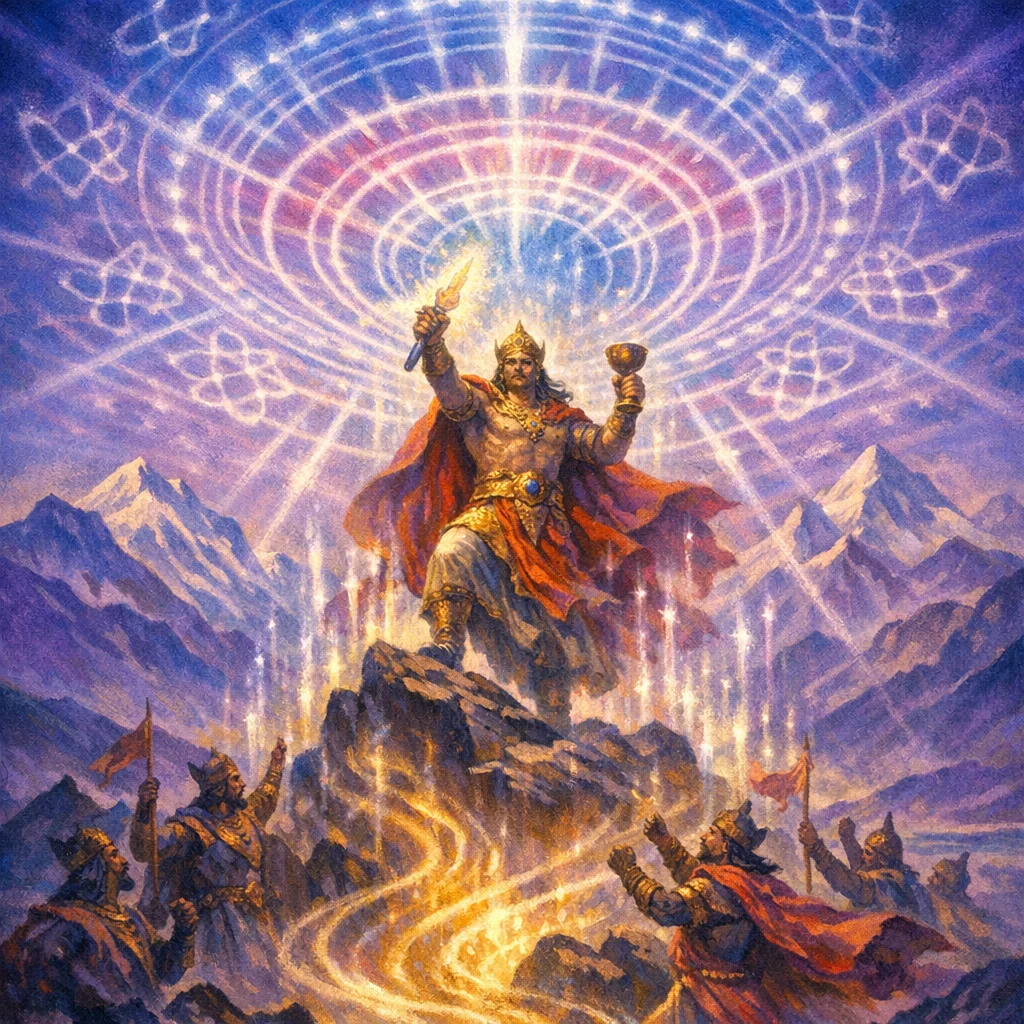
Indra praised as Vṛtra-slayer who accepts stotra and Soma, granting prosperity to the observant patron
Indra
Triumphal and invigorating with a public proclamatory tone suited to Indra-stotra
R̥ṣi attribution is not supplied in the input; identification requires Rigvedic concordance for the underlying RV verses used in this Aindra dashati.
വൃത്രഹനായ ഇന്ദ്രനെ വിജയോത്സാഹത്തോടെ പാടിയും സ്തുതിച്ചും വിളിക്കുന്നു—അവൻ സ്തോത്രവും സോമവും സന്തോഷത്തോടെ സ്വീകരിച്ച്, വ്രതാനുഷ്ഠാനം പാലിക്കുന്ന യജമാനന് ശം (ക്ഷേമം), മഘ (ഉദാരദാനം), റയി (സമ്പത്ത്) എന്നിവ നൽകുന്നു. മരുത്തുകൾ സഹഗായകരായി ചേർന്ന് സ്തുതിയെ സ്റ്റോഭ-വിസ്താരത്തോടെ ശക്തമാക്കി, ഇന്ദ്രന്റെ ശ്രുത (പ്രശസ്തി)യും യുവ (യൗവനവീര്യം)യും കൂടുതൽ പ്രഖ്യപിക്കുന്നു.
Mantras
Mantra 1
विश्वतोदावन्विश्वतो न आ भर यं त्वा शविष्ठमीमहे
ഹേ വിശ്വതോദാവൻ (എല്ലാ ദിക്കുകളിലും ദാനം ചെയ്യുന്നവനേ), എല്ലാ ദിക്കുകളിൽ നിന്നുമെങ്ങൾക്ക് (വരങ്ങൾ) കൊണ്ടുവരിക; നിന്നെ—ശവിഷ്ഠ (അത്യന്തം ശക്തൻ)—ഞങ്ങൾ ആഹ്വാനം ചെയ്യുന്നു.
Mantra 2
एष ब्रह्मा य ऋत्विय इन्द्रो नाम श्रुतो गृणे
ഇവൻ ബ്രഹ്മാ (യാഗത്തിലെ ബ്രഹ്മാ) ആകുന്നു—ഋത്വിജ്; നാമത്തിൽ ഇന്ദ്രൻ, പ്രസിദ്ധൻ; അവനെ ഞാൻ സ്തുതിയായി പാടുന്നു.
Mantra 3
ब्रह्माण इन्द्रं महयन्तो अर्कैरवर्धयन्नहये हन्तवा उ
ബ്രഹ്മന്മാർ (യാജകർ) സ്തോത്ര-അർക്കങ്ങളാൽ ഇന്ദ്രനെ മഹിമപ്പെടുത്തിക്കൊണ്ട് അവനെ വർദ്ധിപ്പിച്ചു—നിശ്ചയം നമ്മുടെ ഹിതാർത്ഥം, ആക്രമിക്കുന്ന ശത്രുവിനെ സംഹരിക്കുവാൻ.
Mantra 4
अनवस्ते रथमश्वाय तक्षुस्त्वष्टा वज्रं पुरुहूत द्युमन्तम्
ഹേ പുരുഹൂത (അനേകം പ്രാവശ്യം ആഹ്വാനിക്കപ്പെടുന്ന) ഇന്ദ്രാ! നിനക്കായി ത്വഷ്ടൃ അശ്വയുക്തമായ രഥവും, ദ്യുമന്തമായ (തേജസ്സുള്ള) വജ്രവും നിർമ്മിച്ചു.
Mantra 5
शं पदं मघं रयीषिणो न काममव्रतो हिनोति न स्पृशद्रयिम्
ശം പദം—മംഗളസ്ഥാനവും; മഘം—ദാന/സമൃദ്ധിയും; റയീഷിണഃ—ധനവാനായ ഉപാസകന്റെ കാമനയും. അവ്രതൻ (വ്രതരഹിതൻ) അതിനെ നീക്കിക്കളയുകയും ചെയ്യില്ല; ആ റയി (സമ്പത്ത്) സ്പർശിച്ച്/പ്രാപിക്കുകയും ചെയ്യില്ല.
Mantra 6
सदा गावः शुचयो विश्वधायसः सदा देवा अरेपसः
സദാ ഗാവഃ ശുചയഃ—പശുക്കൾ സദാ പവിത്രം; വിശ്വധായസഃ—എല്ലാം ധരിച്ചു പോഷിപ്പിക്കുന്നവ. സദാ ദേവാഃ അരെപസഃ—ദേവന്മാർ സദാ നിർദോഷരും കളങ്കരഹിതരും.
Mantra 7
आ याहि वनसा सह गावः सचन्त वर्त्तनिं यदूधभिः
ആ യാഹി വനസാ സഹ—വനസാ (വനം/യജ്ഞകാഷ്ഠം, ആനന്ദഭാവം) സഹിതം ഇവിടെ വരിക. ഗാവഃ സചന്ത വർത്തനിം യദൂധഭിഃ—പശുക്കൾ തങ്ങളുടെ ഉദരങ്ങളാൽ (പാൽ നിറഞ്ഞ) നിനക്കായി നിശ്ചിതമായ പാതയെ അനുഗമിച്ച് കൂടെ നടക്കുന്നു.
Mantra 8
उप प्रक्षे मधुमति क्षियन्तः पुष्येम रयिं धीमहे त इन्द्र
ഹേ ഇന്ദ്രാ! നിന്റെ സംരക്ഷണത്തിൽ, മധുമതീ (മധുരാശീർവാദഭരിത) അവസ്ഥയിൽ വസിച്ച് ഞങ്ങൾ സമൃദ്ധിയിലാകട്ടെ; റയി—ധനം നേടിയും അതിനെ നിലനിർത്തിയും ഇരിക്കട്ടെ.
Mantra 9
अर्चन्त्यर्कं मरुतः स्वर्क्का आ स्तोभति श्रुतो युवा स इन्द्रः
മരുതന്മാർ സുസ്തുതിയോടെ അർക്ക (സ്തുതി-ഗാനം) പാടുന്നു; പ്രശസ്തനും യുവാവുമായ അവൻ—ഇന്ദ്രൻ stobha (സ്തോഭ)യാൽ ഗീത-സ്തുതിയാകുന്നു.
Mantra 10
प्र व इन्द्राय वृत्रहन्तमाय विप्राय गाथं गायत यं जुजोषते
ഹേ വിപ്ര പുരോഹിതന്മാരേ, ഇന്ദ്രനുവേണ്ടി—വൃത്രഹന്തമ, മഹാബലൻ, ജ്ഞാനി—സ്തുതിഗാഥ പാടുവിൻ; (നമ്മുടെ സ്തോത്രവും ഹവിഃവും) ആനന്ദിപ്പിക്കുന്നവനും കൃപയോടെ അവയെ സ്വീകരിക്കുന്നവനും ആയ അവനോടു.
Frequently Asked Questions
It proclaims Indra as the Vṛtra-slayer who is pleased by properly sung praise and offerings, and who rewards the disciplined, observing worshipper with welfare and wealth.
The verses stress that prosperity is linked to right ritual conduct: the one who neglects observance (avrata) neither attains the patron’s wealth nor can disrupt the welfare gained through correct worship.
Stobha refers to the characteristic Sāman-style chant-expansions that intensify praise; here it signals heightened musical acclamation of Indra, with the Maruts depicted as participating in the praise.