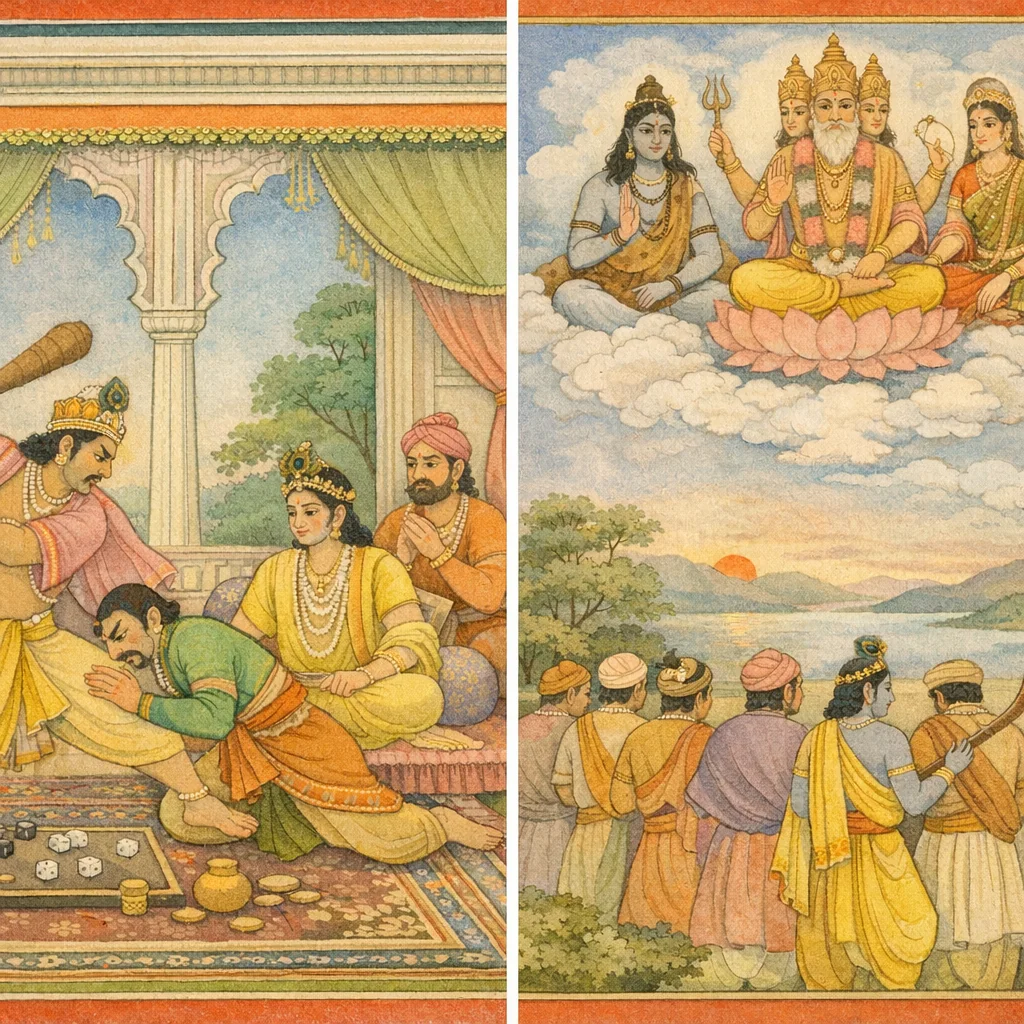
Adhyaya 201: Krishna’s Lineage from Rukmini and the Dice-Game Slaying of Rukmi
ഈ അധ്യായത്തിൽ രുക്മിണിയുടെ പുത്രന്മാരെയും ഒരു പുത്രിയെയും വംശക്രമമായി വിവരിച്ച്, ശ്രീകൃഷ്ണന്റെ മറ്റ് പ്രധാന ഭാര്യമാരെയും സംക്ഷിപ്തമായി പരാമർശിക്കുന്നു. തുടർന്ന് രുക്മിയുടെ പുത്രിയുമായുള്ള പ്രദ്യുമ്നന്റെ വിവാഹവും അനിരുദ്ധന്റെ ജനനവും പറയുന്നു. അനിരുദ്ധന്റെ വിവാഹക്രമീകരണങ്ങൾക്കായി കൃഷ്ണൻ, ബലരാമൻ, യാദവർ രുക്മിയുടെ നഗരം ഭോജകട്ടയിലേക്കു പോകുന്നു. അവിടെ കലിംഗരാജൻ മുതലായ വിരോധി രാജാക്കന്മാർ ബലരാമന്റെ ദ്യൂതാസക്തിയെ മുതലെടുത്ത് പാശക്രീഡയ്ക്ക് പ്രേരിപ്പിക്കുന്നു; രുക്മി ആദ്യം ജയിച്ച് ബലരാമനെ പരിഹസിക്കുന്നു. ക്രുദ്ധനായ ബലരാമൻ മഹാപണം വെച്ച് ജയിച്ചിട്ടും രുക്മി വിജയം അംഗീകരിക്കില്ല; അപ്പോൾ ആകാശവാണി ബലരാമന്റെ ജയത്തെ സ്ഥിരീകരിക്കുന്നു. തുടർന്ന് ബലരാമൻ രുക്മിയെ വധിക്കുകയും കലിംഗരാജന്റെ പല്ലുകൾ പൊട്ടിച്ച് ശിക്ഷിക്കുകയും ചെയ്യുന്നു. അവസാനം അനിരുദ്ധന്റെ വിവാഹം പൂർത്തിയായി യാദവർ ദ്വാരകയിലേക്കു മടങ്ങുന്നു; രുക്മിണി–ബലരാമ സംഘർഷം കണ്ട് കൃഷ്ണൻ മൗനം പാലിക്കുന്നു.
Chapter Arc
{"opening_hook":"The chapter opens in a genealogical register: Rukmiṇī’s children by Kṛṣṇa are named one by one, immediately situating the listener inside the intimate, dynastic “household history” of Dvārakā.","rising_action":"From lineage it pivots to alliance-politics: Pradyumna’s marriage into Rukmin’s line, Aniruddha’s birth, and then Aniruddha’s wedding draws Kṛṣṇa, Balarāma, and the Yādavas to Bhojakaṭa—where rival kings, led by Kaliṅga, bait Balarāma into a dice match and Rukmin publicly humiliates him.","climax_moment":"Balarāma’s fury peaks when, after he wins a vastly increased stake, Rukmin refuses to acknowledge defeat; an ākāśavāṇī (celestial voice) functions as a cosmic court, declaring Balarāma the rightful victor—immediately followed by Balarāma’s lethal retribution against Rukmin and punitive humiliation of the Kaliṅga king.","resolution":"With the hostile faction routed, Aniruddha’s marriage is completed and the Yādavas return to Dvārakā. Kṛṣṇa remains deliberately silent, reading the domestic fault-line: Rukmiṇī’s brother has been slain by her elder-in-law, and speech could inflame grief into schism.","key_verse":null}
Thematic Essence
{"primary_theme":"Yādava dynastic continuity and sabhā-dharma tested through the dice-game conflict","secondary_themes":["Genealogical legitimation: Rukmiṇī’s progeny and Kṛṣṇa’s principal queens as a map of alliances","Marriage as statecraft: svayaṃvara/nuptial gatherings as geopolitical flashpoints","Public insult and fraud as adharma: denial of a fair win in the royal assembly","Restraint as governance: Kṛṣṇa’s strategic silence to prevent domestic-political fracture"],"brahma_purana_doctrine":"Even in royal sport (dyūta), dharma is enforceable: when human authority collapses into bias, daiva (here, ākāśavāṇī) restores pramāṇa and legitimizes punishment; the Purāṇa thus frames political order as ultimately answerable to cosmic truth.","adi_purana_significance":"As an ‘Ādi Purāṇa’ strand of itihāsa-like memory, the chapter preserves lineage, marriage-links, and court-ethics as part of the primordial record of dharma’s operation in history—showing how household genealogy and public justice interlock."}
Emotional Journey
{"opening_rasa":"शान्त","climax_rasa":"रौद्र","closing_rasa":"शान्त","rasa_transitions":["शान्त → शृङ्गार (विवाह-प्रसङ्ग) → हास्य/उपहास (सभा-परिहास) → रौद्र → वीर → शान्त"],"devotional_peaks":["The ākāśavāṇī moment, where cosmic authority breaks into the human court to uphold truth (dharma-pratiṣṭhā)."]}
Tirtha Focus
{"tirthas_covered":[],"jagannath_content":null,"surya_content":null,"cosmology_content":null}
Shlokas in Adhyaya 201
Verse 1
व्यास उवाच चारुदेष्णं सुदेष्णं च चारुदेहं च शोभनम् सुषेणं चारुगुप्तं च भद्रचारुं तथापरम् //
ഇവിടെ അധ്യായത്തിന്റെ ആദ്യ ശ്ലോകം ആരംഭിക്കുന്നു; പവിത്ര ഉപദേശം ക്രമമായി വെളിവാകുന്നു।
Verse 2
चारुविन्दं सुचारुं च चारुं च बलिनां वरम् रुक्मिण्य् अजनयत् पुत्रान् कन्यां चारुमतीं तथा //
ഇത് രണ്ടാം ശ്ലോകം; മുൻപറഞ്ഞ ഭാവത്തിന്റെ തുടർച്ചയാൽ പുരാണാർത്ഥം വ്യക്തമാകുന്നു।
Verse 3
अन्याश् च भार्याः कृष्णस्य बभूवुः सप्त शोभनाः कालिन्दी मित्रविन्दा च सत्या नाग्नजिती तथा //
ഇത് മൂന്നാം ശ്ലോകം; ധർമ്മാർത്ഥം വിശദീകരിച്ച് ശ്രവണ-പാരായണത്തിന്റെ ഫലം ഉപദേശിക്കുന്നു।
Verse 4
देवी जाम्बवती चापि सदा तुष्टा तु रोहिणी मद्रराजसुता चान्या सुशीला शीलमण्डला //
ഇവിടെ ശ്ലോകത്തിന്റെ മൂല സംസ്കൃത പാഠം നൽകിയിട്ടില്ല; അതിനാൽ കൃത്യമായ വിവർത്തനം സാധ്യമല്ല।
Verse 5
सात्राजिती सत्यभामा लक्ष्मणा चारुहासिनी षोडशात्र सहस्राणि स्त्रीणाम् अन्यानि चक्रिणः //
ഇവിടെ ശ്ലോകത്തിന്റെ മൂല സംസ്കൃത പാഠം നൽകിയിട്ടില്ല; അതിനാൽ കൃത്യമായ വിവർത്തനം സാധ്യമല്ല।
Verse 6
प्रद्युम्नो ऽपि महावीर्यो रुक्मिणस् तनयां शुभाम् स्वयंवरस्थां जग्राह सापि तं तनयं हरेः //
ഇവിടെ ശ്ലോകത്തിന്റെ മൂല സംസ്കൃത പാഠം നൽകിയിട്ടില്ല; അതിനാൽ കൃത്യമായ വിവർത്തനം സാധ്യമല്ല।
Verse 7
तस्याम् अस्याभवत् पुत्रो महाबलपराक्रमः अनिरुद्धो रणे रुद्धो वीर्योदधिर् अरिंदमः //
ഇവിടെ ശ്ലോകത്തിന്റെ മൂല സംസ്കൃത പാഠം നൽകിയിട്ടില്ല; അതിനാൽ കൃത്യമായ വിവർത്തനം സാധ്യമല്ല।
Verse 8
तस्यापि रुक्मिणः पौत्रीं वरयाम् आस केशवः दौहित्राय ददौ रुक्मी स्पर्धयन्न् अपि शौरिणा //
ഇവിടെ ശ്ലോകത്തിന്റെ മൂല സംസ്കൃത പാഠം നൽകിയിട്ടില്ല; അതിനാൽ കൃത്യമായ വിവർത്തനം സാധ്യമല്ല।
Verse 9
तस्या विवाहे रामाद्या यादवा हरिणा सह रुक्मिणो नगरं जग्मुर् नाम्ना भोजकटं द्विजाः //
ഇവിടെ ഒൻപതാം ശ്ലോകത്തിൽ പുരാണാർത്ഥം സംക്ഷിപ്തമായി നിർൂപിക്കുന്നു।
Verse 10
विवाहे तत्र निर्वृत्ते प्राद्युम्नेः सुमहात्मनः कलिङ्गराजप्रमुखा रुक्मिणं वाक्यम् अब्रुवन् //
ഇവിടെ പത്താം ശ്ലോകത്തിൽ ശ്രദ്ധയോടെ ധർമ്മാർത്ഥം പ്രകാശിപ്പിക്കുന്നു।
Verse 11
कलिङ्गादय ऊचुः अनक्षज्ञो हली द्यूते तथास्य व्यसनं महत् तन् नयामो बलं तस्माद् द्यूतेनैव महाद्युते //
ഇവിടെ പതിനൊന്നാം ശ്ലോകത്തിൽ ശാസ്ത്രദൃഷ്ട്യാ സത്കർമ്മങ്ങളുടെ മഹിമ പറയുന്നു।
Verse 12
व्यास उवाच तथेति तान् आह नृपान् रुक्मी बलसमन्वितः सभायां सह रामेण चक्रे द्यूतं च वै तदा //
ഇവിടെ പന്ത്രണ്ടാം ശ്ലോകത്തിൽ ജ്ഞാനവും ഭക്തിയും തമ്മിലുള്ള സമന്വയം പ്രശംസിക്കുന്നു।
Verse 13
सहस्रम् एकं निष्काणां रुक्मिणा विजितो बलः द्वितीये दिवसे चान्यत् सहस्रं रुक्मिणा जितः //
ഇവിടെ പതിമൂന്നാം ശ്ലോകത്തിൽ ശ്രവണ-മനന-നിദിധ്യാസനങ്ങളാൽ മോക്ഷമാർഗം കാണിക്കുന്നു।
Verse 14
ततो दश सहस्राणि निष्काणां पणम् आददे बलभद्रप्रपन्नानि रुक्मी द्यूतविदां वरः //
ഇവിടെ ശ്ലോകത്തിന്റെ മൂലപാഠം നൽകിയിട്ടില്ല; ‘14’ എന്ന സംഖ്യ മാത്രം ഉള്ളതിനാൽ അർത്ഥവത്തായ വിവർത്തനം സാധ്യമല്ല.
Verse 15
ततो जहासाथ बलं कलिङ्गाधिपतिर् द्विजाः दन्तान् विदर्शयन् मूढो रुक्मी चाह मदोद्धतः //
ഇവിടെ ശ്ലോകത്തിന്റെ മൂലപാഠം നൽകിയിട്ടില്ല; ‘15’ എന്ന സംഖ്യ മാത്രം ഉള്ളതിനാൽ അർത്ഥവത്തായ വിവർത്തനം സാധ്യമല്ല.
Verse 16
रुक्म्य् उवाच अविद्यो ऽयं महाद्यूते बलभद्रः पराजितः मृषैवाक्षावलेपत्वाद् यो ऽयं मेने ऽक्षकोविदम् //
ഇവിടെ ശ്ലോകത്തിന്റെ മൂലപാഠം നൽകിയിട്ടില്ല; ‘16’ എന്ന സംഖ്യ മാത്രം ഉള്ളതിനാൽ അർത്ഥവത്തായ വിവർത്തനം സാധ്യമല്ല.
Verse 17
दृष्ट्वा कलिङ्गराजं तु प्रकाशदशनाननम् रुक्मिणं चापि दुर्वाक्यं कोपं चक्रे हलायुधः //
ഇവിടെ ശ്ലോകത്തിന്റെ മൂലപാഠം നൽകിയിട്ടില്ല; ‘17’ എന്ന സംഖ്യ മാത്രം ഉള്ളതിനാൽ അർത്ഥവത്തായ വിവർത്തനം സാധ്യമല്ല.
Verse 18
व्यास उवाच ततः कोपपरीतात्मा निष्ककोटिं हलायुधः ग्लहं जग्राह रुक्मी च ततस् त्व् अक्षान् अपातयत् //
ഇവിടെ ശ്ലോകത്തിന്റെ മൂലപാഠം നൽകിയിട്ടില്ല; ‘18’ എന്ന സംഖ്യ മാത്രം ഉള്ളതിനാൽ അർത്ഥവത്തായ വിവർത്തനം സാധ്യമല്ല.
Verse 19
अजयद् बलदेवो ऽथ प्राहोच्चैस् तं जितं मया ममेति रुक्मी प्राहोच्चैर् अलीकोक्तैर् अलं बलम् //
ഇവിടെ ശ്ലോകത്തിന്റെ മൂല സംസ്കൃത പാഠം നൽകിയിട്ടില്ല; അതിനാൽ കൃത്യമായ വിവർത്തനം സാധ്യമല്ല. ദയവായി ശ്ലോകം നൽകുക.
Verse 20
त्वयोक्तो ऽयं ग्लहः सत्यं न ममैषो ऽनुमोदितः एवं त्वया चेद् विजितं न मया विजितं कथम् //
ഇവിടെ ശ്ലോകത്തിന്റെ മൂല സംസ്കൃത പാഠം നൽകിയിട്ടില്ല; അതിനാൽ കൃത്യമായ വിവർത്തനം സാധ്യമല്ല. ദയവായി ശ്ലോകം നൽകുക.
Verse 21
ततो ऽन्तरिक्षे वाग् उच्चैः प्राह गम्भीरनादिनी बलदेवस्य तं कोपं वर्धयन्ती महात्मनः //
ഇവിടെ ശ്ലോകത്തിന്റെ മൂല സംസ്കൃത പാഠം നൽകിയിട്ടില്ല; അതിനാൽ കൃത്യമായ വിവർത്തനം സാധ്യമല്ല. ദയവായി ശ്ലോകം നൽകുക.
Verse 22
आकाशवाग् उवाच जितं तु बलदेवेन रुक्मिणा भाषितं मृषा अनुक्त्वा वचनं किंचित् कृतं भवति कर्मणा //
ഇവിടെ ശ്ലോകത്തിന്റെ മൂല സംസ്കൃത പാഠം നൽകിയിട്ടില്ല; അതിനാൽ കൃത്യമായ വിവർത്തനം സാധ്യമല്ല. ദയവായി ശ്ലോകം നൽകുക.
Verse 23
व्यास उवाच ततो बलः समुत्थाय क्रोधसंरक्तलोचनः जघानाष्टापदेनैव रुक्मिणं स महाबलः //
ഇവിടെ ശ്ലോകത്തിന്റെ മൂല സംസ്കൃത പാഠം നൽകിയിട്ടില്ല; അതിനാൽ കൃത്യമായ വിവർത്തനം സാധ്യമല്ല. ദയവായി ശ്ലോകം നൽകുക.
Verse 24
कलिङ्गराजं चादाय विस्फुरन्तं बलाद् बलः बभञ्ज दन्तान् कुपितो यैः प्रकाशं जहास सः //
ഇവിടെ ശ്ലോകപാഠം “24” എന്നത്രേ; മൂലവാക്യം ഇല്ലാത്തതിനാൽ വിവർത്തനം സാധ്യമല്ല।
Verse 25
आकृष्य च महास्तम्भं जातरूपमयं बलः जघान ये तत्पक्षास् तान् भूभृतः कुपितो बलः //
ഇവിടെ ശ്ലോകപാഠം “25” മാത്രം; മൂലപാഠം ഇല്ലാത്തതിനാൽ വിവർത്തനം ചെയ്യാൻ കഴിയില്ല।
Verse 26
ततो हाहाकृतं सर्वं पलायनपरं द्विजाः तद् राजमण्डलं सर्वं बभूव कुपिते बले //
ഇവിടെ “26” എന്ന സംഖ്യ മാത്രം; ശ്ലോകത്തിന്റെ മൂലവാക്യം ഇല്ല, അതിനാൽ വിവർത്തനം സാധ്യമല്ല।
Verse 27
बलेन निहतं श्रुत्वा रुक्मिणं मधुसूदनः नोवाच वचनं किंचिद् रुक्मिणीबलयोर् भयात् //
ഇവിടെ ശ്ലോകം “27” എന്നത്രേ; മൂലപാഠമില്ലാതെ പവിത്രാർത്ഥ വിവർത്തനം ചെയ്യാൻ കഴിയില്ല।
Verse 28
ततो ऽनिरुद्धम् आदाय कृतोद्वाहं द्विजोत्तमाः द्वारकाम् आजगामाथ यदुचक्रं सकेशवम् //
ഇവിടെ ശ്ലോകത്തിന്റെ മൂലപാഠം ലഭ്യമല്ല, “28” എന്ന സംഖ്യ മാത്രം; അതിനാൽ വിവർത്തനം താൽക്കാലികമായി നിർത്തി।
Frequently Asked Questions
The chapter foregrounds royal ethics and the governance of honor: public mockery, false claims in a formal contest, and the corrective role of authoritative testimony (ākāśavāṇī). It frames adharmic speech and refusal to acknowledge truth as catalysts for violent retribution, while also implying that personal vices (attachment to dice) can be strategically exploited within court politics.
Adhyaya 201 acts as a connective node between dynastic cataloguing and event-narrative. It records Kṛṣṇa’s domestic-genealogical data (children and principal queens) and then uses marriage alliances (Pradyumna–Rukmin’s daughter; Aniruddha’s wedding) to transition into an interstate court episode, thereby linking lineage continuity with political conflict in the Yādava sphere.
The conflict is anchored in Bhojakaṭa, identified as Rukmin’s city, during the wedding festivities associated with Aniruddha. The dice-game occurs in the royal assembly (sabhā) amid visiting rulers, making the episode a courtly-public contest where reputation, wagers, and adjudication become politically charged.