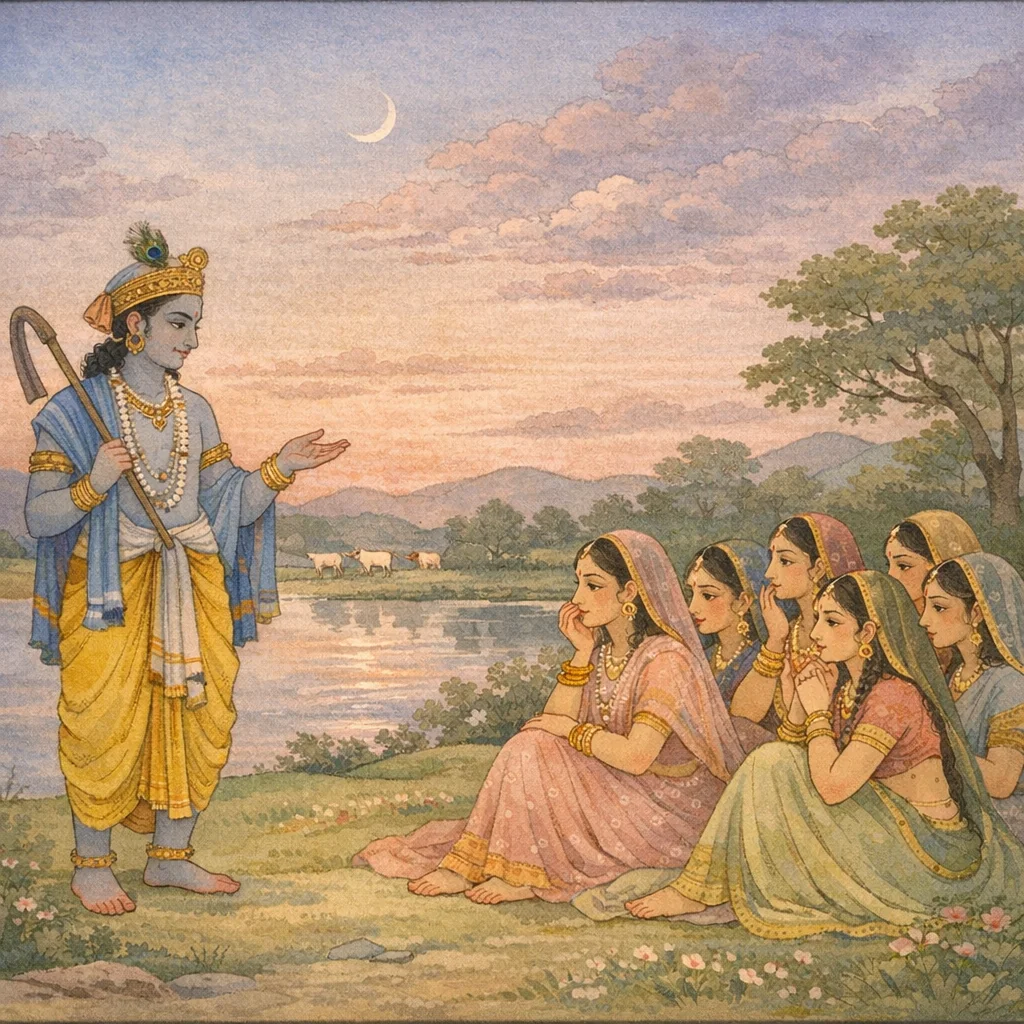
Adhyaya 197: Krishna’s Boon to Muchukunda and Balarama’s Consolation of Vraja
ഈ അധ്യായത്തിൽ രാജഭക്തി, ദൈവപ്രതിഫലം, യാദവലോകത്തിലെ മാറുന്ന സാമൂഹികാവസ്ഥ എന്നിവയെ ബന്ധിപ്പിക്കുന്ന ഒരു ഇടക്കഥനം വരുന്നു. ജ്ഞാനിയായ രാജാവ് മുചുകുന്ദൻ ഹരി ശ്രീകൃഷ്ണനെ സ്തുതിച്ചതിന് ശേഷം, ഭഗവാൻ അവനു വരം നൽകുന്നു—ഇഷ്ടമായ ദിവ്യലോകങ്ങളിൽ ചെന്നു ദിവ്യസുഖങ്ങൾ അനുഭവിച്ച്, പിന്നെ ജാതിസ്മരണ (മുൻജന്മസ്മൃതി) ഉള്ള മഹത്തായ വംശത്തിൽ പുനർജന്മം പ്രാപിച്ച്, അവസാനം കൃഷ്ണകൃപയാൽ മോക്ഷം നേടുക. കലിയുഗാരംഭം തിരിച്ചറിഞ്ഞ മുചുകുന്ദൻ ഗന്ധമാദനവുമായി ബന്ധപ്പെട്ട നര-നാരായണ പുണ്യക്ഷേത്രത്തിലേക്ക് തപസ്സിനായി പുറപ്പെടുന്നു. തുടർന്ന് കൃഷ്ണന്റെ രാഷ്ട്രീയസ്ഥിരീകരണം—യുക്തിയാൽ ശത്രുവിനെ നിർവീര്യമാക്കി മഥുരയെ സുരക്ഷിതമാക്കി, ദ്വാരാവതിയിൽ ഉഗ്രസേനനോട് ഫലം അറിയിച്ച് യദുവംശത്തെ സ്ഥിരപ്പെടുത്തുന്നു. സമാന്തരമായി ബലദേവൻ നന്ദന്റെ ഗോകുലത്തിൽ എത്തി, ഗോപന്മാരും ഗോപികമാരും കൃഷ്ണനോടുള്ള സ്നേഹം, ആശങ്ക, അസൂയ, വിരഹം എന്നിവ പ്രകടിപ്പിക്കുമ്പോൾ, മൃദുവായ സന്ദേശങ്ങളാൽ അവരെ ആശ്വസിപ്പിച്ച് വ്രജത്തിന്റെ പവിത്രസ്മൃതിയിൽ ബന്ധങ്ങൾ ദൃഢമാക്കുന്നു.
Chapter Arc
{"opening_hook":"The chapter opens in the afterglow of Muchukunda’s praise: a weary but wise king stands before Hari, and the reader is drawn in by the intimacy of a devotee asking not for conquest but for a destiny beyond time.","rising_action":"Kṛṣṇa’s boon unfolds in a carefully tiered sequence—celestial enjoyment, sovereign ease, a future birth with jātismaraṇa, and finally mokṣa—while Muchukunda’s discernment of Kali-yuga redirects the narrative from royal life to renunciant geography (Gandhamādana/Nara-Nārāyaṇa). The scene then pivots to statecraft: Kṛṣṇa’s upāya secures Mathurā and the political order is ritually ‘reported’ to Ugrasena in Dvāravatī. In parallel, Baladeva’s visit to Vraja raises social tension as gopīs and cowherds voice love mixed with grievance over Kṛṣṇa’s absence.","climax_moment":"The peak teaching is the Purāṇic synthesis of bhakti and karma-phala: Kṛṣṇa grants not merely svarga but a structured soteriology—rebirth with memory leading to liberation by divine grace—while Baladeva’s consolatory diplomacy preserves Vraja’s bhakti as a living, communal reality rather than a private emotion.","resolution":"Muchukunda departs for tapas in the Nara-Nārāyaṇa region, embodying the turn from kṣatra-glory to śānta-dharma as Kali approaches. Kṛṣṇa’s royal consolidation stabilizes the Yādavas under Ugrasena, and Baladeva’s gentle assurances soothe Vraja, leaving the chapter with restored social equilibrium and sustained longing that continues to sanctify Vraja’s memory.","key_verse":"“Having enjoyed the worlds you desire, you shall be born again in a noble lineage, endowed with remembrance of former births; and by My grace you will attain final release (mokṣa).” (Teaching-summary of Kṛṣṇa’s boon to Muchukunda; wording varies by recension)"}
Thematic Essence
{"primary_theme":"Bhakti rewarded as a graded path: from svarga to jātismaraṇa to mokṣa, alongside dharmic kingship and Vraja’s sustaining remembrance.","secondary_themes":["Kali-yuga awareness as a trigger for renunciation and pilgrimage","Upāya (strategic means) in the service of restoring righteous order","Separation (viraha) and reassurance as engines of Vraja-bhakti","Dynastic stabilization under Ugrasena as a ritual-political closure"],"brahma_purana_doctrine":"This chapter foregrounds a distinctly Purāṇic soteriology: Kṛṣṇa’s prasāda can structure destiny across births—granting enjoyment without bondage, then jātismaraṇa as a spiritual accelerant, culminating in mokṣa—while still affirming the legitimacy of worldly governance when aligned with dharma.","adi_purana_significance":"As an ‘Adi Purāṇa’ layer, it integrates three foundational Purāṇic registers in one movement—devotional theology (boon and grace), sacred geography (Gandhamādana/Nara-Nārāyaṇa), and social order (Yādava polity and Vraja community)—showing how cosmic time (Kali) reshapes human aims."}
Emotional Journey
{"opening_rasa":"शान्त (śānta)","climax_rasa":"अद्भुत (adbhuta)","closing_rasa":"करुण (karuṇa)","rasa_transitions":["śānta → adbhuta (boon and destiny across births)","adbhuta → vīra (political consolidation and restored order)","vīra → śṛṅgāra/karuṇa (Vraja’s love-in-separation)","karuṇa → śānta (consolation and emotional settling)"],"devotional_peaks":["Kṛṣṇa’s articulation of mokṣa-by-grace as the final fruit of devotion","Muchukunda’s turn to tapas upon sensing Kali-yuga","Vraja’s collective outpouring of longing and Baladeva’s soothing relay of Kṛṣṇa’s affectionate intent"]}
Tirtha Focus
{"tirthas_covered":["गन्धमादन (Gandhamādana)","नर-नारायणस्थान (Nara-Nārāyaṇa sacred region)","नन्दगोकुल/व्रजभूमि (Nanda’s Gokula/Vraja)","मथुरा (Mathurā)","द्वारवती/द्वारका (Dvāravatī/Dvārakā)"],"jagannath_content":null,"surya_content":null,"cosmology_content":"Implicit yuga-cosmology: Muchukunda recognizes the advent of Kali-yuga, and this temporal shift motivates renunciation; no detailed sarga/pralaya exposition occurs here."}
Shlokas in Adhyaya 197
Verse 1
व्यास उवाच इत्थं स्तुतस् तदा तेन मुचुकुन्देन धीमता प्राहेशः सर्वभूतानाम् अनादिनिधनो हरिः //
ഈ ആദ്യ വചനത്തിൽ ധർമ്മത്തിന്റെ മഹിമ വെളിപ്പെടുന്നു; ധർമ്മം സർവ്വലോകഹിതകരമെന്നു കരുതപ്പെടുന്നു.
Verse 2
श्रीकृष्ण उवाच यथाभिवाञ्छितांल् लोकान् दिव्यान् गच्छ नरेश्वर अव्याहतपरैश्वर्यो मत्प्रसादोपबृंहितः //
രണ്ടാം വചനത്തിൽ സത്കർമ്മഫലപ്രാപ്തിയും പാപനിവാരണവും ധർമ്മമാർഗ്ഗത്തിലൂടെയേ ഉണ്ടാകൂ എന്നു പറയുന്നു.
Verse 3
भुक्त्वा दिव्यान् महाभोगान् भविष्यसि महाकुले जातिस्मरो मत्प्रसादात् ततो मोक्षम् अवाप्स्यसि //
മൂന്നാം വചനത്തിൽ ഗുരുവും ശാസ്ത്രവും ചേർന്ന ധർമ്മം ജീവന് മോക്ഷമാർഗ്ഗം കാണിച്ചുതരുന്നു എന്നു പറയുന്നു.
Verse 4
व्यास उवाच इत्य् उक्तः प्रणिपत्येशं जगताम् अच्युतं नृपः गुहामुखाद् विनिष्क्रान्तो ददृशे सो ऽल्पकान् नरान् //
നാലാം വചനത്തിൽ ശ്രദ്ധയോടെ ധർമ്മം അനുഷ്ഠിക്കുന്നവൻ ലോകത്തിൽ കീർത്തിയും പുണ്യവും പ്രാപിക്കുന്നു എന്നു പറയുന്നു.
Verse 5
ततः कलियुगं ज्ञात्वा प्राप्तं तप्तुं ततो नृपः नरनारायणस्थानं प्रययौ गन्धमादनम् //
അഞ്ചാം വചനത്തിൽ ധർമ്മത്തിൽ സ്ഥിരനായ പുരുഷൻ ശാന്തി പ്രാപിക്കുകയും പരലോകത്തിൽ ശുഭഗതി നേടുകയും ചെയ്യുന്നു എന്നു പറയുന്നു.
Verse 6
कृष्णो ऽपि घातयित्वारिम् उपायेन हि तद्बलम् जग्राह मथुराम् एत्य हस्त्यश्वस्यन्दनोज्ज्वलम् //
ഇവിടെ ശ്ലോകത്തിന്റെ മൂല സംസ്കൃത പാഠം ലഭ്യമല്ല; “6” എന്ന സംഖ്യ മാത്രം കാണുന്നു. ദയവായി പാഠം നൽകുക.
Verse 7
आनीय चोग्रसेनाय द्वारवत्यां न्यवेदयत् पराभिभवनिःशङ्कं बभूव च यदोः कुलम् //
ഇവിടെ ശ്ലോകത്തിന്റെ മൂല പാഠം ലഭ്യമല്ല; “7” എന്ന സംഖ്യ മാത്രം ഉണ്ട്. ദയവായി പാഠം നൽകുക.
Verse 8
बलदेवो ऽपि विप्रेन्द्राः प्रशान्ताखिलविग्रहः ज्ञातिदर्शनसोत्कण्ठः प्रययौ नन्दगोकुलम् //
ഈ ശ്ലോകത്തിന്റെ സംസ്കൃത മൂലപാഠം നൽകിയിട്ടില്ല; “8” മാത്രം ഉണ്ട്. വിവർത്തനത്തിന് മൂലപാഠം ആവശ്യമാണ്.
Verse 9
ततो गोपाश् च गोप्यश् च यथापूर्वम् अमित्रजित् तथैवाभ्यवदत् प्रेम्णा बहुमानपुरःसरम् //
ഇവിടെ “9” മാത്രം കാണുന്നു; ശ്ലോകപാഠം നൽകിയിട്ടില്ല. ദയവായി സംസ്കൃത ശ്ലോകം എഴുതുക.
Verse 10
कैश् चापि संपरिष्वक्तः कांश्चित् स परिषस्वजे हासं चक्रे समं कैश्चिद् गोपगोपीजनैस् तथा //
ഈ പദ്യത്തിന്റെ മൂല സംസ്കൃതം ലഭ്യമല്ല; “10” എന്ന സംഖ്യ മാത്രം ഉണ്ട്. ദയവായി ശ്ലോകപാഠം നൽകുക.
Verse 11
प्रियाण्य् अनेकान्य् अवदन् गोपास् तत्र हलायुधम् गोप्यश् च प्रेममुदिताः प्रोचुः सेर्ष्यम् अथापराः //
ഈ അധ്യായത്തിലെ പതിനൊന്നാം ശ്ലോകം—പവിത്രാർത്ഥം സൂചിപ്പിച്ച് സംക്ഷേപമായി നിരൂപിക്കുന്നു।
Verse 12
गोप्यः पप्रच्छुर् अपरा नागरीजनवल्लभः कच्चिद् आस्ते सुखं कृष्णश् चलत्प्रेमरसाकुलः //
ഈ അധ്യായത്തിലെ പന്ത്രണ്ടാം ശ്ലോകം—ധർമ്മാർത്ഥത്തിലെ പവിത്ര തത്ത്വം വ്യക്തമാക്കുന്നു।
Verse 13
अस्मच्चेष्टोपहसनं न कच्चित् पुरयोषिताम् सौभाग्यमानम् अधिकं करोति क्षणसौहृदः //
ഈ അധ്യായത്തിലെ പതിമൂന്നാം ശ്ലോകം—ശ്രദ്ധയും ഭക്തിയും ഉള്ള മഹത്ത്വം നിരൂപിക്കുന്നു।
Verse 14
कच्चित् स्मरति नः कृष्णो गीतानुगमनं कृतम् अप्य् असौ मातरं द्रष्टुं सकृद् अप्य् आगमिष्यति //
ഈ അധ്യായത്തിലെ പതിനാലാം ശ്ലോകം—സത്കർമ്മങ്ങളുടെ ഫലപ്രാപ്തി ഉപദേശിക്കുന്നു।
Verse 15
अथवा किं तदालापैः क्रियन्ताम् अपराः कथाः यद् अस्माभिर् विना तेन विनास्माकं भविष्यति //
ഈ അധ്യായത്തിലെ പതിനഞ്ചാം ശ്ലോകം—മോക്ഷമാർഗത്തിന്റെ ശുദ്ധിയെ പ്രശംസിക്കുന്നു।
Verse 16
पिता माता तथा भ्राता भर्ता बन्धुजनश् च कः न त्यक्तस् तत्कृते श्माभिर् अकृतज्ञस् ततो हि सः //
ഈ അധ്യായത്തിലെ പതിനാറാം ശ്ലോകം—പവിത്ര വിഷയത്തിന്റെ സംക്ഷിപ്ത സൂചന മാത്രമാണ്।
Verse 17
तथापि कच्चिद् आत्मीयम् इहागमनसंश्रयम् करोति कृष्णो वक्तव्यं भवता वचनामृतम् //
ഈ അധ്യായത്തിലെ പതിനേഴാം ശ്ലോകം—ധർമ്മാർത്ഥത്തിന്റെ പവിത്ര വിവരണത്തെ സൂചിപ്പിക്കുന്നു।
Verse 18
दामोदरो ऽसौ गोविन्दः पुरस्त्रीसक्तमानसः अपेतप्रीतिर् अस्मासु दुर्दर्शः प्रतिभाति नः //
ഈ അധ്യായത്തിലെ പതിനെട്ടാം ശ്ലോകം—ശ്രദ്ധയും ഭക്തിയും ഉള്ള മഹത്ത്വം വെളിപ്പെടുത്തുന്നു।
Verse 19
व्यास उवाच आमन्त्रितः स कृष्णेति पुनर् दामोदरेति च जहसुः सुस्वरं गोप्यो हरिणा कृष्टचेतसः //
ഈ അധ്യായത്തിലെ പത്തൊമ്പതാം ശ്ലോകം—പുണ്യകർമ്മങ്ങളുടെ ഫലപ്രാപ്തിയെ വിശദീകരിക്കുന്നു।
Verse 20
संदेशैः सौम्यमधुरैः प्रेमगर्भैर् अगर्वितैः रामेणाश्वासिता गोप्यः कृष्णस्यातिमधुस्वरैः //
ഈ അധ്യായത്തിലെ ഇരുപതാം ശ്ലോകം—ശുഭമാർഗത്തിൽ നിലകൊള്ളലിനെയും മോക്ഷാഭിലാഷത്തെയും പ്രശംസിക്കുന്നു।
Verse 21
गोपैश् च पूर्ववद् रामः परिहासमनोहरैः कथाश् चकार प्रेम्णा च सह तैर् व्रजभूमिषु //
ഇത് ഇരുപത്തൊന്നാം ശ്ലോക-സൂചികയാണ്; മൂലപാഠം ഇവിടെ നൽകിയിട്ടില്ല.
Frequently Asked Questions
The chapter foregrounds divine grace (prasāda) as a soteriological mechanism: Muchukunda’s devotion yields a graduated path from heavenly enjoyment to rebirth with jātismaraṇa and final mokṣa, while Vraja’s emotional devotion is ethically stabilized through truthful consolation and communal reassurance.
It reinforces Purāṇic chronography and dharmic continuity by explicitly marking the transition into Kali-yuga and by situating liberation, kingship, and ascetic geography within a single narrative frame—typical of early Purāṇic synthesis where cosmic time, royal order, and devotional theology interlock.
No new vrata is formally instituted in this excerpt; however, the text sacralizes pilgrimage-ascetic orientation by directing Muchukunda to the Nara-Nārāyaṇa region associated with Gandhamādana as a locus for tapas, implicitly endorsing that sacred geography as a renunciant destination.