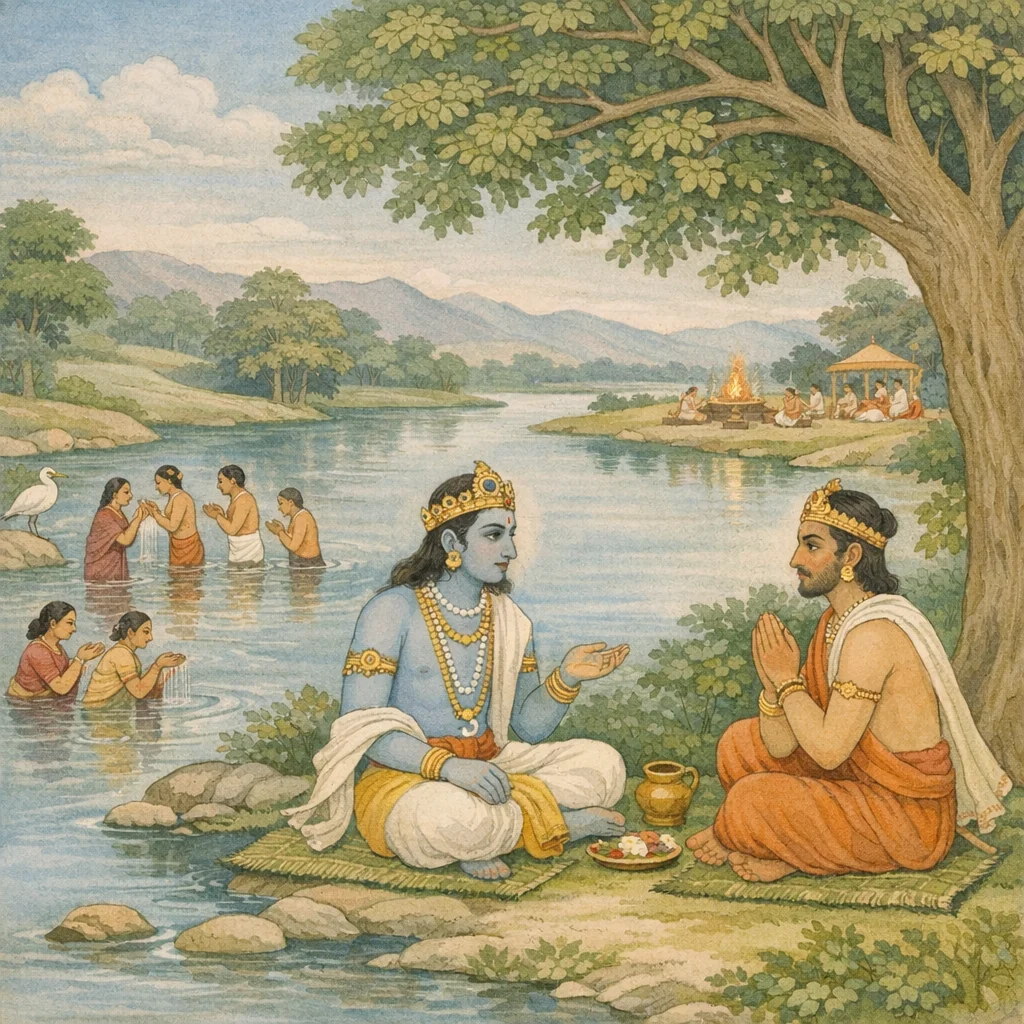
Adhyaya 88: Janasthana Tirtha: Varuna’s Teaching on Karma, Bhukti, and Mukti
അധ്യായം 88-ൽ ഭുക്തിയും മുക്തിയും തമ്മിലുള്ള സ്ഥാനത്തെക്കുറിച്ചുള്ള തത്ത്വചോദ്യത്തെ ആധാരമാക്കി ജനസ്ഥാന-തീർത്ഥമാഹാത്മ്യം വിവരിക്കുന്നു. വൈവസ്വത വംശജനായ രാജാവ് ജനകൻ, അപാംപതി വരുണന്റെ പുത്രി ഗുണാർണവയെ വിവാഹം ചെയ്ത്, കഠിന സന്ന്യാസക്ലേശമില്ലാതെ ‘സുലഭമായി’ മോക്ഷം എങ്ങനെ നേടാമെന്ന് തന്റെ പുരോഹിതൻ യാജ്ഞവൽക്ക്യനോട് ചോദിക്കുന്നു. യാജ്ഞവൽക്ക്യൻ അവനെ വരുണന്റെ അടുക്കൽ അയക്കുന്നു. വരുണൻ വേദസമ്മത മാർഗം ഉപദേശിച്ച്, മോക്ഷം ‘കർമദ്വാരം’ വഴിയാണ് ഗ്രഹിക്കേണ്ടത്; ലളിതമായ അകർമവാദം നിരസിക്കുന്നു. തുടർന്ന് ഭാരതവർഷത്തെ, പ്രത്യേകിച്ച് ദണ്ഡക പ്രദേശത്തെ, പ്രശംസിക്കുകയും ഗൗതമീ ഗംഗയെ ശ്രേഷ്ഠ തീർത്ഥമായി ഉയർത്തുകയും ചെയ്യുന്നു; അവിടെ യജ്ഞം, ദാനം, വിധിനിഷ്ഠാചരണം എന്നിവയാൽ ഭുക്തിയും മുക്തിയും രണ്ടും ലഭ്യമാകുന്നു. അവസാനം നാല് യോജന വ്യാപ്തിയുള്ള ജനസ്ഥാനം—ജനകരുടെ യജ്ഞാസനമായി സ്മരിക്കപ്പെടുന്ന സ്ഥലം—എന്ന് മഹത്വപ്പെടുത്തുന്നു; അവിടെ സ്മരണം, തീർത്ഥയാത്ര, സ്നാനം, അർപ്പണം, പിതൃതർപ്പണം എന്നിവ പാപനാശം ചെയ്ത് ഇഷ്ടഫലവും മോക്ഷവും നൽകുന്നു।
Chapter Arc
{"opening_hook":"A practical dharma-crisis opens the chapter: King Janaka asks how mokṣa can be attained “easily,” without the crushing hardship of total renunciation—framing a tension between royal life (bhukti) and liberation (mukti).","rising_action":"Yājñavalkya refuses a simplistic answer and redirects Janaka to Varuṇa (Apāṃpati), whose authority as Vedic lord of waters and dharma-guardian raises the stakes: the question is not merely personal but doctrinal—whether liberation can be grounded in Vedic action rather than flight from action.","climax_moment":"Varuṇa’s central teaching: mokṣa is intelligible through the “gateway of karma,” and the Veda does not endorse a naïve non-action doctrine; properly ordered Vedic duty (especially within the āśrama system, with gārhasthya highlighted) can yield both bhukti and mukti when performed as dharma rather than as craving.","resolution":"The philosophical resolution is sealed by sacred geography: Varuṇa praises Bhāratavarṣa and the Daṇḍaka region, exalting the Gautamī Gaṅgā as a premier liberating tīrtha; the chapter culminates by naming and glorifying Janasthāna—four yojanas wide—as the Janakas’ yajña-seat where remembrance, pilgrimage, bathing, dāna, and pitṛ-rites destroy sin and grant desired ends and liberation.","key_verse":"“Liberation is not won by mere non-action; it is approached through the gate of Vedic karma—when duty is performed as ordained, it bestows both enjoyment and release.” (Teaching-summary of Varuṇa; chapter’s doctrinal refrain)"}
Thematic Essence
{"primary_theme":"Karma as the Vedic gateway reconciling bhukti and mukti (tīrtha-grounded soteriology).","secondary_themes":["Āśrama-dharma as structured ‘gateways’ of karma, with gārhasthya praised","Gautamī Gaṅgā (Godāvarī) as a premier liberating river-tīrtha","Bhāratavarṣa/Daṇḍaka praise as moral-sacred geography","Janasthāna as yajña-sad of the Janakas; merit through snāna, dāna, pitṛ-tarpaṇa, smaraṇa"],"brahma_purana_doctrine":"This chapter insists that mokṣa is not opposed to Vedic action: karma, when performed as śāstra-ordained duty (and intensified through tīrtha-sevā), becomes a soteriological instrument yielding both bhukti and mukti—rejecting a simplistic ‘non-action alone’ claim.","adi_purana_significance":"As ‘Adi Purāṇa,’ it models the Purāṇic synthesis: philosophical inquiry (mokṣa) is resolved not abstractly but by embedding dharma in place—Bhāratavarṣa and the Gautamī network—showing how primordial teaching becomes lived practice through pilgrimage and rite."}
Emotional Journey
{"opening_rasa":"चिन्ता (a shade of karuṇa/śānta-adjacent concern)","climax_rasa":"शान्त","closing_rasa":"अद्भुत","rasa_transitions":["चिन्ता → जिज्ञासा → शान्त → अद्भुत → शान्त"],"devotional_peaks":["Varuṇa’s pronouncement that Vedic karma can open to mokṣa (a stabilizing śānta peak)","The exaltation of Gautamī Gaṅgā as a liberating river where yajña and dāna bear soteriological fruit","The naming of Janasthāna and the promise that smaraṇa, snāna, dāna, and pitṛ-kriyā remove sin and grant liberation"]}
Tirtha Focus
{"tirthas_covered":["भारतवर्ष (Bhāratavarṣa)","दण्डक (Daṇḍaka region/forest tract)","गौतमी गङ्गा (Gautamī Gaṅgā / Godāvarī)","जनस्थान-तीर्थ (Janasthāna Tīrtha)","गङ्गातीर (riverbank setting for rites)"],"jagannath_content":null,"surya_content":null,"cosmology_content":null}
Shlokas in Adhyaya 88
Verse 1
ब्रह्मोवाच तस्माद् अप्य् अपरं तीर्थं जनस्थानम् इति श्रुतम् चतुर्योजनविस्तीर्णं स्मरणान् मुक्तिदं नृणाम् //
ഇവിടെ മൂല സംസ്കൃത ശ്ലോകം നൽകിയിട്ടില്ല; അതിനാൽ കൃത്യമായ വിവർത്തനം സാധ്യമല്ല. ദയവായി ശ്ലോകം നൽകുക.
Verse 2
वैवस्वतान्वये जातो राजाभूज् जनकः पुरा सो ऽपांपतेस् तु तनुजाम् उपयेमे गुणार्णवाम् //
ഇവിടെ മൂല സംസ്കൃത ശ്ലോകം നൽകിയിട്ടില്ല; അതിനാൽ കൃത്യമായ വിവർത്തനം സാധ്യമല്ല. ദയവായി ശ്ലോകം നൽകുക.
Verse 3
धर्मार्थकाममोक्षाणां जनकां जनको नृपः अनुरूपगुणत्वाच् च तस्य भार्या गुणार्णवा //
ഇവിടെ മൂല സംസ്കൃത ശ്ലോകം നൽകിയിട്ടില്ല; അതിനാൽ കൃത്യമായ വിവർത്തനം സാധ്യമല്ല. ദയവായി ശ്ലോകം നൽകുക.
Verse 4
याज्ञवल्क्यश् च विप्रेन्द्रस् तस्य राज्ञः पुरोहितः तम् अपृच्छन् नृपश्रेष्ठो याज्ञवल्क्यं पुरोहितम् //
ഇവിടെ മൂല സംസ്കൃത ശ്ലോകം നൽകിയിട്ടില്ല; അതിനാൽ കൃത്യമായ വിവർത്തനം സാധ്യമല്ല. ദയവായി ശ്ലോകം നൽകുക.
Verse 5
जनक उवाच भुक्तिमुक्ती उभे श्रेष्ठे निर्णीते मुनिसत्तमैः दासीदासेभतुरगरथाद्यैर् भुक्तिर् उत्तमा //
ഇവിടെ ‘5’ എന്ന ശ്ലോകസംഖ്യ മാത്രം സൂചിപ്പിക്കുന്നു; മൂല സംസ്കൃത പാഠം നൽകിയിട്ടില്ല.
Verse 6
किंत्व् अन्तविरसा भुक्तिर् मुक्तिर् एका निरत्यया भुक्तेर् मुक्तिः श्रेष्ठतमा भुक्त्या मुक्तिं कथं व्रजेत् //
ഇവിടെ ‘6’ എന്ന ശ്ലോകസംഖ്യയുടെ സൂചന മാത്രം; മൂല ശ്ലോകം ലഭ്യമല്ല.
Verse 7
सर्वसङ्गपरित्यागान् मुक्तिप्राप्तिः सुदुःखतः तद् ब्रूहि द्विजशार्दूल सुखान् मुक्तिः कथं भवेत् //
ഇവിടെ ശ്ലോകസംഖ്യ ‘7’; പാഠം ഇല്ലാത്തതിനാൽ വിവർത്തനം സൂചനാത്മകമാണ്.
Verse 8
याज्ञवल्क्य उवाच अपांपतिस् तव गुरुः श्वशुरः प्रियकृत् तथा तं गत्वा पृच्छ नृपते उपदेक्ष्यति ते हितम् //
ഇവിടെ ‘8’ എന്ന ശ്ലോകസംഖ്യ നിർദ്ദിഷ്ടം; മൂലവാക്യം ഇല്ലാത്തതിനാൽ അർത്ഥം നിശ്ചയിക്കാനാവില്ല.
Verse 9
याज्ञवल्क्यश् च जनको राजानं वरुणं तदा गत्वा चोचतुर् अव्यग्रौ मुक्तिमार्गं यथाक्रमम् //
ഇവിടെ ശ്ലോകസംഖ്യ ‘9’; മൂലപാഠം ലഭിച്ചാൽ മാത്രമേ യഥാർത്ഥ വിവർത്തനം സാധ്യമാകൂ.
Verse 15
चतुर्णाम् आश्रमाणां च गार्हस्थ्यं पुण्यदं स्मृतम् तस्माद् भुक्तिश् च मुक्तिश् च भवतीति मतिर् मम //
ഇവിടെ ശ്ലോകത്തിന്റെ മൂല സംസ്കൃത പാഠം നൽകിയിട്ടില്ല; അതിനാൽ കൃത്യമായ വിവർത്തനം സാധ്യമല്ല. ദയവായി പാഠം നൽകുക.
Verse 16
ब्रह्मोवाच एतच् छ्रुत्वा तु जनको याज्ञवल्क्यश् च बुद्धिमान् वरुणं पूजयित्वा तु पुनर् वचनम् ऊचतुः //
ഈ ശ്ലോകത്തിന്റെ മൂല സംസ്കൃത പാഠം ഇവിടെ ലഭ്യമല്ല; അതിനാൽ ഉറപ്പുള്ള അർത്ഥവിവർത്തനം ചെയ്യാൻ കഴിയില്ല. ദയവായി പാഠം അയയ്ക്കുക.
Verse 17
को देशः किं च तीर्थं स्याद् भुक्तिमुक्तिप्रदायकम् तद् वदस्व सुरश्रेष्ठ सर्वज्ञो ऽसि नमो ऽस्तु ते //
ശ്ലോകത്തിന്റെ സംസ്കൃത പാഠമില്ലാതെ ഇവിടെ കൽപ്പിത വിവർത്തനം ചെയ്യുന്നത് ഉചിതമല്ല; ദയവായി മൂലപാഠം നൽകുക.
Verse 18
वरुण उवाच पृथिव्यां भारतं वर्षं दण्डकं तत्र पुण्यदम् तस्मिन् क्षेत्रे कृतं कर्म भुक्तिमुक्तिप्रदं नृणाम् //
മൂല ശ്ലോകം ഇവിടെ നൽകിയിട്ടില്ല; അതില്ലാതെ പവിത്രാർത്ഥം ശരിയായി വിവർത്തനം ചെയ്യാൻ കഴിയില്ല. ദയവായി പാഠം നൽകുക.
Verse 19
तीर्थानां गौतमी गङ्गा श्रेष्ठा मुक्तिप्रदा नृणाम् तत्र यज्ञेन दानेन भोगान् मुक्तिम् अवाप्स्यति //
ഈ ശ്ലോകത്തിന്റെ മൂല സംസ്കൃത വാക്യങ്ങൾ ഇവിടെ കാണുന്നില്ല; അതിനാൽ പ്രമാണപരമായ വിവർത്തനം സാധ്യമല്ല. ദയവായി പാഠം അയയ്ക്കുക.
Verse 20
ब्रह्मोवाच याज्ञवल्क्यश् च जनको वाचं श्रुत्वा ह्य् अपांपतेः वरुणेन ह्य् अनुज्ञातौ स्वपुरीं जग्मतुस् तदा //
ഇവിടെ ശ്ലോകത്തിന്റെ മൂല സംസ്കൃത പാഠം നൽകിയിട്ടില്ല; അതിനാൽ കൃത്യമായ വിവർത്തനം സാധ്യമല്ല. ദയവായി പാഠം നൽകുക.
Verse 21
अश्वमेधादिकं कर्म चकार जनको नृपः याजयाम् आस विप्रेन्द्रो याज्ञवल्क्यश् च तं नृपम् //
ഇവിടെ ശ്ലോകത്തിന്റെ മൂല സംസ്കൃത പാഠം നൽകിയിട്ടില്ല; അതിനാൽ കൃത്യമായ വിവർത്തനം സാധ്യമല്ല. ദയവായി പാഠം നൽകുക.
Verse 22
गङ्गातीरं समाश्रित्य यज्ञान् मुक्तिम् अवाप राट् तथा जनकराजानो बहवस् तत्र कर्मणा //
ഇവിടെ ശ്ലോകത്തിന്റെ മൂല സംസ്കൃത പാഠം നൽകിയിട്ടില്ല; അതിനാൽ കൃത്യമായ വിവർത്തനം സാധ്യമല്ല. ദയവായി പാഠം നൽകുക.
Verse 23
मुक्तिं प्रापुर् महाभागा गौतम्याश् च प्रसादतः ततः प्रभृति तत् तीर्थं जनस्थानेति विश्रुतम् //
ഇവിടെ ശ്ലോകത്തിന്റെ മൂല സംസ്കൃത പാഠം നൽകിയിട്ടില്ല; അതിനാൽ കൃത്യമായ വിവർത്തനം സാധ്യമല്ല. ദയവായി പാഠം നൽകുക.
Verse 24
जनकानां यज्ञसदो जनस्थानं प्रकीर्तितम् चतुर्योजनविस्तीर्णं स्मरणात् सर्वपापनुत् //
ഇവിടെ ശ്ലോകത്തിന്റെ മൂല സംസ്കൃത പാഠം നൽകിയിട്ടില്ല; അതിനാൽ കൃത്യമായ വിവർത്തനം സാധ്യമല്ല. ദയവായി പാഠം നൽകുക.
Verse 25
तत्र स्नानेन दानेन पितॄणां तर्पणेन तु तीर्थस्य स्मरणाद् वापि गमनाद् भक्तिसेवनात् //
അധ്യായം 88, ശ്ലോകം 25—ഇവിടെ മൂല സംസ്കൃത പാഠം നൽകിയിട്ടില്ല; അതിനാൽ യഥാർത്ഥ വിവർത്തനം സാധ്യമല്ല. ദയവായി ശ്ലോകപാഠം നൽകുക.
Verse 26
सर्वान् कामान् अवाप्नोति मुक्तिं च समवाप्नुयात् //
അധ്യായം 88, ശ്ലോകം 26—മൂല സംസ്കൃത പാഠം ലഭ്യമല്ല; അതിനാൽ പ്രാമാണിക വിവർത്തനം സാധ്യമല്ല. ദയവായി പാഠം നൽകുക.
Frequently Asked Questions
The chapter centers on mokṣa-access through Vedic karma: it addresses Janaka’s concern that full renunciation is difficult and presents Varuṇa’s doctrine that properly performed Vedic action—supported by yajña, dāna, and āśrama-dharma—can yield both bhukti (legitimate prosperity/enjoyment) and mukti (liberation).
Janasthāna is glorified as a four-yojana sacred expanse identified as the Janakas’ sacrificial seat (yajña-sad). Its distinctive claim is that mere remembrance, as well as pilgrimage, bathing, gifting, pitṛ-tarpaṇa, and devotional service there, removes sin and grants desired aims culminating in liberation.
The chapter recommends yajña and dāna at the Gautamī Gaṅgā, and at Janasthāna it prescribes tīrtha-based observances: snāna (bathing), dāna (charitable giving), pitṛ-tarpaṇa (ancestral offerings), smaraṇa (remembrance of the tīrtha), gamana (pilgrimage/going there), and bhakti-sevā (devotional attendance).