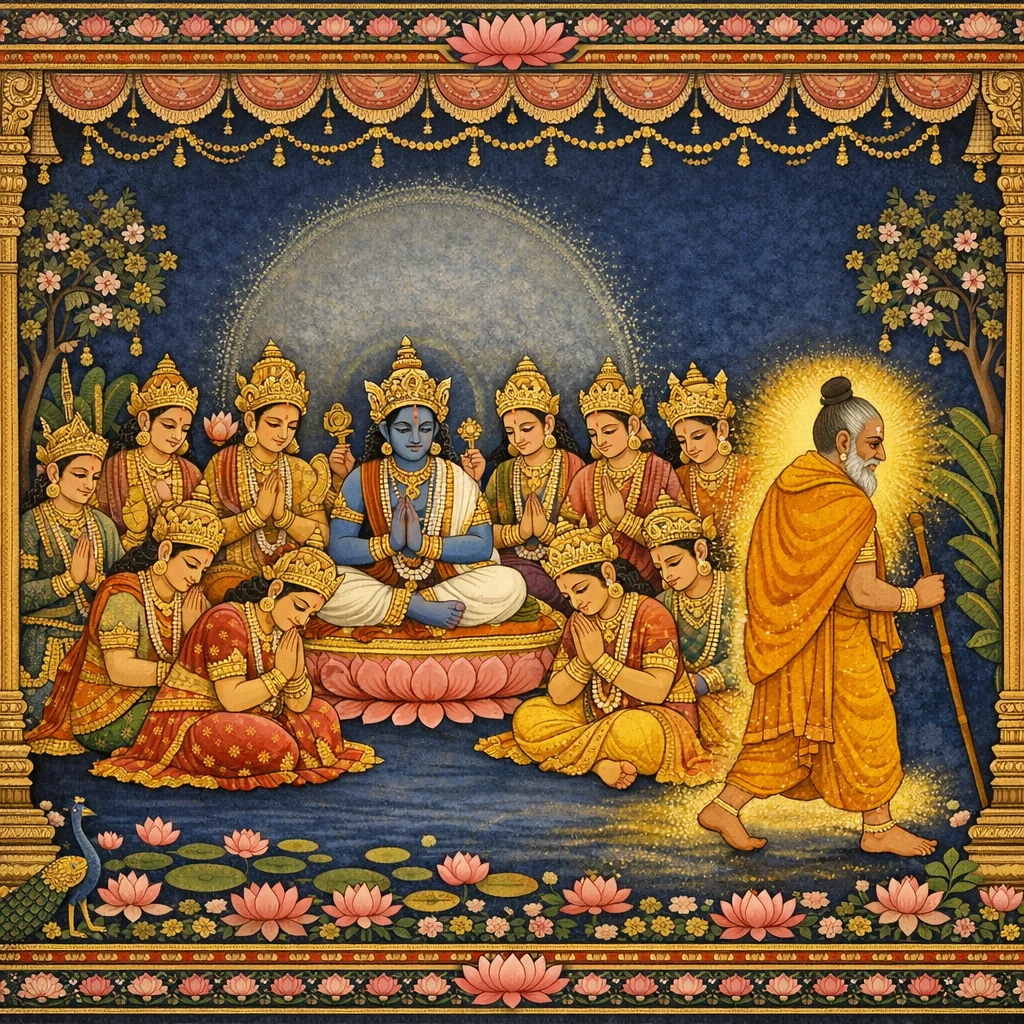
Adhyaya 7
Bṛhaspati Rejects the Demigods: The Root of Deva Weakness and the Need for Humility
ദേവ–അസുര സംഘർഷത്തിന്റെ പശ്ചാത്തലത്തിൽ പരീക്ഷിത് ശുകദേവഗോസ്വാമിയോട് ചോദിക്കുന്നു—ദേവഗുരു ബൃഹസ്പതി എന്തുകൊണ്ട് സ്വന്തം ശിഷ്യരെ വിട്ടുപോയി? ഈ അധ്യായം പറയുന്നു: പദഗർവ്വവും രാഷ്ട്രീയചിന്തയും മൂലം ദേവന്മാർ ഗുരുവിന് യഥോചിതമായ ആദരവും ശ്രദ്ധയും കാണിച്ചില്ല; അതാണ് ഗുരു-അപരാധം. ബൃഹസ്പതി പിരിഞ്ഞതോടെ ദേവരുടെ ആത്മീയ പിന്തുണ ക്ഷയിച്ച്, അസുരന്മാരോടുള്ള പോരാട്ടത്തിൽ നയം–ധർമ്മങ്ങളിൽ ആശയക്കുഴപ്പം വർധിക്കുന്നു. ധർമ്മത്തിന്റെ മൂലമാണ് ഗുരുഭക്തിയും ഭഗവാൻ വിഷ്ണുവിലേക്കുള്ള ആശ്രയവും; അവ അവഗണിക്കുമ്പോൾ ലോകക്രമം തളരുന്നു. തുടർന്ന് ദേവന്മാർ മറ്റൊരു ഉപദേശം തേടുകയും, ഒടുവിൽ വിനയത്തിലും വിഷ്ണു-കേന്ദ്രിത ശരണാഗതിയിലും തിരിച്ചെത്താൻ നിർബന്ധിതരാകുകയും ചെയ്യുന്നു—വൃത്രാസുര കഥയുടെ മുൻപൊരുക്കം।
Shlokas
Frequently Asked Questions
Because the devas failed in proper guru-sevā and respect—an offense rooted in pride and neglect. In Bhāgavata theology, the guru is not merely an advisor but the channel of dharma and divine favor; when disciples disregard him, their spiritual potency and right judgment diminish, and their worldly power becomes unreliable.
They violated appropriate etiquette and honor toward him—treating the guru as secondary to courtly and political concerns. Such disrespect constitutes guru-aparādha, which is portrayed as spiritually corrosive: it blocks blessings, weakens protection (poṣaṇa), and invites disorder even among the devas.
Bṛhaspati’s withdrawal explains the devas’ ensuing vulnerability and missteps, preparing the ground for the larger lesson that victory depends on humility, proper shelter, and Viṣṇu’s will—not merely celestial weaponry. This moral causality culminates in the Vṛtrāsura episodes, where devotion and surrender overturn simplistic labels of ‘deva’ and ‘asura.’