
Shloka 10
Vishwarupa Darshana Yoga — Vishwarupa Darshana Yoga
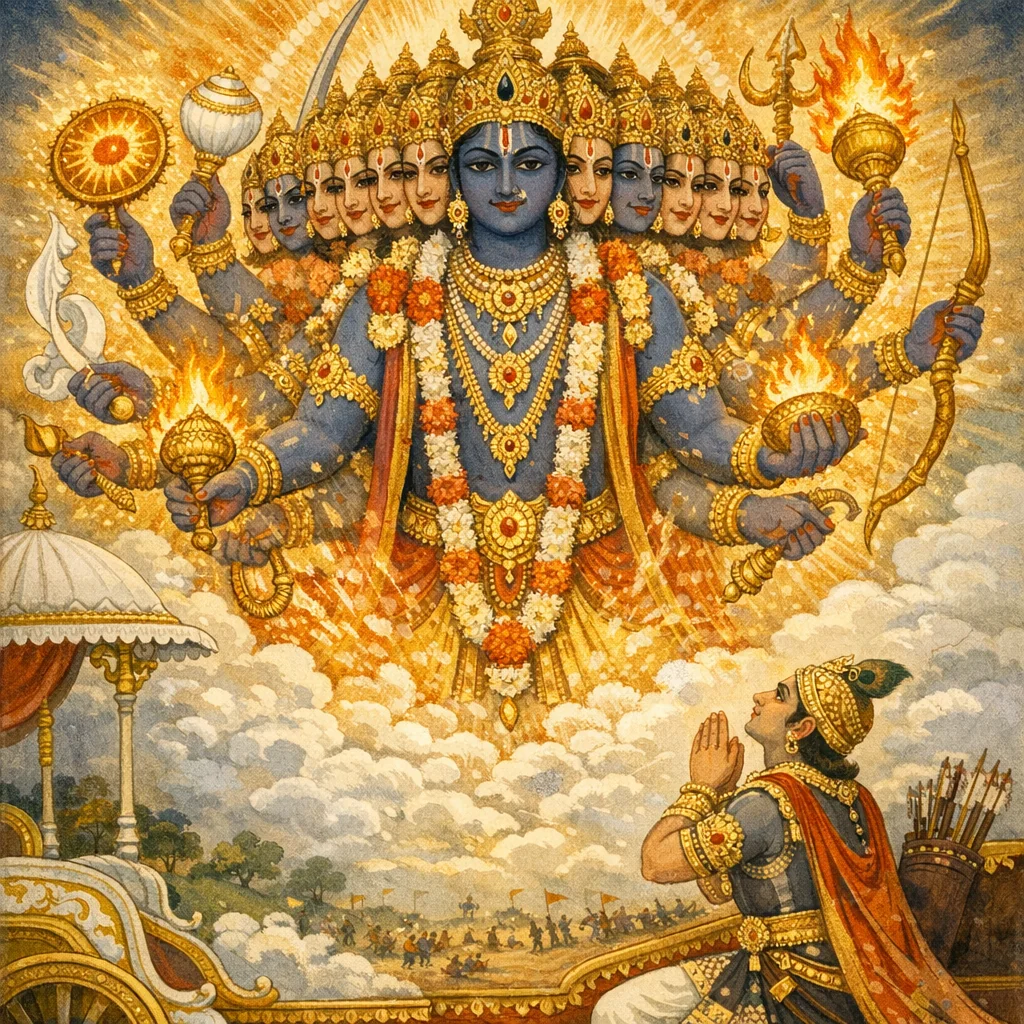
अनेकवक्त्रनयनमनेकाद्भुतदर्शनम् । अनेकदिव्याभरणं दिव्यानेकोद्यतायुधम् ॥ ११.१० ॥
anekavaktra-nayanam anekādbhuta-darśanam | aneka-divyābharaṇaṃ divyānekodyatāyudham || 11.10 ||

ആ (രൂപത്തിൽ) അനേകം മുഖങ്ങളും കണ്ണുകളും ഉണ്ടായിരുന്നു; അനേകം അത്ഭുതദർശനങ്ങൾ; അനേകം ദിവ്യാഭരണങ്ങൾ; കൂടാതെ ഉയർത്തിപ്പിടിച്ച അനേകം ദിവ്യായുധങ്ങൾ.
उस (रूप) में अनेक मुख और नेत्र थे, अनेक अद्भुत दर्शन थे, अनेक दिव्य आभूषण थे तथा अनेक दिव्य, उठाए हुए आयुध थे।
It had many faces and eyes, many wondrous appearances; many divine ornaments; and many divine weapons held aloft.
The imagery is hyperbolic and iconic, typical of epic theophany. “आयुध” can be read historically as royal insignia of power; in non-literal readings it can symbolize capacities (forces) through which cosmic order is maintained.
FAQs
The many-faced imagery can represent the mind’s encounter with overwhelming complexity—an experience of awe where ordinary categories struggle to contain what is perceived.
Multiplicity of eyes and faces suggests omnipresence and omniscience in symbolic form: the cosmos is presented as pervaded by a single, comprehensive principle.
This verse begins the detailed visual catalog of the universal form, building intensity and scale for Arjuna’s subsequent response.
It can be used as a metaphor for recognizing many perspectives at once—useful in ethics, leadership, and conflict-resolution without reducing reality to a single viewpoint.