
Shloka 15
Shraddhatraya Vibhaga Yoga — Shraddhatraya Vibhaga Yoga
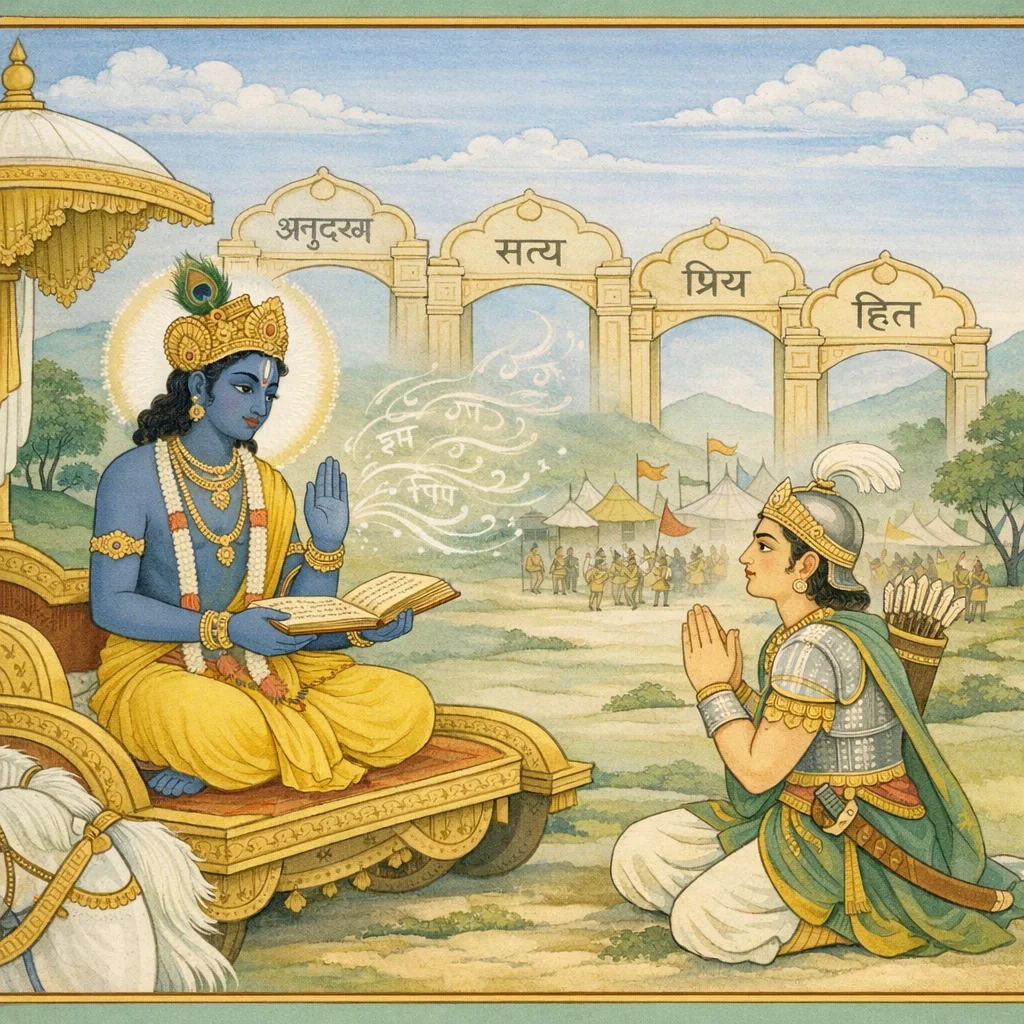
अनुद्वेगकरं वाक्यं सत्यं प्रियहितं च यत् । स्वाध्यायाभ्यसनं चैव वाङ्मयं तप उच्यते ॥ १७.१५ ॥
anudvegakaraṃ vākyaṃ satyaṃ priya-hitaṃ ca yat | svādhyāyābhyasanaṃ caiva vāṅmayaṃ tapa ucyate || 17.15 ||

ഉദ്വേഗം സൃഷ്ടിക്കാത്തതും, സത്യമുമായും, പ്രിയവും ഹിതകരവുമായ വാക്കുകൾ; കൂടാതെ സ്വാധ്യായത്തിന്റെ അഭ്യാസം—ഇതാണ് വാങ്മയ തപസ്സ് എന്ന് പറയുന്നു.
जो वाणी उद्वेग न करने वाली हो, सत्य हो, प्रिय और हितकारक हो तथा स्वाध्याय का अभ्यास हो—यह वाङ्मय तप कहा जाता है।
Speech that does not agitate, that is truthful, pleasant and beneficial; and the practice of recitation/study (svādhyāya)—this is called austerity of speech.
‘Priya’ (pleasant) and ‘hita’ (beneficial) can be in tension; commentators often treat the ideal as truth expressed with care and constructive intent. ‘Svādhyāya’ may mean Vedic recitation in older contexts, and more generally disciplined study/self-study in broader reception.
FAQs
It identifies regulated speech as a discipline that reduces interpersonal friction and internal reactivity, promoting steadier attention and emotional self-control.
Speech is treated as a locus of tapas: by aligning words with truth, care, and benefit, one refines the instrument of expression that shapes cognition and social reality.
It continues the taxonomy of austerity by moving from bodily discipline (17.14) to verbal discipline (17.15), preparing for mental austerity in the subsequent verse.
It can guide communication ethics: truthful statements delivered in a non-provocative manner, oriented toward constructive outcomes, along with ongoing learning and reflective study.