
Shloka 61
Moksha Sannyasa Yoga — Moksha Sannyasa Yoga
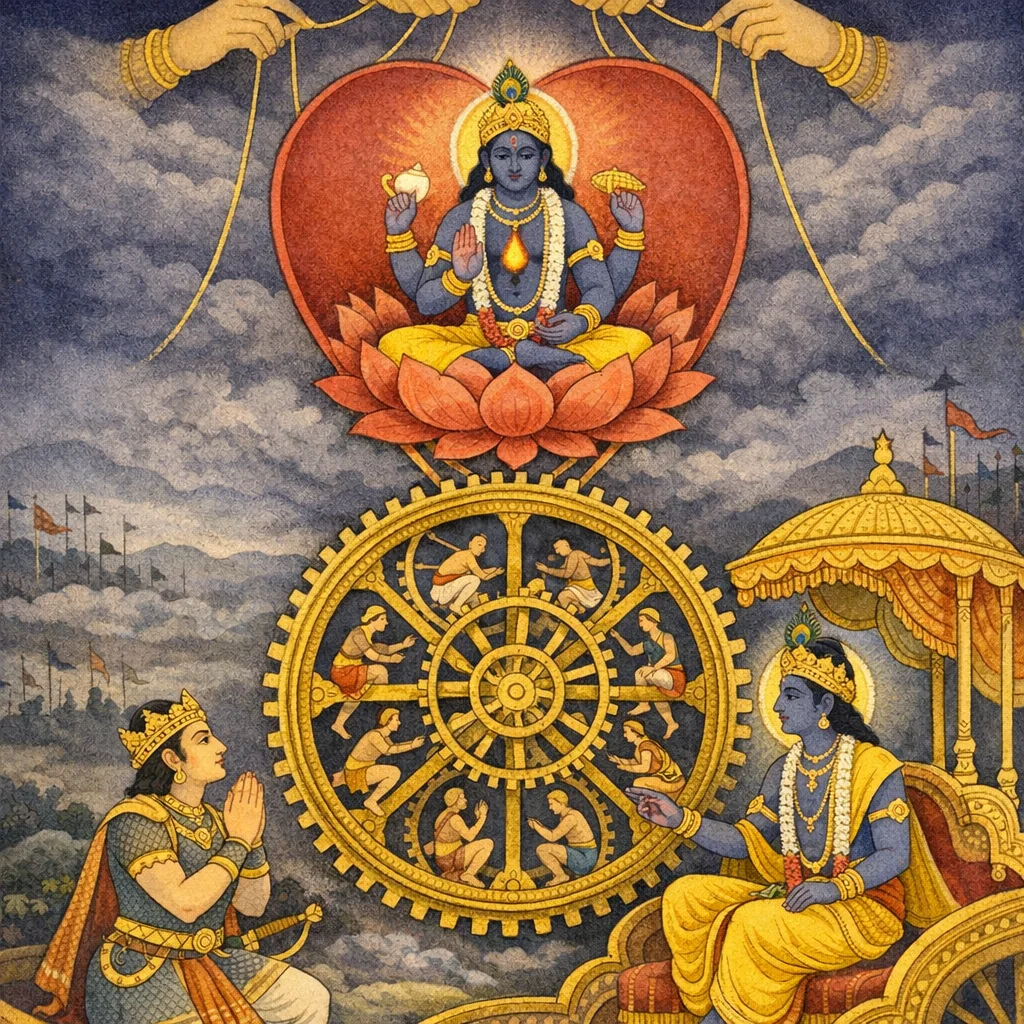
ईश्वरः सर्वभूतानां हृद्देशेऽर्जुन तिष्ठति । भ्रामयन्सर्वभूतानि यन्त्रारूढानि मायया ॥ १८.६१ ॥
īśvaraḥ sarvabhūtānāṁ hṛddeśe 'rjuna tiṣṭhati | bhrāmayan sarvabhūtāni yantrārūḍhāni māyayā || 18.61 ||

ഹേ അർജുന! ഈശ്വരൻ സർവഭൂതങ്ങളുടെയും ഹൃദയദേശത്തിൽ വസിക്കുന്നു; തന്റെ മായയാൽ യന്ത്രത്തിൽ കയറ്റിയിരിക്കുന്നവരെപ്പോലെ എല്ലാ ജീവികളെയും ഭ്രമിപ്പിച്ചുകൊണ്ട് ചലിപ്പിക്കുന്നു.
हे अर्जुन! ईश्वर समस्त प्राणियों के हृदय में स्थित है और अपनी माया से उन्हें यंत्र पर आरूढ़ की भाँति घुमाता है।
The Lord abides in the heart-region of all beings, O Arjuna, causing all beings to revolve, as if mounted on a machine, by (his) māyā.
The ‘machine’ (yantra) metaphor is interpreted variously: as the body-mind apparatus, or the causal network of guṇas and karma. ‘Māyā’ here often denotes divine power of manifestation and governance rather than illusion in a purely epistemic sense; schools differ on whether this implies determinism or a compatibilist model.
FAQs
The ‘machine’ image can be read as a model of how cognition and behavior are shaped by built-in tendencies and situational forces, encouraging humility and careful self-observation.
It asserts an indwelling divine principle coordinating the motion of embodied beings. Interpretations range from strong providential control to a view where divine presence underwrites order while individuals retain responsibility within karmic law.
As Krishna concludes his instruction, he situates Arjuna’s decision within a larger metaphysical framework: individual action occurs within divine immanence and the conditioned dynamics of prakṛti.
It can function as a contemplative prompt: treat the mind-body as an instrument that can be trained, and cultivate a sense of accountability coupled with awareness of systemic influences.