
Shloka 59
Moksha Sannyasa Yoga — Moksha Sannyasa Yoga
यदहंकारमाश्रित्य न योत्स्य इति मन्यसे । मिथ्यैष व्यवसायस्ते प्रकृतिस्त्वां नियोक्ष्यति ॥ १८.५९ ॥
yad ahaṅkāram āśritya na yotsya iti manyase | mithyaiṣa vyavasāyas te prakṛtis tvāṁ niyokṣyati || 18.59 ||

അഹങ്കാരത്തെ ആശ്രയിച്ച് ‘ഞാൻ യുദ്ധം ചെയ്യില്ല’ എന്ന് നീ കരുതുന്നുവെങ്കിൽ, ആ നിശ്ചയം വ്യർത്ഥമാണ്; നിന്റെ പ്രകൃതി നിന്നെ കര്മത്തിലേക്ക് തന്നെ നിയോഗിക്കും.
यदि तुम अहंकार का आश्रय लेकर यह मानते हो कि ‘मैं युद्ध नहीं करूँगा’, तो तुम्हारा यह निश्चय मिथ्या है; तुम्हारी प्रकृति तुम्हें कर्म में लगा देगी।
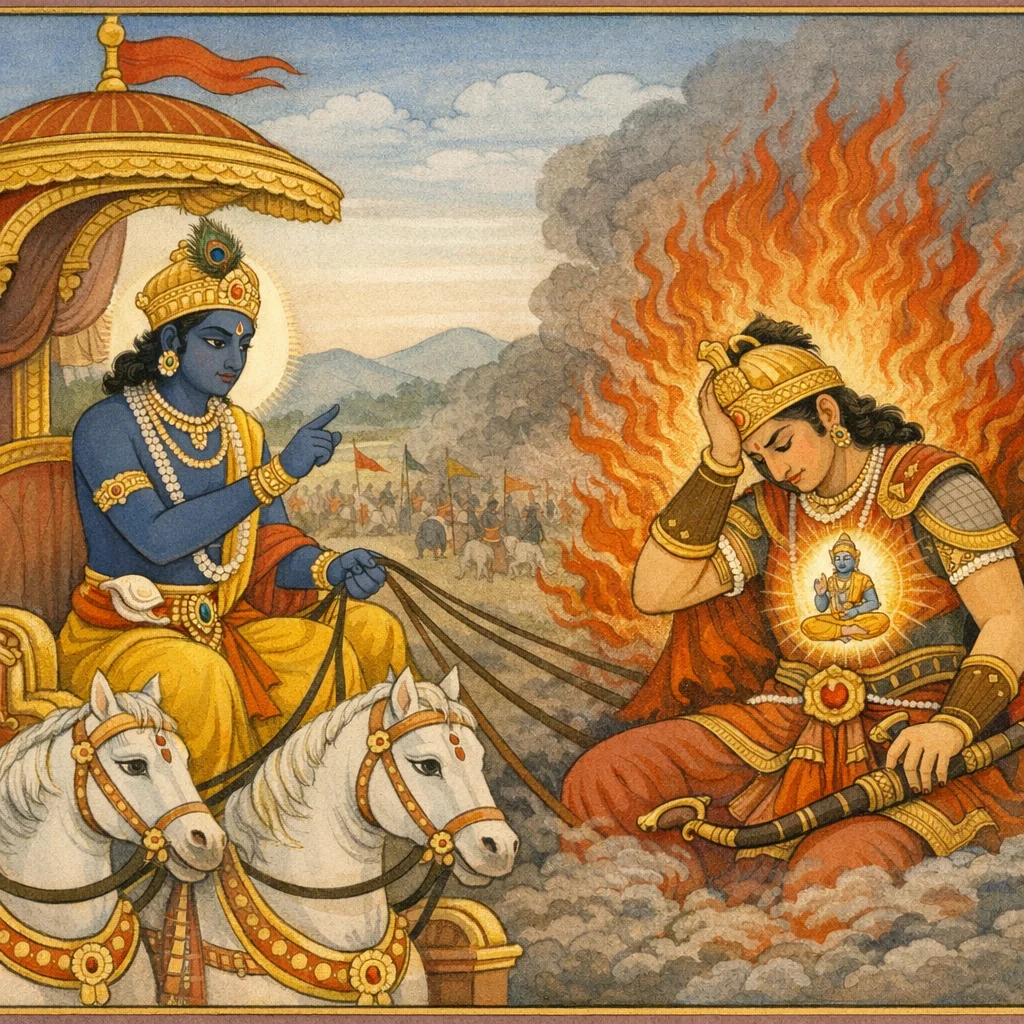
If, relying on egoism, you think ‘I will not engage in battle/action,’ this resolve of yours is mistaken; your nature will compel you into action.
‘योत्स्य’ historically refers to fighting in the epic setting, but many interpreters generalize it to ‘undertaking one’s duty-bound action.’ ‘प्रकृति’ is read either as one’s psycho-physical constitution shaped by guṇas and past habituation, or as the broader cosmic nature; both support the idea of compulsion through conditioned tendencies.
FAQs
The verse anticipates a conflict between conscious intention and ingrained disposition: even if one declares avoidance, habitual patterns and temperament can override stated plans, especially when the intention is motivated by ego-reactivity.
It implies that embodied agency is constrained by prakṛti (guṇa-conditioned nature). Genuine freedom is associated with insight that loosens identification with ego and conditioned impulses.
Krishna addresses Arjuna’s earlier reluctance by arguing that refusal is unstable if it contradicts Arjuna’s own warrior-social role and temperament within the epic framework.
It can be applied to behavior change: commitments that ignore deep conditioning often fail; sustainable change requires working with one’s dispositions through training, reflection, and supportive structures.