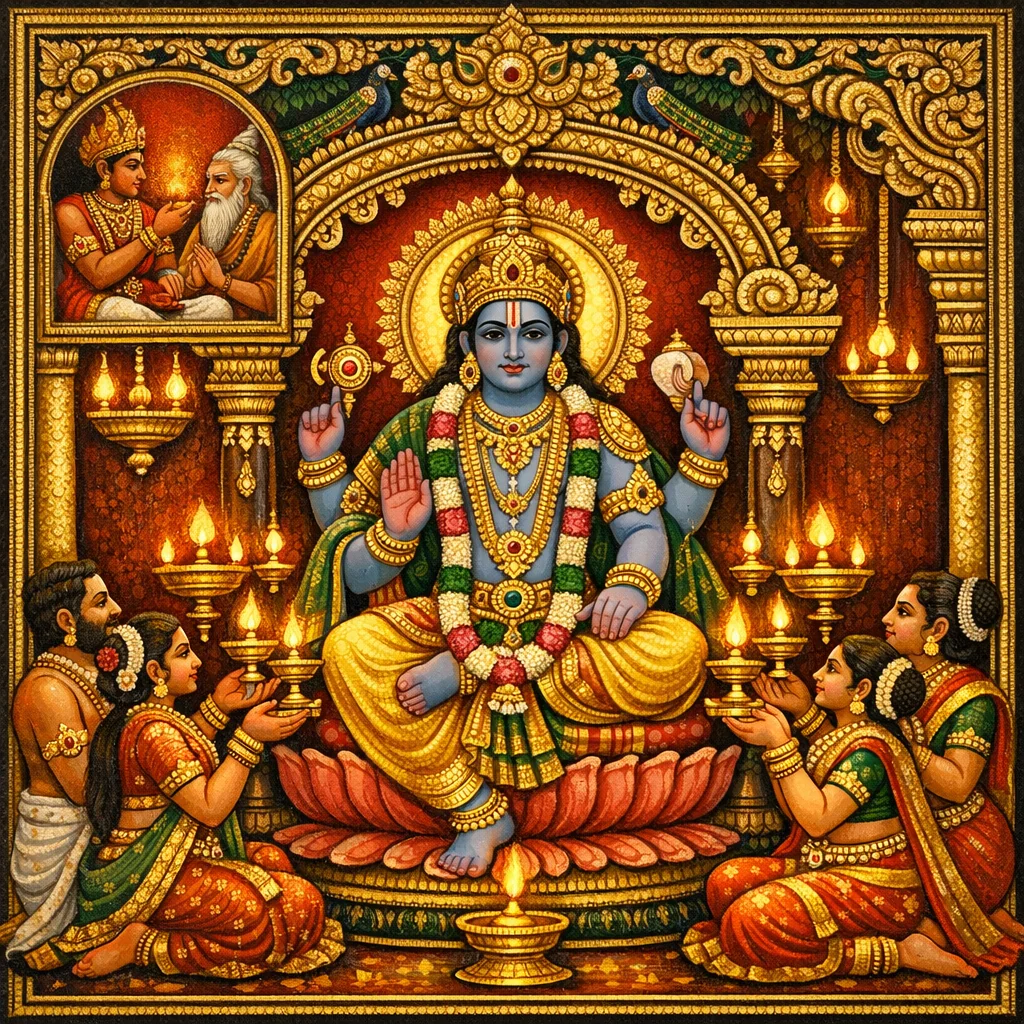
Adhyaya 200
Dīpadāna-vrata (The Vow of Offering Lamps)
ഭഗവാൻ അഗ്നി ദീപദാനവ്രതം ഭുക്തിയും മുക്തിയും നൽകുന്നതായി ഉപദേശിക്കുന്നു. ദേവാലയത്തിലോ ബ്രാഹ്മണന്റെ ഗൃഹത്തിലോ ഒരു വർഷം ദീപം അർപ്പിച്ച് തെളിയിച്ചാൽ സമഗ്രസമൃദ്ധി ലഭിക്കും; പ്രത്യേകിച്ച് ചാതുർമാസ്യത്തിലും കാർത്തികത്തിലും ഇതിന്റെ പുണ്യം അതുല്യം, വിഷ്ണുലോകപ്രാപ്തിയും സ്വർഗ്ഗഭോഗങ്ങളും നൽകുന്നു. തുടർന്ന് ലലിതയുടെ കഥയിൽ വിഷ്ണുമന്ദിരത്തിലെ ദീപവുമായി ബന്ധപ്പെട്ട ഉദ്ദേശമില്ലാത്ത ഒരു പ്രവൃത്തിയും മഹാഫലം നൽകി; അവൾ രാജകുലത്തിൽ പുനർജന്മം നേടി ദാമ്പത്യസമൃദ്ധിയും ലഭിച്ചു. ദീപമോഷണം കടുത്ത നിന്ദ്യമാണ്—മൂക/ജഡ ജന്മവും അന്ധകാര-നരകപാതവും ഫലം. ഇന്ദ്രിയാസക്തി, ദുഷ്കാമം, പരസ്ത്രീഗമനം എന്നിവ ഉപേക്ഷിച്ച് ഹരിനാമജപവും ലളിതമായ അർപ്പണമായി ദീപദാനവും ചെയ്യണമെന്ന് ഉപദേശം. അവസാനം ദീപദാനം എല്ലാ വ്രതഫലങ്ങളും വർധിപ്പിക്കുന്നതും, ഈ ഉപദേശം ശ്രവിച്ച് അനുഷ്ഠിച്ചാൽ ഉയർന്ന ഗതി ലഭിക്കുന്നതുമെന്നു പുനഃസ്ഥാപിക്കുന്നു.
Shlokas
No shlokas available for this adhyaya yet.
Frequently Asked Questions
Offer a lamp—ideally sustained as a yearly practice—in a deity’s shrine (especially Viṣṇu’s) or a brāhmaṇa’s home; the act is taught as a high-merit vrata granting prosperity, longevity, clarity of sight, and higher worlds, ultimately supporting liberation.
Kārttika is presented as a peak season of ritual potency: lamp-giving then is said to yield exceptional heavenly results, surpassing ordinary times and amplifying vrata-fruit.
It demonstrates that even an unpremeditated or indirect contribution to a lamp-offering in a Viṣṇu temple can generate powerful puṇya, underscoring the vow’s efficacy and the sacredness of temple-based offerings.
The chapter condemns dīpa-theft with severe karmic outcomes and uses hell imagery to caution against negligence, sense-addiction, and sexual misconduct (adultery), redirecting the practitioner toward dharmic restraint and Hari-nāma.