Adhyaya 186
Daśamī-vrata (Observance for the Tenth Lunar Day)
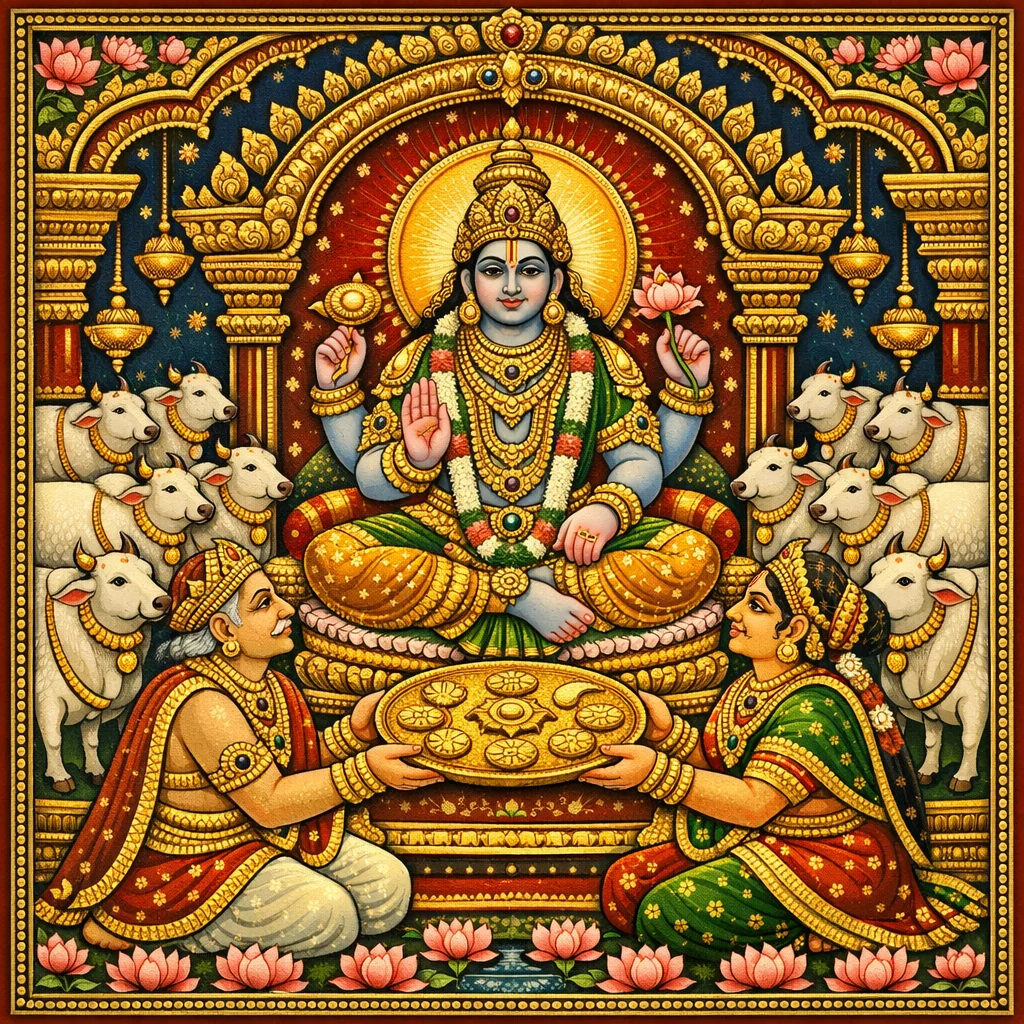
നവമീ-വ്രതങ്ങൾ അവസാനിച്ചതിന് ശേഷം വ്രതഖണ്ഡത്തിലെ തിഥി-ആധാരിത ക്രമത്തിൽ ഭഗവാൻ അഗ്നി ദശമീ-വ്രതം ഉപദേശിക്കുന്നു. ഇതിന്റെ ഫലങ്ങൾ പുരുഷാർത്ഥഭാഷയിൽ—ധർമ്മം, കാമം എന്നിവയും ബന്ധപ്പെട്ട ലക്ഷ്യങ്ങളും—എന്ന് വ്യക്തമാക്കുകയും, ആചാരനിയമം നൈതിക-ആധ്യാത്മിക പുണ്യത്തിനൊപ്പം ക്രമബദ്ധമായ ലൗകിക സമൃദ്ധിക്കും ഉപകരണമാണെന്ന് കാണിക്കുകയും ചെയ്യുന്നു. ദശമീനാൾ ഏകഭക്തം (ഒരിക്കൽ മാത്രം ഭക്ഷണം) ആചരിക്കണം; നിയന്ത്രിത ആഹാരം ശുദ്ധീകരണ മാർഗമാണെന്ന് പറയുന്നു. വ്രതം ദാനത്തോടെ സമാപിക്കുന്നു—പത്ത് പശുക്കളുടെ ദാനം—അങ്ങനെ സ്വകാര്യ തപസ്സ് പൊതുഹിതത്തോടെ പൂർണ്ണമാകുന്നു. കൂടാതെ പ്രതിഷ്ഠ സൂചിപ്പിക്കുന്ന ദാനം: സ്വർണ്ണത്തിൽ നിർമ്മിച്ച അഷ്ടദിക്കുകൾ (ദിക്) അർപ്പിക്കൽ; ഇതിലൂടെ ദാതാവിന് ബ്രാഹ്മണരിൽ പ്രഭുത്വസമമായ മാനമുണ്ടാകുമെന്ന് പറയുന്നു. ഇങ്ങനെ നിയയം, തിഥിയുടെ പവിത്രകാലം, ദാനം എന്നിവ ഒരൊറ്റ ധാർമ്മിക പദ്ധതിയായി ബന്ധിപ്പിക്കുന്നു।
Shlokas
No shlokas available for this adhyaya yet.
Frequently Asked Questions
The practitioner observes ekabhakta on Daśamī—taking a single meal—establishing dietary restraint as the vow’s primary discipline.
Upon completion of the vow, one should gift ten cows (daśa-dhenu-dāna), making dana the culminating act that externalizes the merit of the observance.
The text states that gifting the directions (dik) fashioned in gold results in becoming a lord among Brāhmaṇas, indicating social-spiritual elevation linked to high-value symbolic dana.
By combining tithi-discipline (Daśamī), bodily restraint (ekabhakta), and compassionate redistribution (dana), the vrata trains self-control and generosity—core dharmic virtues that support both worldly order and inner purification.