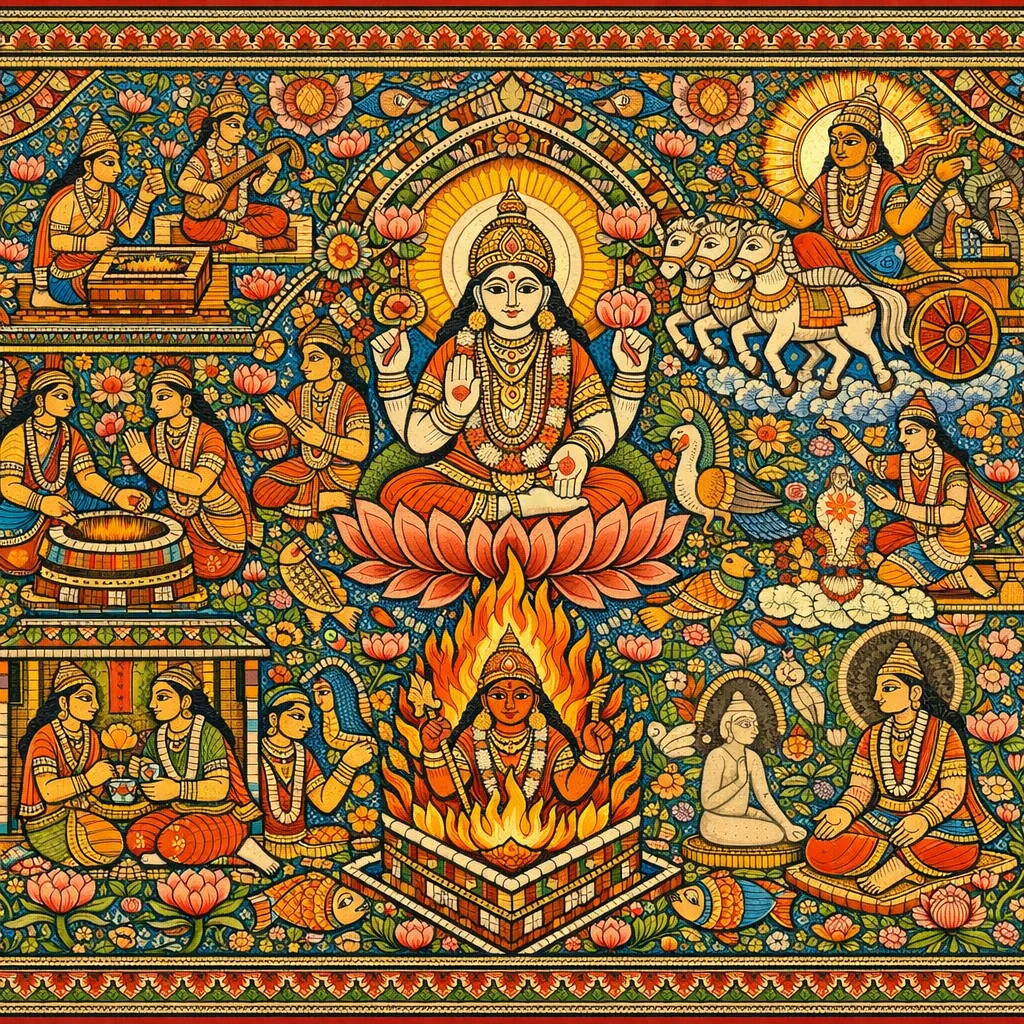
Adhyaya 40
Isha Upanishad -- the crown jewel of the Vajasaneyi Samhita on the nature of the Self and renunciation.
Mantras
Mantra 1
ई॒शा वा॒स्य॒मि॒दᳪ सर्वं॒ यत्किं च॒ जग॑त्यां॒ जग॑त् । तेन॑ त्य॒क्तेन॑ भुञ्जीथा॒ मा गृ॑ध॒ः कस्य॑ स्वि॒द्धन॑म्
All this—whatsoever moveth on the earth—must be covered by the Lordship. By that renounced thou shouldst enjoy; covet not the wealth of any man whatsoever.
Mantra 2
कु॒र्वन्ने॒वेह कर्मा॑णि जिजीवि॒षेच्छ॒तᳪ समा॑: । ए॒वं त्वयि॒ नान्यथे॒तो॒ऽस्ति॒ न कर्म॑ लिप्यते॒ नरे॑
Doing verily works here, one should desire to live a hundred years. Thus it is in thee—there is no other way than this: work cleaveth not to a man.
Mantra 3
अ॒सु॒र्या नाम॑ ते लो॒का अ॒न्धेन॒ तम॒सावृ॑ताः । ताँस्ते प्रेत्यापि॑ गच्छन्ति॒ ये के चा॑त्म॒हनो॒ जना॑:
Sunless, verily, are those worlds, and covered over with blind darkness; thither, after death, they go—whatsoever men are slayers of the Self.
Mantra 4
अने॑ज॒देकं॒ मन॑सो॒ जवी॑यो नैन॑द्दे॒वा आ॑प्नुव॒न् पूर्व॒मर्श॑त् । तद्धाव॑तो॒ऽन्यानत्ये॑ति॒ तिष्ठ॒त्तस्मि॑न्न॒पो मा॑त॒रिश्वा॑ दधाति
Unmoving, it is one; swifter than the mind. The gods reached it not, for it went before. Standing, it outstrippeth others that run: in it Mātariśvan setteth the waters.
Mantra 5
तदे॑जति॒ तन्नैज॑ति॒ तद्दू॒रे तद्व॑न्ति॒के । तद॒न्तर॑स्य॒ सर्व॑स्य॒ तदु॒ सर्व॑स्यास्य बाह्य॒तः
It moveth; it moveth not. It is far, and it is near. It is within all this; and it is also without all this.
Mantra 6
यस्तु सर्वा॑णि भू॒तान्या॒त्मन्ने॒वानु॒पश्य॑ति । स॒र्व॒भू॒तेषु॑ चा॒त्मानं॒ ततो॒ न वि चि॑कित्सति
But he who beholdeth all beings in the Self alone, and the Self in all beings—thereafter he doubteth not.
Mantra 7
यस्मि॒न्त्सर्वा॑णि भू॒तान्यात्मै॒वाभू॑द्विजान॒तः । तत्र॒ को मोह॒: कः शोक॑ एक॒त्वम॑नु॒पश्य॑तः
In him, for the man of understanding, all beings have verily become the Self: what delusion, what grief can there be for him who thus beholds unity?
Mantra 8
स पर्य॑गाच्छु॒क्रम॑का॒यम॑व्र॒णम॑स्नावि॒रᳪ शु॒द्धमपा॑पविद्धम् । क॒विर्म॑नी॒षी प॑रि॒भूः स्व॑य॒म्भूर्या॑थातथ्य॒तोऽर्था॒न् व्य॒दधाच्छाश्व॒तीभ्य॒: समा॑भ्यः
He hath encompassed all—bright, bodiless, without wound, without sinews, pure, unpierced by evil; the Seer, the Thinker, the All-surpassing, self-existent—he, according to the truth of things, hath duly ordered the objects for everlasting years.
Mantra 9
अ॒न्धं तम॒: प्रवि॑शन्ति॒ येऽसं॑भूतिमु॒पास॑ते । ततो॒ भूय॑ इव॒ ते तमो॒ य उ॒ सम्भू॑त्याᳪ र॒ताः
Into blind darkness enter they that worship non-becoming; and, as it were, into yet greater darkness they that delight in becoming.
Mantra 10
अ॒न्यदे॒वाहुः स॑म्भ॒वाद॒न्यदा॑हु॒रस॑म्भवात् । इति॑ शुश्रुम॒ धीरा॑णां॒ ये न॒स्तद्वि॑चचक्षि॒रे
One thing, indeed, they say, is obtained from becoming; another, they say, from non-becoming: thus have we heard from the wise who have clearly discerned it unto us.
Mantra 11
सम्भू॑तिं च विना॒शं च॒ यस्तद्वेदो॒भय॑ᳪ स॒ह । वि॒ना॒शेन॑ मृ॒त्युं ती॒र्त्वा सम्भू॑त्या॒मृत॑मश्नुते
He who knoweth both becoming and destruction together—having crossed death by destruction, he attaineth immortality by becoming.
Mantra 12
अ॒न्धं तम॒ः प्रवि॑शन्ति॒ येऽवि॑द्यामु॒पास॑ते । ततो॒ भूय॑ इव॒ ते तमो॒ य उ॑ वि॒द्याया॑ᳪ र॒ताः ॥
Into blind darkness enter they that worship Ignorance; and, as it were, into yet greater darkness than that go they who are devoted unto Knowledge alone.
Mantra 13
अ॒न्यदे॒वाहुर्वि॒द्याया॑ अ॒न्यदा॑हु॒रवि॑द्यायाः । इति॑ शुश्रुम॒ धीरा॑णां॒ ये न॒स्तद्वि॑चचक्षि॒रे ॥
One thing, indeed, they say, is obtained from Knowledge, and another, they say, from Ignorance. Thus have we heard from the wise who have clearly expounded this unto us.
Mantra 14
वि॒द्यां चावि॑द्यां च॒ यस्तद्वेदो॒भय॑ᳪ स॒ह । अवि॑द्यया मृ॒त्युं ती॒र्त्वा वि॒द्यया॒ऽमृत॑मश्नुते ॥
He who knoweth both Knowledge and Ignorance together—by Ignorance having crossed beyond death, by Knowledge he attaineth immortality.
Mantra 15
वा॒युरनि॑लम॒मृत॒मथे॒दं भस्मा॑न्त॒ᳪ शरी॑रम् । ओ३म् क्रतो॑ स्मर । क्लि॒बे स्म॑र । कृ॒तᳪ स्म॑र ॥
Air is the immortal breath; then this body endeth in ashes. Om! O Will, remember! O faint heart, remember! Remember what hath been done!
Mantra 16
अग्ने॒ नय॑ सु॒पथा॑ रा॒ये अ॒स्मान्विश्वा॑नि देव व॒युना॑नि वि॒द्वान् । यु॒यो॒ध्यस्मज्जु॑हुरा॒णमेनो॒ भुयि॑ष्ठां ते॒ नम॑ उक्तिं विधेम ॥
O Agni, lead us by the good path unto wealth, O god, thou that knowest all ordinances; remove from us the sin that leadeth us astray: to thee we would offer most abundant homage of speech.
Mantra 17
हि॒र॒ण्मये॑न॒ पात्रे॑ण स॒त्यस्यापि॑हितं॒ मुख॑म् । यो॒ऽसावा॑दि॒त्ये पुरु॑ष॒: सोऽसाव॒हम् । ओ३म् खं ब्रह्म॑
With a vessel of gold is the face of Truth covered over. That Person who is yonder in the Sun—He indeed am I. Oṃ: the Sky is Brahman.
Frequently Asked Questions
It is the Īśāvāsya Upaniṣad placed inside the Saṃhitā itself, giving a direct Upaniṣadic teaching on Brahman, renunciation, and liberation within a ritual Vedic corpus.
No. It teaches that one should live fully while doing rightful works, but without possessiveness; action is to be integrated with inner knowledge rather than treated as the final goal.
The seeker prays to Sūrya/Savitṛ (often addressed as Pūṣan) to remove the radiant veil that hides satya, so the real face of Truth may be directly seen—symbolizing the final unveiling of liberating realization.