Dashati 4
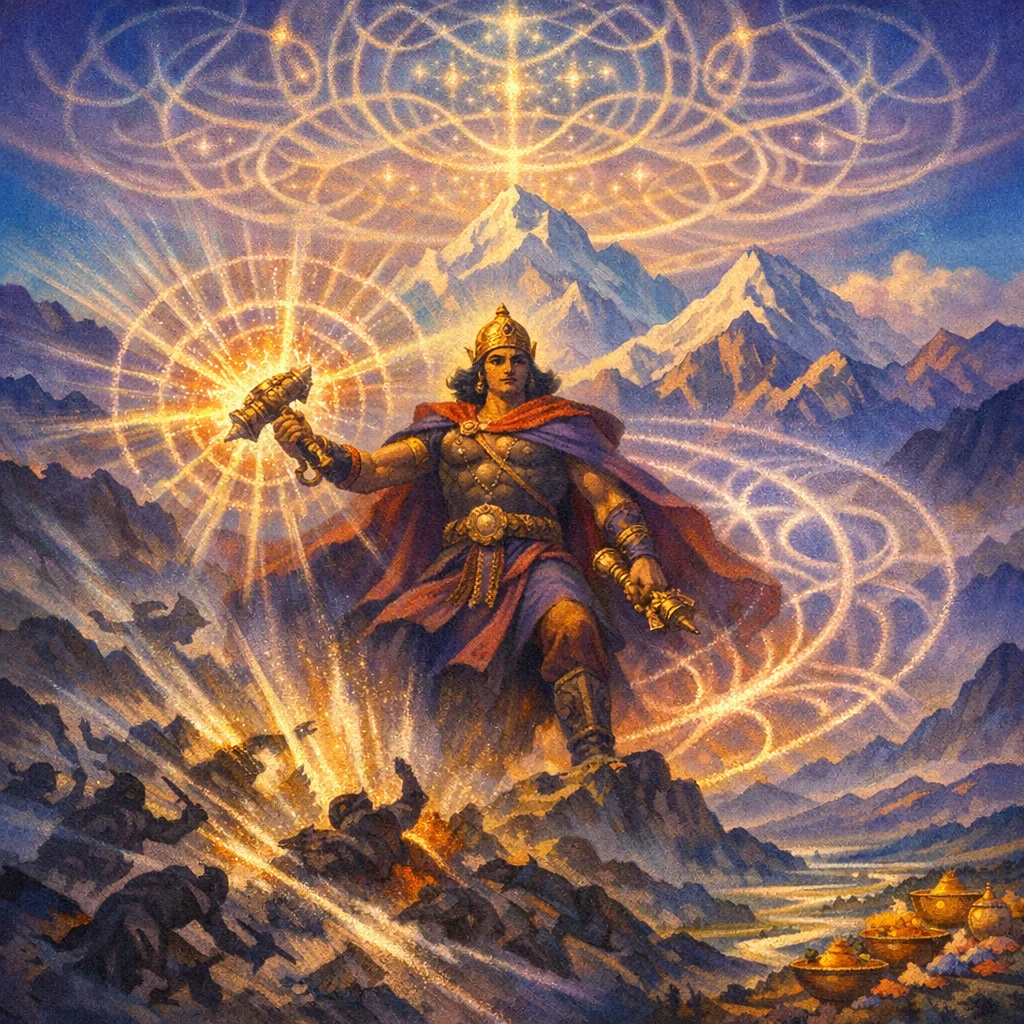
Aindra praise of Indra as the force that removes obstruction and secures victory, stability, and cosmic provisioning for the sacrifice
Indra
Vigorous triumphant and stabilizing (heroic Aindra tone)
Vasiṣṭha
Soma-yajña: Indra-focused stotras supporting Soma offering and the overcoming of antarāyas (ritual obstacles)
Mantras
Mantra 1
अव द्रप्सो अंशुमतीमतिष्ठदीयानः कृष्णो दशभिः सहस्रैः आवत्तमिन्द्रः शच्या धमन्तमप स्नीहितिं नृमणा अधद्राः
Downward the drop passed beyond the radiant (Soma); the dark (foe), advancing with ten thousand (hosts): Indra, by his power, turned him back, blowing away the obstruction; the manly-minded (god) smote him down.
Mantra 2
वृत्रस्य त्वा श्वसथादीषमाणा विश्वे देवा अजहुर्ये सखायः मरुद्भिरिन्द्र सख्यं ते अस्त्वथेमा विश्वाः पृतना जयासि
When thou wast panting from the (combat with) Vṛtra, all the gods, who are thy friends, left thee; let thy friendship be with the Maruts, O Indra; then shalt thou conquer all these battles.
Mantra 3
विधुं दद्राणं समने बहूनां युवानं सन्तं पलितो जगार देवस्य पश्य काव्यं महित्वाद्या ममार स ह्यः समान
Behold the divine mystery: the impetuous (one), rushing in the contest of many, though youthful, the grey-haired has awakened; by greatness (is shown) the god’s poetic wisdom: to-day he has died, yet yesterday he was the same.
Mantra 4
त्वं ह त्यत्सप्तभ्यो जायमानो ऽशत्रुभ्यो अभवः शत्रुरिन्द्र गूढे द्यावापृथिवी अन्वविन्दो विभुमद्भ्यो भुवनेभ्यो रणं धाः
Thou verily, Indra, being born from the seven, becamest a foe to the foes, but to the unhostile a friend; hidden in heaven and earth thou didst discover them, and from the ample worlds thou didst establish the battle (wherein the adversaries are overthrown).
Mantra 5
मेडिं न त्वा वज्रिणं भृष्टिमन्तं पुरुधस्मानं वृषभं स्थिरप्स्नुम् करोष्यर्यस्तरुषीर्दुवस्युरिन्द्र द्युक्षं वृत्रहणं गृणीषे
As a pillar (is firm), so do I celebrate thee, Indra, the thunderer, bright-weaponed, of manifold might, the bull, steadfast in exploit: thou makest the worshipper, the Arya who serves thee, to prevail; thee, the splendid, the slayer of Vṛtra, I praise.
Mantra 6
प्र वो महे महेवृधे भरध्वं प्रचेतसे प्र सुमतिं कृणुध्वम् विशः पूर्वीः प्र चर चर्षणिप्राः
Bring ye forth (your praises) to the great, to the increaser of greatness, to the wise; procure ye for yourselves his favourable mind: advance, ye many peoples, ye that sustain the tribes of men.
Mantra 7
शुनं हुवेम मघवानमिन्द्रमस्मिन्भरे नृतमं वाजसातौ शृण्वन्तमुग्रमूतये समत्सु ध्नन्तं वृत्राणि सञ्जितं धनानि
Auspiciously let us invoke the bountiful Indra, in this conflict, the most heroic in the winning of the prize; the fierce, who heareth (our praise) for our succour in battles, who smiteth the Vṛtras, and winneth riches.
Mantra 8
उदु ब्रह्माण्यैरत श्रवस्येन्द्रं समर्ये महया वसिष्ठ आ यो विश्वानि श्रवसा ततानोपश्रोता म ईवतो वचांसि
Up have the sacred hymns been raised for fame; (raise ye) Indra in the encounter with lofty praise, O Vasiṣṭha: may he, who hath spread all renown, hearken to my eager words.
Mantra 9
चक्रं यदस्याप्स्वा निषत्तमुतो तदस्मै मध्विच्चच्छद्यात् पृथिव्यामतिषितं यदूधः पयो गोष्वदधा ओषधीषु
When his wheel is set in the waters, then may it for him be covered even with sweetness; when his udder is fixed upon the earth, (then) milk didst thou place in the cows, and in the plants.
Frequently Asked Questions
It celebrates Indra as the decisive power who drives away obstruction and hostility, ensuring the sacrifice proceeds successfully and results in strength and prosperity.
They frame ritual and life impediments as forces to be blown away or struck down by Indra, so the yajña and its benefits are not blocked.
It portrays divine ordering that makes sweetness and milk available—symbolizing the arranged abundance that supports the Soma rite and the sacrificer’s welfare.