Adhyaya 351
स्त्रीलिङ्गशब्दसिद्धरूपम् (The Established Forms of Feminine Nouns)
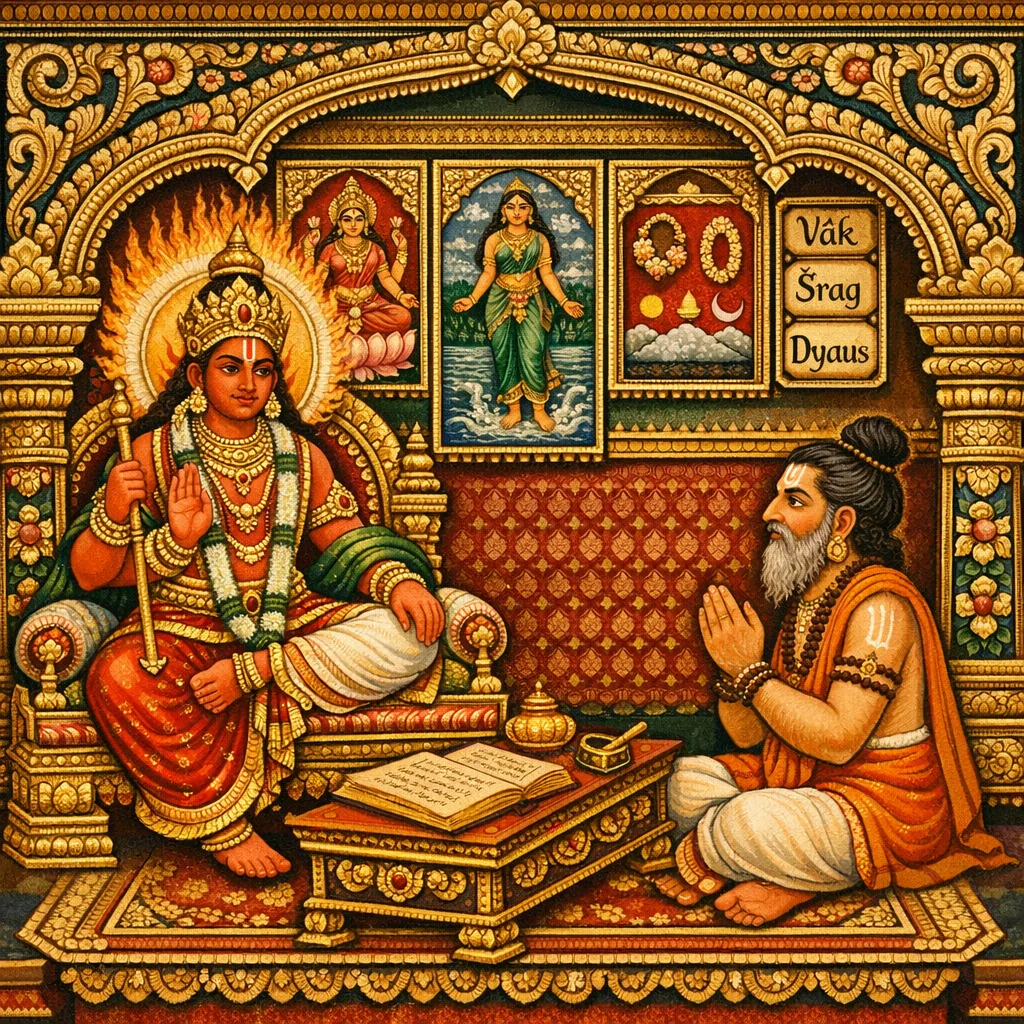
ສືບຕໍ່ສາຍວິຍາກອນ ຫຼັງຈາກຮູບນາມເພດຊາຍສຳເລັດ ບົດນີ້ຫັນມານຳເສີນຮູບສຳເລັດຂອງນາມເພດຍິງ (śabda-siddha-rūpa) ແບບກະທັດຮັດ ເນັ້ນການທ່ອງຈຳ. ສະກັນດະລຽນແບບການຜັນວິພັດ ເລີ່ມຈາກຮາກ ā ຕົວຢ່າງ Ramā ແລ້ວຂະຫຍາຍໄປຫາກຸ່ມນາມເພດຍິງອື່ນໆ ແລະຮູບຜິດປົກກະຕິ: ຮາກ ī ເຊັ່ນ nadī, ຄຳຍົກຍ້ອງ/ຄຳສັບເຊັ່ນ śrī ແລະ strī (ມີຮູບສະຫຼັບທີ່ຮັບຮອງ), ນາມຮາກພະຍັນຊະນະ ແລະນາມພິເສດ vāk, śrag, dyaus, samit, dṛṣat. ຍັງບັນທຶກຮູບສັບພະນາມ/ຊີ້ບອກ (asau/amū) ແລະຮູບທີ່ອະນຸຍາດ (śriyai/śriye; bhavatī → bhavanty). ທັງໝົດເປັນການສອນແບບຈື່ຈຳ ເພື່ອມາດຕະຖານການໃຊ້ພາສາໃນການຮຽນ ອະທິບາຍ ແລະພິທີກຳ—ສະທ້ອນການປະສານວິຍາກອນວິຊາການກັບຈຸດໝາຍພຸຣານະເພື່ອຄວາມຊັດເຈນທາງທຳມະ ແລະຄວາມສັດຊື່ຕໍ່ຄຳພີ.
Shlokas
No shlokas available for this adhyaya yet.
Frequently Asked Questions
It emphasizes standardized, memorisable case-form listings for feminine nouns—starting with the Ramā ā-stem paradigm, then mapping other feminine stems and irregulars (nadī, śrī, strī, vāk, śrag, dyaus) and recording sanctioned alternants (e.g., śriyai/śriye; bhavatī → bhavanty).
By ensuring grammatical correctness in sacred speech—scripture study, mantra recitation, and ritual address—this technical training supports dharma through precision, protecting meaning and supporting disciplined (śāstra-aligned) practice.