Adhyaya 206
Agastyārghyadāna-kathana (On the Giving of the Agastya Honor-Offering)
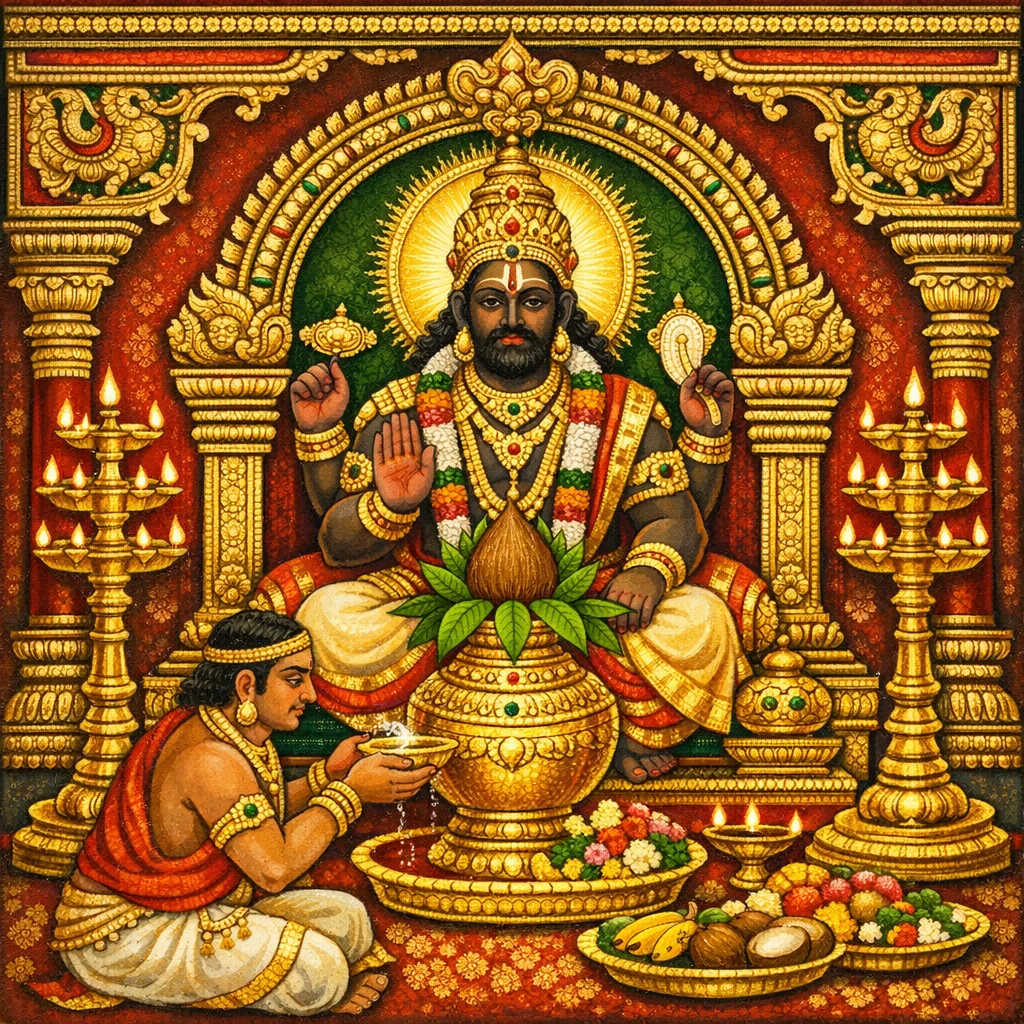
ພຣະອັກນີກໍານົດວຣະຕະບູຊາທີ່ມີອະກັສຕະຍະເປັນສູນກາງ ໂດຍລະບຸຊັດວ່າອະກັສຕະຍະແມ່ນພຣະວິສນຸ ເພື່ອເຊື່ອມການນັບຖືລະດັບລິສີກັບການບັນລຸຮາຣິ. ພິທີມີເວລາກໍານົດ 3 ມື້: ກ່ອນຕາເວັນຂຶ້ນ ອົດອາຫານ ບູຊາ ແລະຖວາຍອາຣະຄະຍະແກ່ອະກັສຕະຍະ. ໃນເວລາປຣະໂດສະ ຕິດຕັ້ງຮູບທໍາດ້ວຍດອກຄາຊະໃນຫມໍ້ນ້ໍາ (ຄຸມພະ/ຄຸມບະ) ແລ້ວຢາມຄ່ໍາຄືນ (ປຣະຈາກາຣ). ຕອນເຊົ້າຖວາຍອາຣະຄະຍະໃກ້ແຫຼ່ງນ້ໍາ ພ້ອມບົດສັນລະເສີນການກະທໍາຕໍານານຂອງອະກັສຕະຍະ (ເຮັດໃຫ້ທະເລແຫ້ງ; ທໍາລາຍອາຕາປິ–ວາຕາປິ) ແລະຂໍພອນກັບຄວາມສຸກດີໃນປະໂລກ. ບົດນີ້ລາຍລະອຽດຂອງເຄື່ອງບູຊາແລະທານ: ໄມ້ຈັນ, ພວງດອກໄມ້, ທູບ, ຜ້າ, ເຂົ້າ/ທັນຍາຫານ, ໝາກໄມ້, ຄໍາ, ແລະຖວາຍຫມໍ້ນ້ໍາແກ່ພຣາຫມັນ ພ້ອມການເລີ້ຍງອາຫານແລະດັກຊິນາ (ງົວ, ເຄື່ອງນຸ່ງ, ຄໍາ). ກ່າວເຖິງຄວາມແຕກຕ່າງຂອງມັນຕຣາ ແລະກົດວ່າສໍາລັບແມ່ຍິງແລະຊູດຣະ ຄວນເຮັດໂດຍບໍ່ໃຊ້ມັນຕຣາເວດ. ການຖວາຍອາຣະຄະຍະຕໍ່ເນື່ອງ 7 ປີ ໃຫ້ຜົນເປັນຄວາມຮັ່ງມີຄົບຖ້ວນ—ຜູ້ບໍ່ມີລູກໄດ້ລູກ ແລະສາວນ້ອຍໄດ້ສາມີເປັນກະສັດ.
Shlokas
No shlokas available for this adhyaya yet.
Frequently Asked Questions
Fasting and worship precede the arghya; at pradoṣa a kāśa-flower image is placed in a ghaṭa/kumbha, followed by night vigil; in the morning the arghya is offered near water, then tyāga (grain, fruit, libation) and charitable gifts/feeding of brāhmaṇas conclude the rite.
Sandalwood, garlands, incense, cloth, rice/grains, fruits, gold (and in an expanded description: five gems, gold and silver, seven grains, curd, sandalwood), plus a pot-gift to a brāhmaṇa and dakṣiṇā including cow, garments, and gold.
The rite explicitly aims at attaining Hari through Agastya-worship (mukti-oriented devotion) while also promising dharma-anchored prosperity—health, fortune, desired boons, lineage, and marital success—thus integrating dharma, artha, kāma, and mokṣa.
It states that for women and Śūdras the rite is ‘non-Vedic,’ i.e., performed without Vedic mantras, indicating an inclusive procedural adaptation while preserving the devotional and charitable structure.
By giving the arghya for seven years, ‘all obtain everything’: a childless woman gains sons and good fortune, and a maiden gains a husband of royal birth; the arghya is also described in some readings as imperishable and mind-fulfilling.