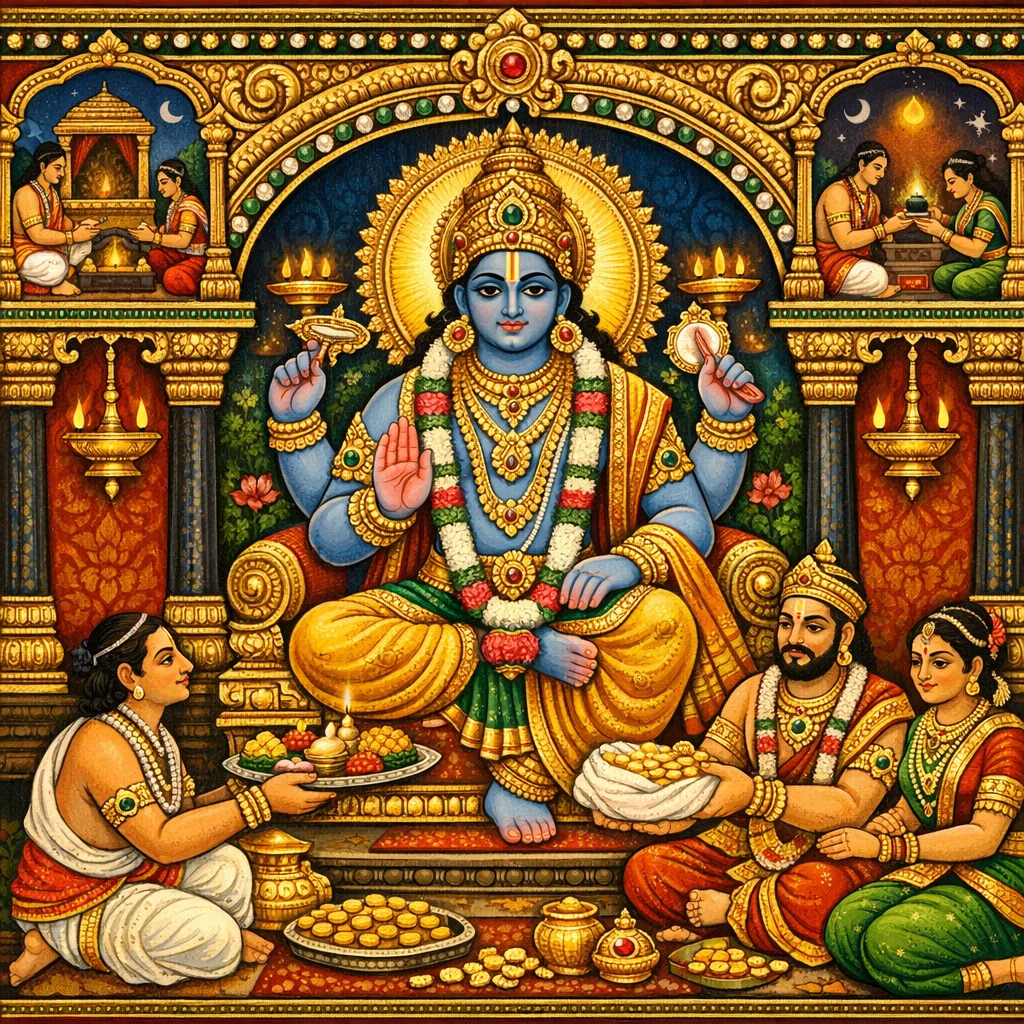
Adhyaya 204
Chapter 204 — मासोपवासव्रतम् (The Vow of Month-long Fasting)
ພຣະອັກນີສອນວະສິດຖະເຖິງວຣະຕະ «ມາໂສປະວາສະ» ເປັນວຣະຕະອັນປະເສີດສຸດ ຄວນປະຕິບັດຫຼັງພິທີບູຊາແບບໄວສະນະວະ ແລະໄດ້ຮັບອະນຸຍາດຈາກຄູບາອາຈານ. ຜູ້ຖືວຣະຕະກວດຄວາມສາມາດດ້ວຍຕະປະສະຍາກ່ອນ (ເຊັ່ນ ກຣິຈຊຣະ) ແລະຂະຫຍາຍສິດໃຫ້ວານະປຣັສຖະ ນັກບຳເນັດ ແລະແມ່ຍິງ (ລວມທັງແມ່ໝ້າຍ). ເລີ່ມໃນສຸກກະປັກຂອງເດືອນອາສະວິນ ຫຼັງອົບອາຫານໃນວັນເອກາດະຊີ ແລະດຳເນີນ 30 ມື້ ເປັນການນະມັດສະການພຣະວິສນຸຈົນຮອດ «ອຸດຖານ» (ການຕື່ນ) ຂອງພຣະອົງ. ຜູ້ຖືວຣະຕະບູຊາພຣະວິສນຸວັນລະສາມເທື່ອ ພ້ອມອາບນ້ຳສາມເທື່ອ ຖວາຍເຄື່ອງບູຊາ ສວດມົນ ແລະພິຈາລະນາສະມາທິ ພ້ອມຮັກສາວາຈາ ຄວາມບໍ່ຍຶດຕິດ ແລະຂໍ້ຫ້າມການສຳຜັດ/ພຶດຕິກຳ. ໃນວັນດວາດະຊີ ສິ້ນສຸດດ້ວຍການບູຊາ ເລີ້ຍງພຣາຫມະນ ໃຫ້ທັກຊິນາ ແລະເຮັດພາຣະນາໃຫ້ຖືກຕ້ອງ. ບົດນີ້ລະບຸທານມາດຕະຖານ (ໂດຍເດັ່ນເປັນຊຸດ 13) ແລະຜົນບຸນ: ຄວາມບໍລິສຸດ ຍົກສົງຕະກູນ ແລະໄດ້ເຖິງວິສນຸໂລກ; ຖ້າເປັນລົມຫຼືຫມົດສະຕິ ອະນຸຍາດໃຫ້ດື່ມນົມ ແລະກີ ເພາະເປັນຮະວິສທີ່ພຣາຫມະນຮັບຮອງ.
Shlokas
No shlokas available for this adhyaya yet.
Frequently Asked Questions
It is undertaken in the bright fortnight of Āśvina, after fasting on Ekādaśī, and is maintained for up to thirty days, oriented toward worship of Viṣṇu until his Utthāna.
After assessing personal capacity via austerities like kṛcchra, the vow is prescribed for vānaprasthas, ascetics (yatis), and women—explicitly including widows.
Thrice-daily worship of Viṣṇu, triple bathing, offering fragrance and flowers, recitation of Viṣṇu hymns/praises, and meditation, accompanied by restraints on speech and desire for gain.
The vow is completed by worship, feeding brāhmaṇas on Dvādaśī, giving dakṣiṇā and prescribed gifts, and then performing pāraṇa—the regulated, proper breaking of the fast.
No. The chapter states that milk and ghee given to a fainting vow-holder do not violate the vow, as they are treated as havis (an oblation) approved by brāhmaṇas.