Adhyaya 201
Worship of the Nine Vyūhas (Nava-vyūha-arcana)
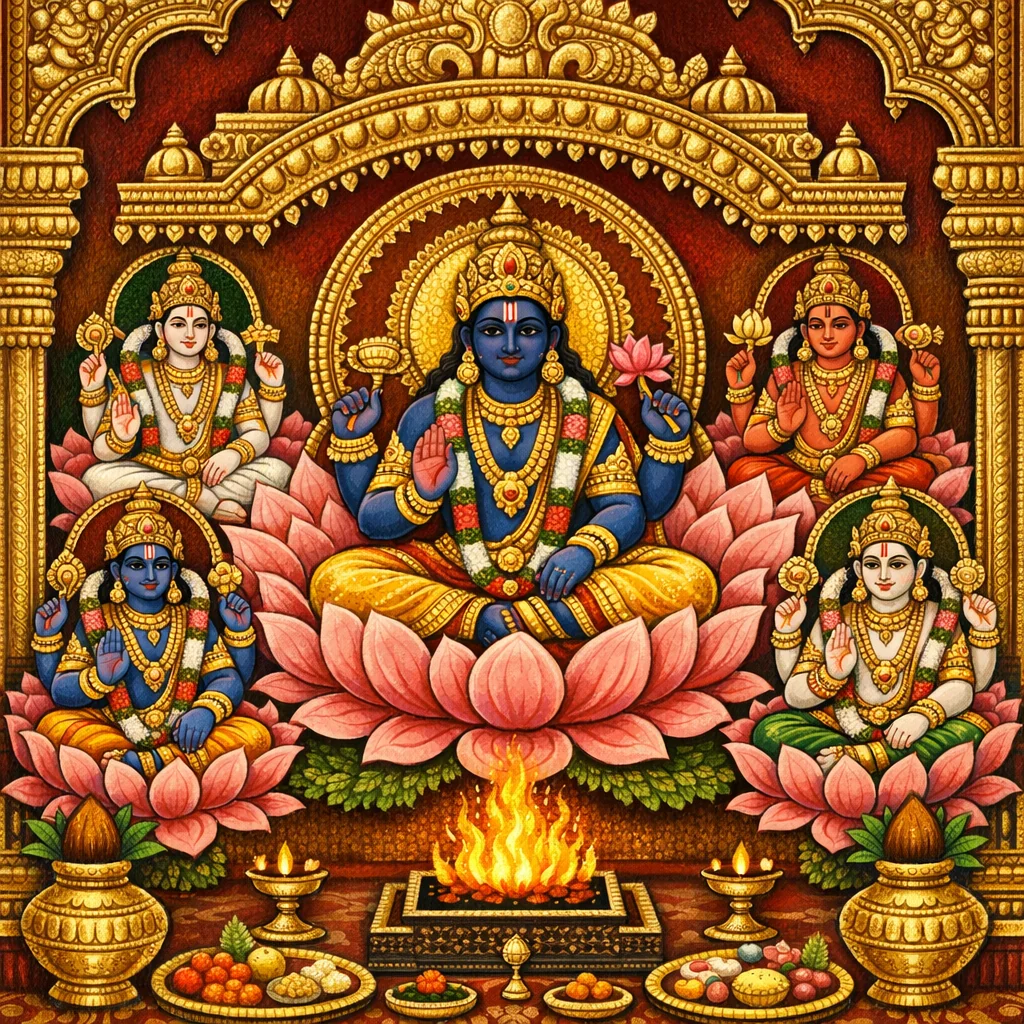
ບົດນີ້ເປີດດ້ວຍການປິດສິ້ນວຣະຕະ Dīpadāna ແລ້ວເຂົ້າສູ່ພິທີບູຊານະວະວິຍູຫະ (Navavyūha-arcana) ຕາມທີ່ຮະຣິຖ່າຍທອດ. ອັກນິສອນການຈັດມະນະດະລາດອກບົວ: ວາສຸເທວະ (Vāsudeva) ຢູ່ກາງ ແລະຈັດ Saṅkarṣaṇa, Pradyumna, Aniruddha, Nārāyaṇa ຕາມທິດ ພ້ອມພະຍາງບີຈະ ແລະຕຳແໜ່ງທາດ/ພິທີ (ຮວມການວາງນ້ຳ). ພິທີຂະຫຍາຍໄປສູ່ການຈັບຄູ່ມັນຕຣາ-ບີຈະ ສຳລັບ Sadbrahmā, Viṣṇu, Nṛsiṃha, Bhūr-Varāha ແລະການວາງສ່ວນຊ່ວຍທີ່ປະຕູ ແລະທິດຕາເວັນຕົກ ພ້ອມຂັ້ນຕອນພິເສດກ່ຽວກັບ Garuḍa ແລະມັນຕຣາ gadā (ຄອນ). ຈາກການສ້າງມະນະດະລາພາຍນອກ ຈຶ່ງເຂົ້າສູ່ການພາຍໃນ: ບູຊາຕາມ daśāṅga-krama, ວາງ ghaṭa ສຳລັບຜູ້ພິທັກທິດ, ຈິນຕະນາ toraṇa ແລະ vitāna, ແລະສະມາທິກາຍລະອຽດໃນນ້ຳອະມຣິຕະແຫ່ງຈັນ. ທ້າຍສຸດເຮັດ nyāsa ດ້ວຍບີຈະ 12 ສ້າງ “ກາຍທິບ”, ກຳນົດສາວົກໂດຍການໂຍນດອກໄມ້, ກຳນົດຈຳນວນ homa ເພື່ອຊຳລະ ແລະຄ່າ dīkṣā ເພື່ອປະທັບຕາການປະກອບພິທີໃນມິຕິສັງຄົມແລະຈິດວິນຍານ.
Shlokas
No shlokas available for this adhyaya yet.
Frequently Asked Questions
A lotus-maṇḍala Navavyūha worship beginning with Vāsudeva at the center, followed by directional deity placements with specific bīja-syllables, then internalization through visualization, daśāṅga-krama, and nyāsa culminating in dīkṣā.
After mandala and mantra placements, it shifts to subtle-body contemplation (lunar nectar), self-identification with Viṣṇu, and nyāsa that produces a “divine body,” explicitly valuing heart-worship of Hari (anirmālyā) as the inner completion of the rite.
Disciples are seated to the left, identify a chosen form by blind flower-casting, perform homa with 108 and then 1000 oblations for purification, and receive dīkṣā after payment of prescribed fees honoring the guru.