Adhyaya 200
Dīpadāna-vrata (The Vow of Offering Lamps)
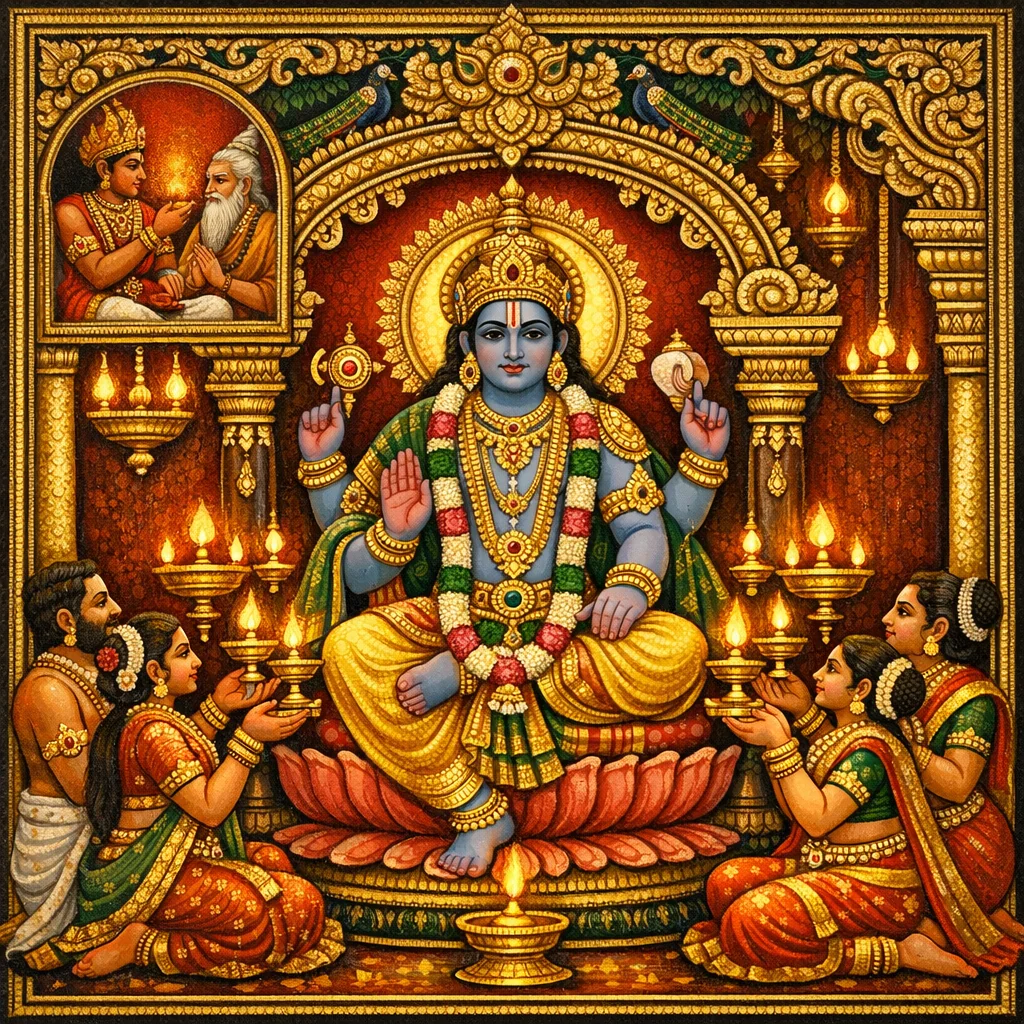
ພຣະອັກນີສອນວຣະຕະ «ດີປະດານ» (Dīpadāna-vrata) ເປັນຄຳປະຕິຍານທີ່ໃຫ້ທັງຄວາມສຸກໃນໂລກ (bhukti) ແລະຄວາມຫຼຸດພົ້ນ (mukti) ໂດຍເນັ້ນວ່າການຖວາຍໂຄມໄຟຕະຫຼອດ 1 ປີ ໃນສະຖານບູຊາພຣະເທວະ ຫຼືໃນເຮືອນພຣາຫມັນ ຈະໄດ້ຮັບຄວາມຮຸ່ງເຮືອງຄົບຖ້ວນ. ການໃຫ້ແສງໄຟຖືກຍົກຍ້ອງວ່າມີບຸນສູງສຸດ ໂດຍສະເພາະໃນຊ່ວງ Cāturmāsya ແລະ Kārttika ໃຫ້ເຂົ້າເຖິງໂລກຂອງພຣະວິສນຸ ແລະຄວາມສຸກສະຫວັນ. ພຣະອັກນີເລົ່າເລື່ອງຕົວຢ່າງຂອງລະລິຕາ: ການກະທຳນ້ອຍໆທີ່ເກີ່ຍວກັບໂຄມໄຟໃນວັດພຣະວິສນຸ ແມ່ນແມ່ນບໍ່ໄດ້ຕັ້ງໃຈ ແຕ່ກໍໃຫ້ຜົນອັນຍິ່ງໃຫຍ່ ຈົນໄດ້ເກີດໃໝ່ເປັນຜູ້ມີລາຊະສົມບັດ ແລະຄວາມຮຸ່ງເຮືອງໃນຄູ່ຄອງ. ການລັກໂຄມໄຟຖືກປະນາມ ມີຜົນກຳເກີດເປັນຄົນໃບ້/ທຶບ ແລະຕົກນະລົກແຫ່ງຄວາມມືດ. ຕໍ່ມາມີຄຳຕັກເຕືອນສິນທຳ ວິຈານການຫຼົງໃນກາມ ແລະຄວາມປາຖະໜາບໍ່ຊອບ (ໂດຍສະເພາະການຜິດຜົວເມຍ) ແລະນຳໃຫ້ຫັນມາສູ່ການປະຕິບັດທີ່ເຮັດໄດ້ງ່າຍ ເຊັ່ນ ສວດນາມພຣະຫຣິ ແລະຖວາຍໂຄມໄຟ. ທ້າຍບົດຢືນຢັນວ່າ ດີປະດານເພີ່ມພູນຜົນຂອງວຣະຕະທັງປວງ ແລະຜູ້ຟັງພ້ອມນຳໄປປະຕິບັດຈະໄດ້ຄະຕິສູງຂຶ້ນ।
Shlokas
No shlokas available for this adhyaya yet.
Frequently Asked Questions
Offer a lamp—ideally sustained as a yearly practice—in a deity’s shrine (especially Viṣṇu’s) or a brāhmaṇa’s home; the act is taught as a high-merit vrata granting prosperity, longevity, clarity of sight, and higher worlds, ultimately supporting liberation.
Kārttika is presented as a peak season of ritual potency: lamp-giving then is said to yield exceptional heavenly results, surpassing ordinary times and amplifying vrata-fruit.
It demonstrates that even an unpremeditated or indirect contribution to a lamp-offering in a Viṣṇu temple can generate powerful puṇya, underscoring the vow’s efficacy and the sacredness of temple-based offerings.
The chapter condemns dīpa-theft with severe karmic outcomes and uses hell imagery to caution against negligence, sense-addiction, and sexual misconduct (adultery), redirecting the practitioner toward dharmic restraint and Hari-nāma.