Adhyaya 196
Chapter 196 — Nakṣatra-vratāni (Observances of the Lunar Mansions)
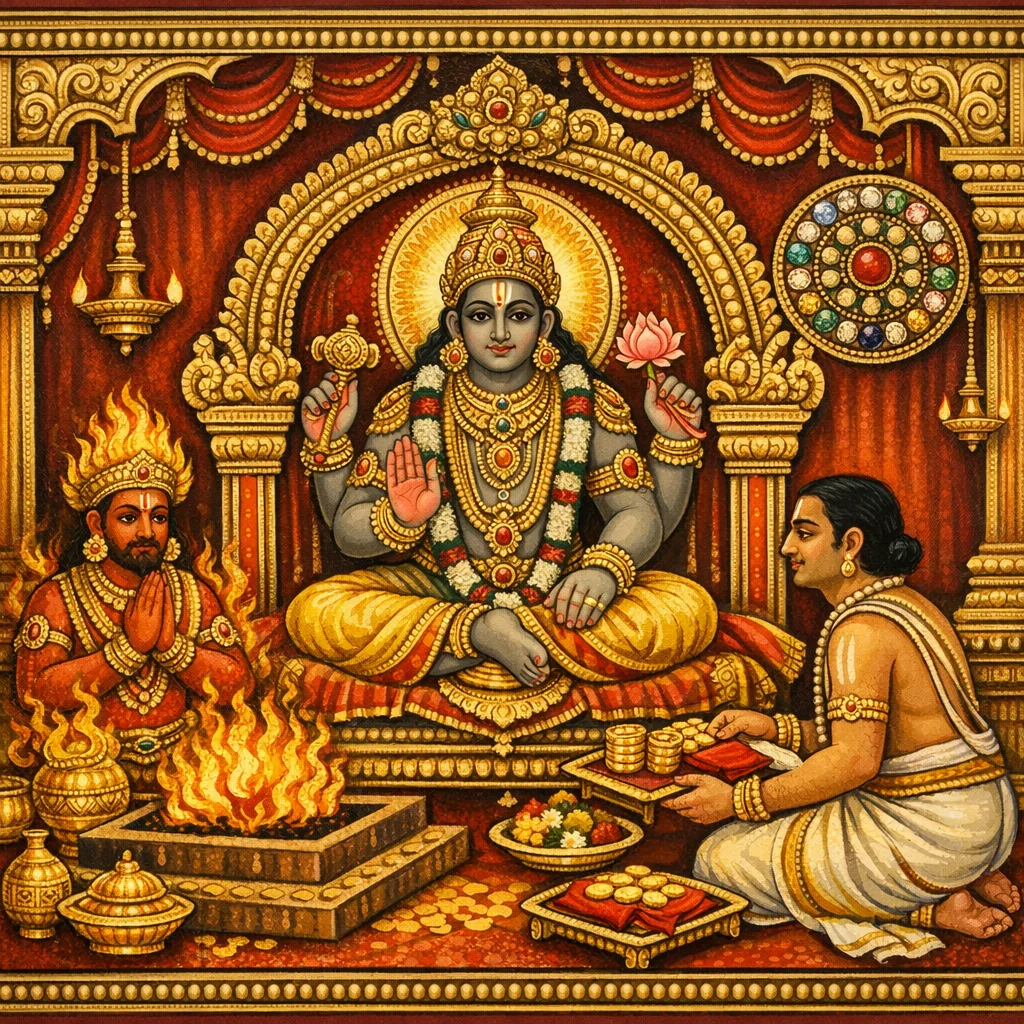
ພຣະອັກນິສອນພຣະລິສີວະສິດຖະ ເຖິງລະບົບ “ນັກສະຕຣະ-ວຣະຕະ” ເລີ່ມຈາກການເຊີນນັກສະຕຣະ-ປຸຣຸສະ ແລະເດືອນໄຈຕຣະ (Caitra). ພຣະຫຣິ (ວິສນຸ) ຖືກບູຊາຕາມການຈັດວາງນັກສະຕຣະໃສ່ອະວັຍະວະຂອງກາຍສາກົນ—ຕີນ, ແຂ້ງຂາ, ຫົວເຂົ່າ, ຂາອ່ອນ, ອະໄວຍະວະເພດ, ສະໂພກ, ຂ້າງລໍາຕົວ, ທ້ອງ, ເຕົ້ານົມ, ຫຼັງ, ແຂນ, ນິ້ວມື, ເລັບ, ຄໍ, ຫູ, ປາກ, ແຂ້ວ, ດັ່ງ, ຕາ, ໜ້າຜາກ—ເຮັດໃຫ້ເວລາແຫ່ງຟ້າກາຍເປັນລໍາດັບພິທີທີ່ມີຮ່າງກາຍ. ມີການບູຊາພິເສດໃນ Citrā/Ārdrā ແລະທ້າຍປີ: ຕັ້ງຮູບພຣະຫຣິຄໍາໃນໝໍ້ທີ່ເຕັມນ້ໍາຕານອ້ອຍ (jaggery) ແລະຂອງທານ dakṣiṇā ແຕກຕ່າງຕາມສາຍຕໍາລາ. ຕໍ່ມາອະທິບາຍ Śāmbhavāyanīya-vrata ທີ່ເນັ້ນເດືອນ Kārttika ແລະນັກສະຕຣະ Kṛttikā ໃຊ້ນາມ Keśava ຫຼືມັນຕຣາ Acyuta, ມີການຖວາຍອາຫານຕາມເດືອນ, ຊໍາລະດ້ວຍ pañcagavya, ແລະກໍານົດຫຼັກວ່າ naivedya ແຕກຈາກ nirmālya ຫຼັງ visarjana. ຄໍາອະທິຖານທ້າຍຂໍໃຫ້ບາບຖືກທໍາລາຍ, ບຸນເພີ່ມ, ຄວາມຮັ່ງມີບໍ່ຫມົດ ແລະວົງສານສືບຕໍ່; ປະພຶດ 7 ປີໄດ້ bhukti ແລະ mukti. ສຸດທ້າຍແນະນໍາ Ananta-vrata (Mārgaśīrṣa/Mṛgaśīrṣa) ເນັ້ນການກິນຕອນກາງຄືນບໍ່ໃສ່ນ້ໍາມັນ, ຕາຕະລາງ homa 4 ເດືອນ, ບຸນອັນບໍ່ມີທີ່ສິ້ນສຸດ ແລະຕົວຢ່າງການເກີດຂອງມານທາຕາຈາກວຣະຕະນີ້.
Shlokas
No shlokas available for this adhyaya yet.
Frequently Asked Questions
It is Viṣṇu envisioned as the cosmic person constituted by the lunar mansions; worship is performed by assigning specific nakṣatras to specific limbs, making the body a ritual map of the nakṣatra cycle.
A substance is termed naivedya only until the moment of visarjana (ritual dismissal); once Jagannātha is dismissed, it immediately becomes nirmālya (the remnant of the offering).
On the Kārttika day when Kṛttikā prevails, the practitioner invokes Acyuta (via Keśava-names or a simple Acyuta salutation), offers prescribed foods across months, maintains purity via pañcagavya, and seeks both enjoyment and liberation.
It is said to generate an endless accumulation of merit, to recur as the ‘gift Ananta’ even in another birth, and to yield imperishable (akṣaya) attainment of desired aims.