Adhyaya 190
Chapter 190: Akhaṇḍa-dvādaśī-vrata (The Unbroken Dvādaśī Vow)
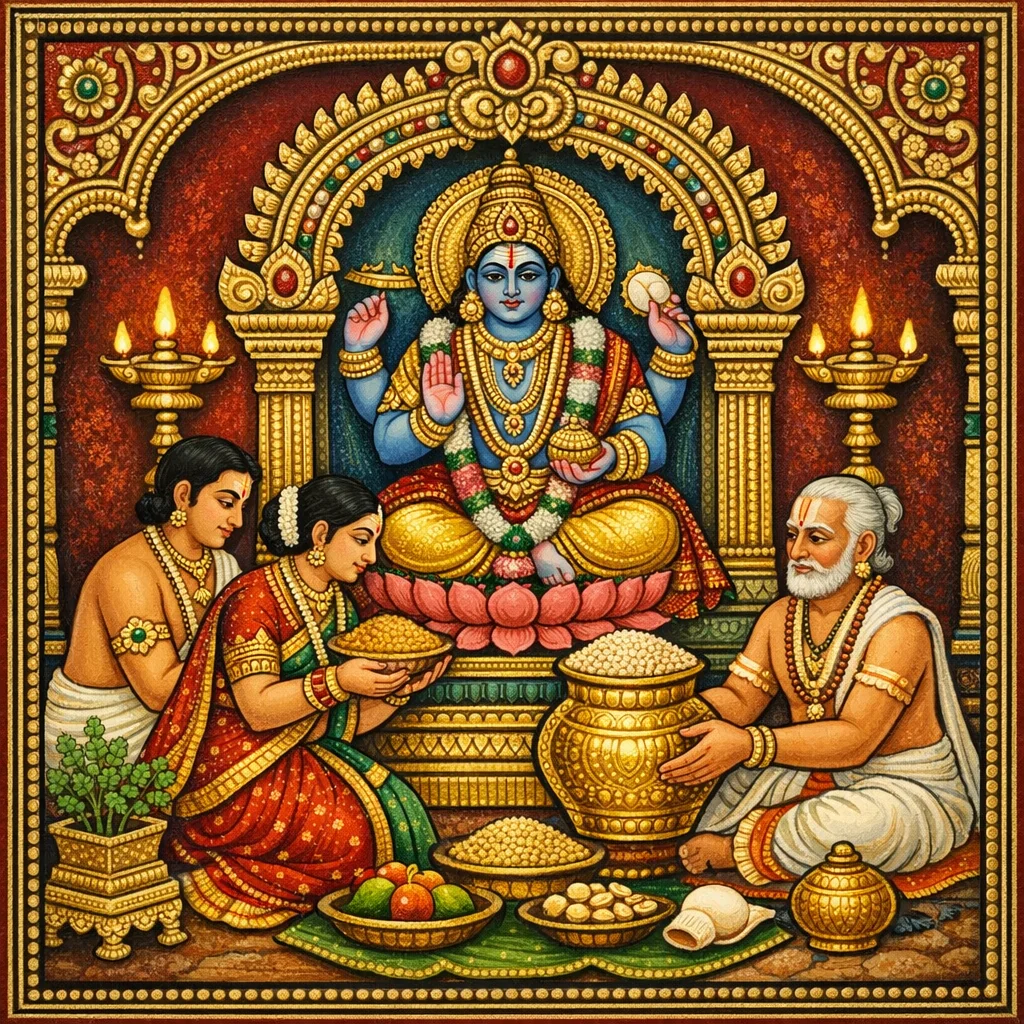
ພຣະອັກນີສອນພຣະິສີວະສິດຖະ ເຖິງວຣະຕະ «ອະຂັນດະ-ດວາດະຊີ» ເພື່ອໃຫ້ຄຳປະຕິຍານທັງຫຼາຍສົມບູນ ບໍ່ຂາດຕອນ (vrata-sampūrṇatā). ຜູ້ປະຕິບັດອົບອົດອາຫານໃນວັນດວາດະຊີຂ້າງຂຶ້ນ ເດືອນມາຣກະສີຣສະ ບູຊາພຣະວິສນຸ ຫຼັງອາບນ້ຳປັນຈະກະວະຍະ ແລະຮັບສານຊຳລະຕາມພິທີ. ສ່ວນສຳຄັນແມ່ນທານ: ໃນວັນດວາດະຊີ ຖວາຍພາຊະນະທີ່ບັນຈຸຂ້າວບາເລຍ ແລະເຂົ້າ ໃຫ້ພຣາຫມັນ. ບົດນີ້ຍັງໃຫ້ແນວອະທິຖານ: ຜູ້ຖືວຣະຕະຂໍໃຫ້ພຣະວິສນຸຊ່ວຍຊ່ອມແປງຄວາມບໍ່ສົມບູນຂອງວຣະຕະທີ່ສະສົມມາ 7 ຊາດ ໂດຍອ້າງອີງພາບມະຕະຟິຊິກວ່າ ຈັກກະວານ «ບໍ່ຂາດຕອນ» ຢູ່ໃນພຣະປຸຣຸໂສຕຕະມະ. ອັກນີຍັງຂະຫຍາຍເປັນວິໄນປະຈຳເດືອນ ແລະ Cāturmāsya ພ້ອມເຄື່ອງຖວາຍຕາມເດືອນ ເຊັ່ນ ຖ້ວຍ śaktu (ແປ້ງບາເລຍຄົ້ວ). ທ້າຍສຸດ ເນັ້ນເວລາທີ່ຖືກຕ້ອງຈາກ Śrāvaṇa ຫາການປາຣະນາ (pāraṇa) ທ້າຍເດືອນ Kārttika ເຕືອນວ່າຄວາມບົກພ່ອງອາດສົ່ງຜົນຂ້າມ 7 ຊາດ; ແຕ່ຖ້າປະຕິບັດສຳເລັດ ຈະໄດ້ອາຍຸຍືນ ສຸຂະພາບ ໂຊກລາບ ອຳນາດ ແລະຄວາມສຸກສົມບູນ।
Shlokas
No shlokas available for this adhyaya yet.
Frequently Asked Questions
It is explicitly framed as a rite for vrata-sampūrṇatā—making vows complete and ‘unbroken,’ including repairing deficiencies believed to persist across seven births through Viṣṇu’s grace.
Fasting on bright Mārgaśīrṣa Dvādaśī for Viṣṇu, bathing in pañcagavya-water and partaking of it, and giving a brāhmaṇa a vessel containing barley and rice on Dvādaśī.
The votary’s prayer links personal vow-completion to the cosmic ‘unbroken wholeness’ of the universe identified with Puruṣottama (Viṣṇu), making ritual integrity a mirror of ontological unity.
The course is described as beginning in Śrāvaṇa and reaching pāraṇa at the end of Kārttika, aligning with the Cāturmāsya-related discipline and its closure.
Long life, freedom from disease, good fortune, sovereignty/kingship, and enjoyments (along with similar prosperities) are stated as outcomes.