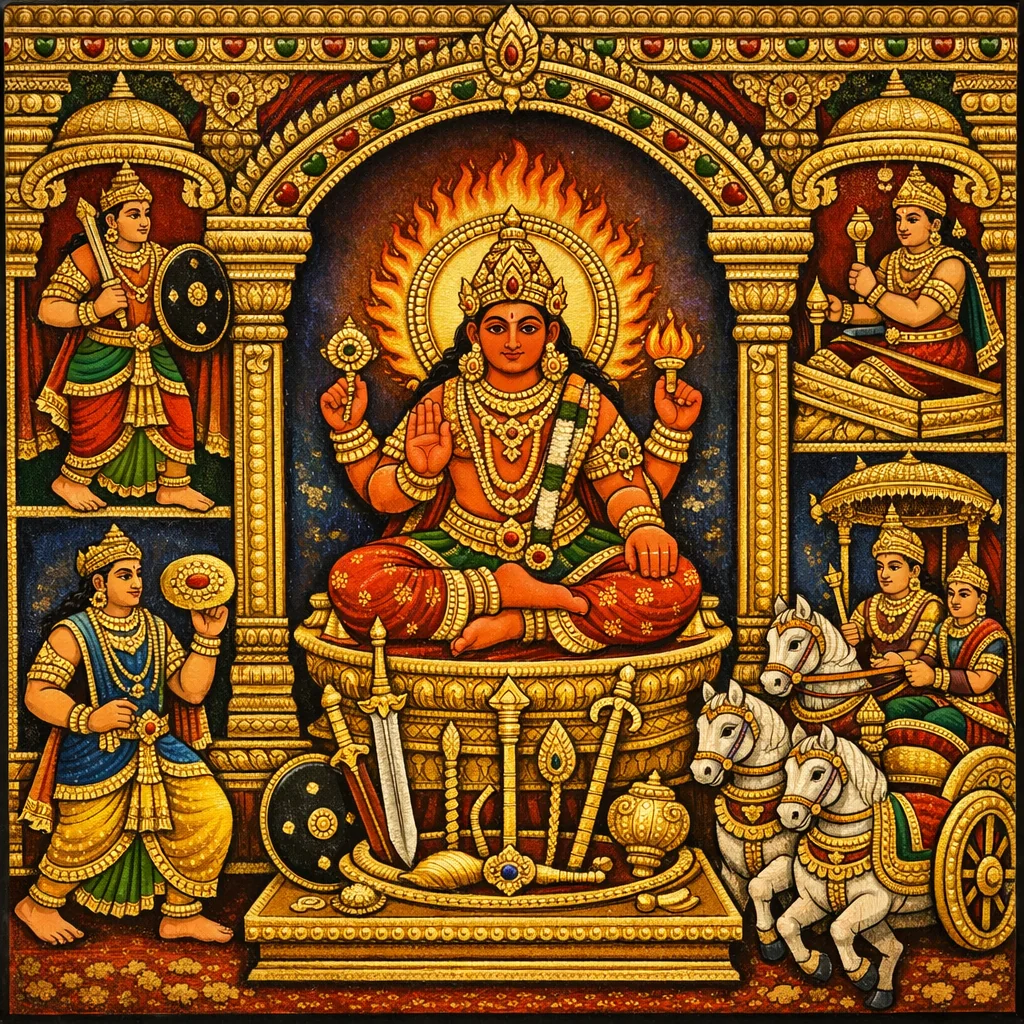
Adhyaya 251
Dhanurveda-kathana (Exposition of Martial Science): Movements, Weapon-Operations, Combat Postures, and Battle Readiness
ພຣະອັກນິຊີ້ແຈງການແບ່ງປະເພດທາງເຕັກນິກຂອງການເຄື່ອນໄຫວແລະແບບການໂຈມຕີໃນສະໜາມຮົບ (bhrānta, udbhrānta, śyenapāta, ākula) ແລ້ວຫັນໄປຫາຄູ່ຊື່ ແລະ ໜ່ວຍໂຄງສ້າງທີ່ໃຊ້ເປັນໝວດມາດຕະຖານສໍາລັບຝຶກຫັດແລະທ່ອງຈໍາ. ບົດນີ້ດໍາເນີນຕາມຫຼັກສູດປະຕິບັດ: (1) ວິທີດາບ-ໂລ່ ມີທ່າ 32 (pratyālīḍha, ālīḍha, varāha, lulita) (2) ການຈັບປະລະ/ມວຍ—ຫັນ, ຈັບ, ໂຍນຂຶ້ນ-ລົງ, ກົດຄຸມ ແລະ ປົດອອກ (3) ການແບ່ງປະເພດເຊືອກມັດ/ບ່ວງບາດໂທດ ແລະ ການໃຊ້ງານ (vyasta-pāśa ພ້ອມການກະທໍາກໍານົດ) (4) ກຳລັງງານອາວຸດເຉພາະສໍາລັບ cakra, śūla, tomara, gadā, parāśu, mudgara, bhindipāla, laguḍa, vajra, paṭṭiśa ແລະ ດາບ—ສຸດທ້າຍເຖິງ yantra-karman (ວຽກງານເຄື່ອງກົນ/ກົນໄກ). ຍັງລາຍຊື່ທ່າມື (hastas/mudrās), ອາການຜົນຕໍ່ຮ່າງກາຍ, ແລະ ຂອງຄຸ້ມຄອງ ຫຼື ຢາ/ພິທີ. ທ້າຍບົດກ່າວເຖິງລະບົບຈັດການສົງຄາມ: ຕິດອາວຸດໃຫ້ຊ້າງແລະລົດຮົບ, ຈັດຄົນຖືຕະຂໍ, ນັກທະນູ, ຄົນຖືດາບ ແລະ ໂລ່, ຊໍາລະອາວຸດດ້ວຍມັນຕຣາ; ແລ້ວປິດດ້ວຍພຣະບັນຊາໃຫ້ກະສັດຊະນະ ແລະ ປົກປ້ອງອານາຈັກຕາມທຳມະ.
Shlokas
No shlokas available for this adhyaya yet.
Frequently Asked Questions
A codified taxonomy of martial practice: named movement/attack modes, enumerated stance-systems (including thirty-two sword-and-shield postures), and weapon-specific karmas (operations) extending from hand weapons to cakra and yantra (mechanical devices), plus prescribed roles and equipment for elephants, chariots, and protective units.
By presenting warfare as Agneya Vidya governed by dharma: weapons are consecrated with mantra, skill is disciplined through named and countable methods, and victory is ethically completed by the duty to protect and govern—aligning embodied mastery (bhukti) with righteous order and higher purpose (mukti-oriented restraint).