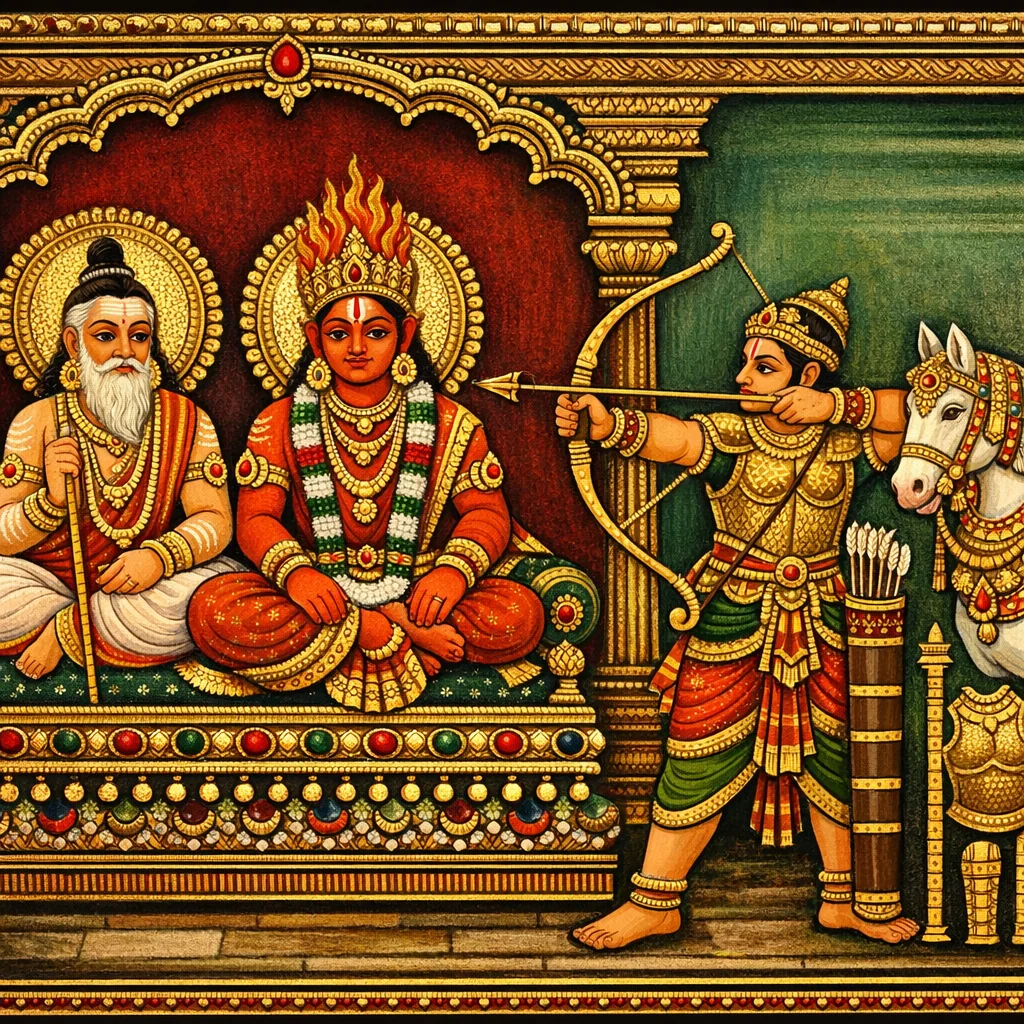
Adhyaya 250
Dhanurveda-kathanam (The Teaching of Martial Science)
ໃນອັດທະຍາຍະທະນຸຣະເວດນີ້ ພຣະອັກນີຊີ້ແຈງວ່າ ຄວາມຊໍານານການຮົບແມ່ນການຝຶກຝົນຢ່າງມີວິໄນເປັນຂັ້ນຕອນ: ຝຶກມື ຈິດ ແລະ ສາຍຕາ ໃຫ້ຍິງເປົ້າໄດ້ແນ່ນອນ ແລ້ວຈຶ່ງພ້ອມປະຕິບັດຈາກຫຼັງມ້າ ຫຼື ພາຫະນະ. ຕໍ່ມາເປັນຂໍ້ກໍານົດທາງເຕັກນິກ: ຂະໜາດຂອງເຊືອກ ແລະ ບ່ວງ/ບ່ວງຄ້ອງ, ຮູບຮ່າງທີ່ຄວນເລືອກ, ແລະ ວັດສະດຸທີ່ເໝາະສໍາລັບເຊືອກຄັນທະນູ ສະແດງວ່າ ຊະນະພຶງພາການປະກອບສ້າງທີ່ຖືກຕ້ອງພໍໆກັບຄວາມກ້າຫານ. ການຝຶກຢູ່ໃນລະບົບຄູ-ສິດ ຄູຈັດທ່າທາງ ແລະ ນໍາພາການເຄື່ອນໄຫວມືໃຫ້ປະສານກັນ. ມີການນໍາໃຊ້ໃນສົງຄາມ: ມ້ວນແລະໂຍນອາວຸດທີ່ໝຸນໄປຫາຄູ່ຕໍ່ສູ້ທີ່ໃສ່ເກາະ, ຮູບແບບການເຄື່ອນ valgita, pluta, pravrajita ພາຍໃຕ້ samayoga, ແລະ ການມັດຄຸມຫຼັງຊະນະ. ກໍານົດການພົກອາວຸດແລະວິທີຊັກດາບ (ດາບຢູ່ຂ້າງຊ້າຍ, ຈັບດ້ວຍມືຊ້າຍໃຫ້ແນ່ນ, ຊັກອອກດ້ວຍມືຂວາ) ພ້ອມມາດຕາຂະໜາດອຸປະກອນ, ເຫຼັກແຫຼມ, ແລະ ຕໍາແໜ່ງຕິດເກາະ. ທ້າຍສຸດເນັ້ນການຝຶກມ້າ/ພາຫະນະໃຫ້ຄ່ອງຕົວແລະພ້ອມນໍາໃຊ້ ປະສານທັກສະສ່ວນບຸກຄົນກັບການກະກຽມດ້ານລໍຈິສຕິກຕາມທໍາມະວິທີ.
Shlokas
No shlokas available for this adhyaya yet.
Frequently Asked Questions
Precise martial metrics and materials: e.g., a pāśa (noose) of ten hands, a well-twisted noose of even thirty units, bowstrings made from cotton, muñja, hemp-fibre, sinew, arka-fibre, and rawhide, plus specified handling protocols (left-hand grip/right-hand draw) and dimensional guidance for implements and armor placement.
By subordinating force to discipline and right procedure: mastery begins with control of hand, mind, and sight, proceeds through regulated training under teachers, and culminates in restraint and order (bandha, proper carriage, measured construction), aligning martial capability with dharma rather than aggression.