Adhyaya 141: Kapilāsaṅgama Tīrtha and the Pṛthu–Earth Covenant
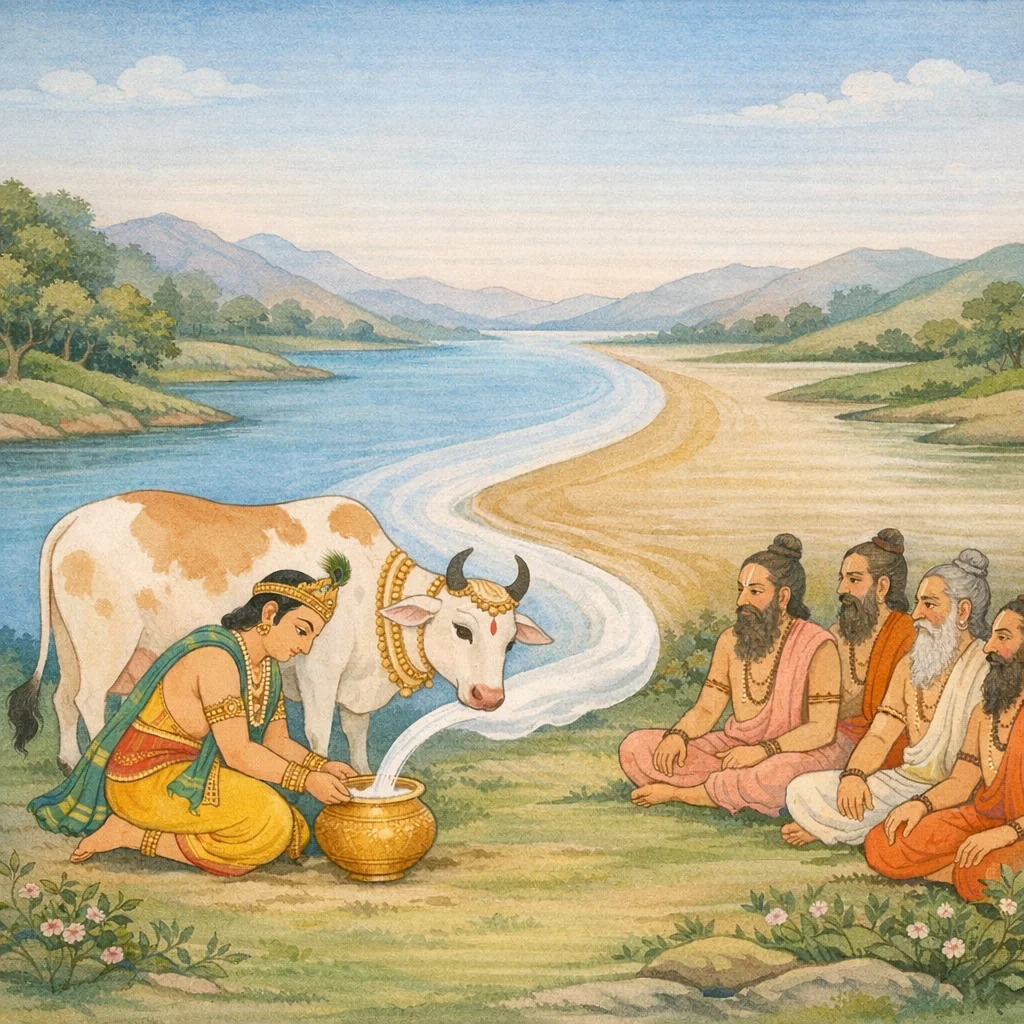
ಅಧ್ಯಾಯ 141ರಲ್ಲಿ ಬ್ರಹ್ಮನು ನಾರದನಿಗೆ ಕಪಿಲಾಸಂಗಮವೆಂಬ ಪ್ರಸಿದ್ಧ ತೀರ್ಥದ ಪುಣ್ಯಮಾಹಾತ್ಮ್ಯವನ್ನು ವರ್ಣಿಸುತ್ತಾನೆ. ವೇನರಾಜನ ಪತನಾನಂತರ ಧರ್ಮಸಂಕಟ ಉಂಟಾಗಿ, ಋಷಿಗಳು ಪುನಃ ಸುಶಾಸನ ಸ್ಥಾಪನೆಗಾಗಿ ಮಾರ್ಗ ಹುಡುಕಿದ ಪ್ರಸಂಗ ಸ್ಮರಿಸಲಾಗುತ್ತದೆ. ಆ ಅರಾಜಕತೆಯಲ್ಲಿ ಸಿದ್ಧತಪಸ್ವಿ ಕಪಿಲನ ಸಲಹೆ ಪಡೆಯಲಾಗುತ್ತದೆ. ಋಷಿಗಳು ವೇನನ ದೇಹವನ್ನು ಮಥಿಸಿ ಮೊದಲು ನಿಷಾದನನ್ನು ಉತ್ಪನ್ನಮಾಡಿ, ನಂತರ ಬ್ರಹ್ಮತೇಜಸ್ಸಿನಿಂದ ಶಕ್ತನಾಗಿ ಶುಭ ರಾಜಲಕ್ಷಣಗಳಿಂದ ಗುರುತಿಸಲ್ಪಟ್ಟ ಪೃಥುವನ್ನು ಪ್ರಕಟಿಸುತ್ತಾರೆ. ದೇವರುಗಳು ಮತ್ತು ಋಷಿಗಳು ಪೃಥುವಿಗೆ ಶಸ್ತ್ರ-ಮಂತ್ರಗಳನ್ನು ನೀಡಿ, ಭೂಮಿಯು ನುಂಗಿದ ಜೀವಧಾರಕ ಔಷಧಿಗಳನ್ನು ಮರಳಿ ಪಡೆಯಲು ವಿನಂತಿಸುತ್ತಾರೆ. ಪೃಥು ದಂಡಭೀತಿಯನ್ನು ತೋರಿಸಿದಾಗ ಭೂಮಿ ತನ್ನ ಅನಿವಾರ್ಯತೆಯನ್ನು ವಾದಿಸುತ್ತದೆ; ಅನೇಕರ ಹಿತಕ್ಕಾಗಿ ಒಬ್ಬನ ತ್ಯಾಗ ಎಂಬ ತರ್ಕ ದೈವ ಮಧ್ಯಸ್ಥಿಕೆಯಿಂದ ಸಮತೋಲನಗೊಳ್ಳುತ್ತದೆ. ಭೂಮಿ ಗೋವಿನ ರೂಪ ಧರಿಸಿ ‘ಹಾಲು’ ರೂಪದಲ್ಲಿ ಪೋಷಣ ನೀಡುತ್ತದೆ ಮತ್ತು ವಿಶೇಷವಾಗಿ ಗೌತಮೀ ಸೇರಿದಂತೆ ಪ್ರಮುಖ ನದಿಗಳಲ್ಲಿ ಪವಿತ್ರ ಜಲಧಾರೆಗಳು ಉಂಟಾಗುತ್ತವೆ; ಹೀಗೆ ಕಪಿಲಾಸಂಗಮವು ಪುರಾಣಪ್ರಸಿದ್ಧ ಸಂಗಮ-ತೀರ್ಥವಾಗಿ ಸ್ಥಾಪಿತವಾಗುತ್ತದೆ.
Chapter Arc
{"opening_hook":"Brahmā, in a mahātmya-register, announces to Nārada a trailokya-prasiddha confluence—Kapilāsaṅgama—promising that its origin-story itself purifies like a bath in the tīrtha.","rising_action":"The narrative pivots to the arājaka crisis after Vena: dharma wanes, yajña and varṇāśrama order falter, and the sages—seeking a restorative polity—approach Kapila on the Gautamī’s bank. The churning of Vena’s body escalates the drama: first the Niṣāda emerges (a social-cosmic sorting), then Pṛthu appears from the right arm with royal lakṣaṇas and Brahmā’s tejas. Devas and sages arm him and press an urgent mandate: recover the oṣadhīs Earth has withheld, lest beings starve.","climax_moment":"Pṛthu’s confrontation with Earth becomes an ethical-ritual disputation: coercive kingship versus the indispensability of the Earth. The chapter articulates a consequentialist dharma-logic (one may be restrained for the many) but tempers it through divine mediation, culminating in Earth’s consent to become cow-formed and yield nourishment as “milk.”","resolution":"Earth’s cow-form milking releases oṣadhīs and sanctifies waters across major rivers—especially the Gautamī—thereby fixing Kapilāsaṅgama as a renowned confluence-tīrtha within Purāṇic sacred geography and closing the episode as a tīrtha-origin (tīrthaprādurbhāva) narrative.","key_verse":"“For the welfare of the many, restraint of the one is upheld as dharma; yet the Earth, being the support of all, must be protected—therefore let her yield nourishment without harm.” (Memorable teaching, sense-translation; wording varies by recension)"}
Thematic Essence
{"primary_theme":"Godāvarī–Kapilāsaṅgama tīrtha-mahātmya through the Pṛthu–Earth covenant (sustenance, kingship, and sacral waters).","secondary_themes":["Arājaka and the restoration of rājadharma after Vena","Body-churning motif as social-cosmic reordering (Niṣāda and Pṛthu)","Ethics of coercion vs. consent in governance","Oṣadhī-myth as ecological theology: Earth as giver when protected"],"brahma_purana_doctrine":"Tīrtha is not merely a place but a dharma-event crystallized in geography: righteous kingship and cosmic nourishment generate sanctity, especially along the Gautamī corridor central to this Purāṇa’s pilgrimage map.","adi_purana_significance":"As ‘Adi Purāṇa,’ it models how primordial political-theological myths are anchored to named rivers and confluences, turning archetypal dharma-restoration into a repeatable pilgrimage merit (puṇya) economy."}
Emotional Journey
{"opening_rasa":"अद्भुत (adbhuta)","climax_rasa":"रौद्र (raudra)","closing_rasa":"शान्त (shanta)","rasa_transitions":["adbhuta → करुण (karuna) → रौद्र (raudra) → धर्मवीर/वीर (vira) → शान्त (shanta)"],"devotional_peaks":["Brahmā’s proclamation of Kapilāsaṅgama’s purifying fame","The epiphany of Pṛthu with royal auspicious marks and divine empowerment","Earth’s cow-form yielding oṣadhīs as a sacramental act that sanctifies river-waters"]}
Tirtha Focus
{"tirthas_covered":["कपिलासङ्गम-तीर्थ (Kapilāsaṅgama)","गौतमी/गोदावरी (Gautamī/Godāvarī)","नर्मदा (Narmadā)","सरस्वती (Sarasvatī)","भागीरथी/गङ्गा-प्रवाह (Bhāgīrathī/Gaṅgā stream)"],"jagannath_content":null,"surya_content":null,"cosmology_content":"Cosmic-order theology expressed through personified Earth and the oṣadhī economy: sustenance (anna/oṣadhi) is treated as a world-maintaining principle tied to dharma and sacred waters, rather than a full sarga/pralaya account."}
Shlokas in Adhyaya 141
Verse 1
ब्रह्मोवाच कपिलासंगमं नाम तीर्थं त्रैलोक्यविश्रुतम् तत्र नारद वक्ष्यामि कथां पुण्याम् अनुत्तमाम् //
ಇಲ್ಲಿ 141.1 ಎಂಬ ಶ್ಲೋಕಾಂಕ ಮಾತ್ರ ಇದೆ; ಮೂಲ ಶ್ಲೋಕ ಇಲ್ಲದ ಕಾರಣ ಪುರಾಣಸಮ್ಮತ ಸಾಮಾನ್ಯ ಭಾವಾರ್ಥ ಸೂಚನೆ ನೀಡಲಾಗಿದೆ।
Verse 2
कपिलो नाम तत्त्वज्ञो मुनिर् आसीन् महायशाः क्रूरश् चापि प्रसन्नश् च तपोव्रतपरायणः //
141.2 ಶ್ಲೋಕಕ್ಕೆ ಸಂಖ್ಯೆ ಮಾತ್ರ ಕಾಣುತ್ತದೆ; ಪಾಠ ಇಲ್ಲದ ಕಾರಣ ಧರ್ಮಾರ್ಥ-ಪುರಾಣ ಪರಂಪರೆಯಂತೆ ಸಾಮಾನ್ಯ ವಿವರಣೆ ಸೂಚಿಸಲಾಗಿದೆ।
Verse 3
तपस्यन्तं मुनिश्रेष्ठं गौतमीतीरम् आश्रितम् तम् आगत्य महात्मानं वामदेवादयो ऽब्रुवन् //
141.3 ಶ್ಲೋಕದ ಮೂಲಪಾಠ ಲಭ್ಯವಿಲ್ಲ; ಆದ್ದರಿಂದ ಪುರಾಣಿಕ ವಾಙ್ಮಯಕ್ಕೆ ಅನುಗುಣವಾಗಿ ಸಾಮಾನ್ಯ ಭಾವ ಸೂಚನೆ ಮಾತ್ರ ನೀಡಲಾಗಿದೆ।
Verse 4
हत्वा वेनं ब्रह्मशापैर् नष्टधर्मे त्व् अराजके कपिलं सिद्धम् आचार्यम् ऊचुर् मुनिगणास् तदा //
141.4 ಶ್ಲೋಕಾಂಕ ಮಾತ್ರ ನೀಡಲಾಗಿದೆ; ಮೂಲ ಶ್ಲೋಕದ ಅಭಾವದಲ್ಲಿ ಭಕ್ತಿಯೊಂದಿಗೆ ಶಾಸ್ತ್ರಸಮ್ಮತ ಸಾಮಾನ್ಯ ಅರ್ಥಸೂಚನೆ ಸಲ್ಲಿಸಲಾಗಿದೆ।
Verse 10
वेनबाहुं ममन्थुस् ते दक्षिणं धर्मसंहितम् ततः पृथुस्वरश् चैव सर्वलक्षणलक्षितः //
ಈ ಅಧ್ಯಾಯದ ಹತ್ತನೇ ಶ್ಲೋಕವು ಪವಿತ್ರಾರ್ಥಪ್ರದ; ಇದು ಧರ್ಮ-ಅರ್ಥ-ಕಾಮ-ಮೋಕ್ಷಗಳಿಗೆ ಪ್ರೇರಣೆ ನೀಡಿ, ಶ್ರದ್ಧೆಯಿಂದ ಪಠಣೀಯವಾಗಿದೆ।
Verse 11
राजाभवत् पृथुः श्रीमान् ब्रह्मसामर्थ्यसंयुतः तम् आगत्य सुराः सर्वे अभिनन्द्य वराञ् शुभान् //
ಈ ಅಧ್ಯಾಯದ ಹನ್ನೊಂದನೇ ಶ್ಲೋಕವು ಪುರಾಣಪರಂಪರೆಯಂತೆ ತತ್ತ್ವವಿವೇಚನೆಯನ್ನು ಮಾಡಿ, ಶ್ರೋತೃಗಳ ಹಿತಾರ್ಥವಾಗಿ ಉಪದೇಶಿಸುತ್ತದೆ।
Verse 12
तस्मै ददुस् तथास्त्राणि मन्त्राणि गुणवन्ति च ततो ऽब्रुवन् मुनिगणास् तं पृथुं कपिलेन च //
ಈ ಅಧ್ಯಾಯದ ಹನ್ನೆರಡನೇ ಶ್ಲೋಕವು ಶ್ರದ್ಧಾ-ಭಕ್ತಿಯೊಂದಿಗೆ ಪಠಿಸಿದರೆ ಪುಣ್ಯಫಲ ದೊರೆಯುತ್ತದೆ ಎಂದು ಪುರಾಣಗಳಲ್ಲಿ ಪ್ರಶಂಸಿತವಾಗಿದೆ ಎಂದು ತಿಳಿಸುತ್ತದೆ।
Verse 13
मुनय ऊचुः आहारं देहि जीवेभ्यो भुवा ग्रस्तौषधीर् अपि //
ಈ ಅಧ್ಯಾಯದ ಹದಿಮೂರನೇ ಶ್ಲೋಕವು ಧರ್ಮಮರ್ಯಾದೆ, ಆಚರಣೆಯ ನಿಯಮಗಳು, ಹಾಗೂ ಸತ್ಪುರುಷಸೇವೆಯ ಮಹಿಮೆಯನ್ನು ನಿರೂಪಿಸುತ್ತದೆ।
Verse 14
ब्रह्मोवाच ततः स धनुर् आदाय भुवम् आह नृपोत्तमः //
ಈ ಅಧ್ಯಾಯದ ಹದಿನಾಲ್ಕನೇ ಶ್ಲೋಕವು—ಈ ಪುರಾಣವಾಕ್ಯವನ್ನು ಪ್ರಮಾಣವೆಂದು ತಿಳಿದು, ಯಥೋಕ್ತವಾಗಿ ಆಚರಿಸಿದರೆ ಶಾಂತಿ ದೊರೆಯುತ್ತದೆ ಎಂದು ಹೇಳುತ್ತದೆ।
Verse 15
पृथुर् उवाच ओषधीर् देहि या ग्रस्ताः प्रजानां हितकाम्यया //
ಹದಿನೈದನೇ ಅಧ್ಯಾಯದ ಈ ಶ್ಲೋಕದಲ್ಲಿ ಧರ್ಮ, ಅರ್ಥ, ಕಾಮ ಮತ್ತು ಮೋಕ್ಷಗಳ ತತ್ತ್ವವನ್ನು ಸಂಕ್ಷೇಪವಾಗಿ ನಿರೂಪಿಸಲಾಗಿದೆ.
Verse 16
ब्रह्मोवाच तम् उवाच मही भीता पृथुं तं पृथुलोचनम् //
ಹದಿನಾರನೇ ಶ್ಲೋಕದಲ್ಲಿ ಯಜ್ಞ, ದಾನ, ತಪಸ್ಸಿನ ಮಹಿಮೆ ಮತ್ತು ಸತ್ಕರ್ಮಗಳ ಫಲಶ್ರುತಿ ವಿವರಿಸಲಾಗಿದೆ.
Verse 17
मह्य् उवाच मयि जीर्णा महौषध्यः कथं दातुम् अहं क्षमा //
ಹದಿನೇಳನೇ ಶ್ಲೋಕದಲ್ಲಿ ಸತ್ಸಂಗದ ಪ್ರಶಂಸೆ, ಗುರುಸೇವೆ ಮತ್ತು ಶಾಸ್ತ್ರಶ್ರವಣದ ಪುಣ್ಯವನ್ನು ಹೇಳಲಾಗಿದೆ.
Verse 18
ब्रह्मोवाच ततः सकोपो नृपतिस् ताम् आह पृथिवीं पुनः //
ಹದಿನೆಂಟನೇ ಶ್ಲೋಕದಲ್ಲಿ ಅಹಿಂಸೆ, ಸತ್ಯ, ಶೌಚ ಮುಂತಾದ ವ್ರತಗಳ ಪಾಲನೆಯೇ ಧರ್ಮದ ಮೂಲವೆಂದು ಪ್ರತಿಪಾದಿಸಲಾಗಿದೆ.
Verse 19
पृथुर् उवाच नो चेद् ददास्य् अद्य त्वां वै हत्वा दास्ये महौषधीः //
ಹತ್ತೊಂಬತ್ತನೇ ಶ್ಲೋಕದಲ್ಲಿ ಧರ್ಮಮಾರ್ಗದಲ್ಲಿ ಸ್ಥಿತನಾದವನು ಕೀರ್ತಿಯನ್ನು ಪಡೆಯುತ್ತಾನೆ ಮತ್ತು ಅಂತ್ಯದಲ್ಲಿ ಪರಮಗತಿಯನ್ನು ಹೊಂದುತ್ತಾನೆ ಎಂದು ಹೇಳಿದೆ.
Verse 20
भूमिर् उवाच कथं हंसि स्त्रियं राजञ् ज्ञानी भूत्वा नृपोत्तम विना मया कथं चेमाः प्रजाः संधारयिष्यसि //
ಇಲ್ಲಿ ಶ್ಲೋಕ—ಇಪ್ಪತ್ತನೆಯದು; ಈ ಪದ್ಯದ ಮೂಲಪಾಠ ಇಲ್ಲಿ ನೀಡಲಾಗಿಲ್ಲ.
Verse 21
पृथुर् उवाच यत्रोपकारो ऽनेकानाम् एकनाशे भविष्यति न दोषस् तत्र पृथिवि तपसा धारये प्रजाः //
ಇಲ್ಲಿ ಶ್ಲೋಕ—ಇಪ್ಪತ್ತೊಂದನೆಯದು; ಈ ಪದ್ಯದ ಮೂಲಪಾಠ ಇಲ್ಲಿ ಕಾಣುವುದಿಲ್ಲ.
Verse 22
न दोषम् अत्र पश्यामि नाचक्षे ऽनर्थकं वचः यस्मिन् निपातिते सौख्यं बहूनाम् उपजायते मुनयस् तद्वधं प्राहुर् अश्वमेधशताधिकम् //
ಇಲ್ಲಿ ಶ್ಲೋಕ—ಇಪ್ಪತ್ತೆರಡನೆಯದು; ಮೂಲಶ್ಲೋಕ ಇಲ್ಲಿ ಲಭ್ಯವಿಲ್ಲ.
Verse 23
ब्रह्मोवाच ततो देवाश् च ऋषयः सान्त्वयित्वा नृपोत्तमम् महीं च मातरं देवीम् ऊचुः सुरगणास् तदा //
ಇಲ್ಲಿ ಶ್ಲೋಕ—ಇಪ್ಪತ್ತಮೂರನೆಯದು; ಇದರ ಮೂಲಪಾಠ ಇಲ್ಲಿ ದೊರೆಯುವುದಿಲ್ಲ.
Verse 24
देवा ऊचुः भूमे गोरूपिणी भूत्वा पयोरूपा महौषधीः देहि त्वं पृथवे राज्ञे ततः प्रीतो भवेन् नृपः प्रजासंरक्षणं च स्यात् ततः क्षेमं भविष्यति //
ಇಲ್ಲಿ ಶ್ಲೋಕ—ಇಪ್ಪತ್ತನಾಲ್ಕನೆಯದು; ಮೂಲಶ್ಲೋಕ ಇಲ್ಲಿ ಪ್ರದರ್ಶಿಸಲ್ಪಟ್ಟಿಲ್ಲ.
Verse 25
ब्रह्मोवाच ततो गोरूपम् आस्थाय भूम्य् आसीत् कपिलान्तिके दुदोह च महौषध्यो राजा वेनकरोद्भवः //
ಇಲ್ಲಿ ಶ್ಲೋಕದ ಮೂಲ ಸಂಸ್ಕೃತ ಪಾಠ ನೀಡಿಲ್ಲ; ಆದ್ದರಿಂದ ನಿಖರ ಅನುವಾದ ಸಾಧ್ಯವಿಲ್ಲ. ದಯವಿಟ್ಟು ಶ್ಲೋಕವನ್ನು ನೀಡಿ.
Verse 26
यत्र देवाः सगन्धर्वा ऋषयः कपिलो मुनिः महीं गोरूपम् आपन्नां नर्मदायां महामुने //
ಇಲ್ಲಿ ಶ್ಲೋಕದ ಮೂಲ ಸಂಸ್ಕೃತ ಪಾಠ ನೀಡಿಲ್ಲ; ಆದ್ದರಿಂದ ನಿಖರ ಅನುವಾದ ಸಾಧ್ಯವಿಲ್ಲ. ದಯವಿಟ್ಟು ಶ್ಲೋಕವನ್ನು ನೀಡಿ.
Verse 27
सरस्वत्यां भागीरथ्यां गोदावर्यां विशेषतः महानदीषु सर्वासु दुदुहे ऽसौ पयो महत् //
ಇಲ್ಲಿ ಶ್ಲೋಕದ ಮೂಲ ಸಂಸ್ಕೃತ ಪಾಠ ನೀಡಿಲ್ಲ; ಆದ್ದರಿಂದ ನಿಖರ ಅನುವಾದ ಸಾಧ್ಯವಿಲ್ಲ. ದಯವಿಟ್ಟು ಶ್ಲೋಕವನ್ನು ನೀಡಿ.
Verse 28
सा दुह्यमाना पृथुना पुण्यतोयाभवन् नदी गौतम्या संगता चाभूत् तद् अद्भुतम् इवाभवत् //
ಇಲ್ಲಿ ಶ್ಲೋಕದ ಮೂಲ ಸಂಸ್ಕೃತ ಪಾಠ ನೀಡಿಲ್ಲ; ಆದ್ದರಿಂದ ನಿಖರ ಅನುವಾದ ಸಾಧ್ಯವಿಲ್ಲ. ದಯವಿಟ್ಟು ಶ್ಲೋಕವನ್ನು ನೀಡಿ.
Verse 29
ततः प्रभृति तत् तीर्थं कपिलासंगमं विदुः तत्राष्टाशीतिः पूज्यानि सहस्राणि महामते //
ಇಲ್ಲಿ ಶ್ಲೋಕದ ಮೂಲ ಸಂಸ್ಕೃತ ಪಾಠ ನೀಡಿಲ್ಲ; ಆದ್ದರಿಂದ ನಿಖರ ಅನುವಾದ ಸಾಧ್ಯವಿಲ್ಲ. ದಯವಿಟ್ಟು ಶ್ಲೋಕವನ್ನು ನೀಡಿ.
Verse 30
तीर्थान्य् आहुर् मुनिगणाः स्मरणाद् अपि नारद पावनानि जगत्य् अस्मिंस् तानि सर्वाण्य् अनुक्रमात् //
ಇಲ್ಲಿ ‘30’ ಎಂಬ ಶ್ಲೋಕಸಂಖ್ಯೆ ಮಾತ್ರ ಸೂಚಿಸಲಾಗಿದೆ; ಮೂಲಪಾಠ ಲಭ್ಯವಿಲ್ಲದ ಕಾರಣ ಪಾಠವಿಲ್ಲದೆ ಅನುವಾದ ಸಾಧ್ಯವಿಲ್ಲ।
Frequently Asked Questions
The chapter foregrounds dharma-restoration through righteous kingship (Pṛthu) and debates coercion versus cosmic responsibility in governance. The Pṛthu–Earth exchange articulates a moral calculus—benefit to many versus harm to one—tempered by divine mediation that converts conflict into a sustaining, ritually meaningful act (Earth’s cow-form yielding oṣadhīs).
Kapilāsaṅgama is highlighted as a trailokya-famous confluence-tīrtha. Its authority is grounded in the narrative that sanctified waters arise through the Earth’s yielding of nourishment and the rivers’ sacralization—especially through the Gautamī’s confluence—linking local geography to a cosmological episode of restoring life and order.
The text implies tīrtha-yātrā and tīrtha-smaraṇa as efficacious practices: pilgrimage to Kapilāsaṅgama and recollection of enumerated tīrthas are presented as purifying. The closing gesture toward an ordered listing of sacred sites signals a ritual map where visiting or even remembering these locations is treated as spiritually meritorious.