Adhyaya 206
Agastyārghyadāna-kathana (On the Giving of the Agastya Honor-Offering)
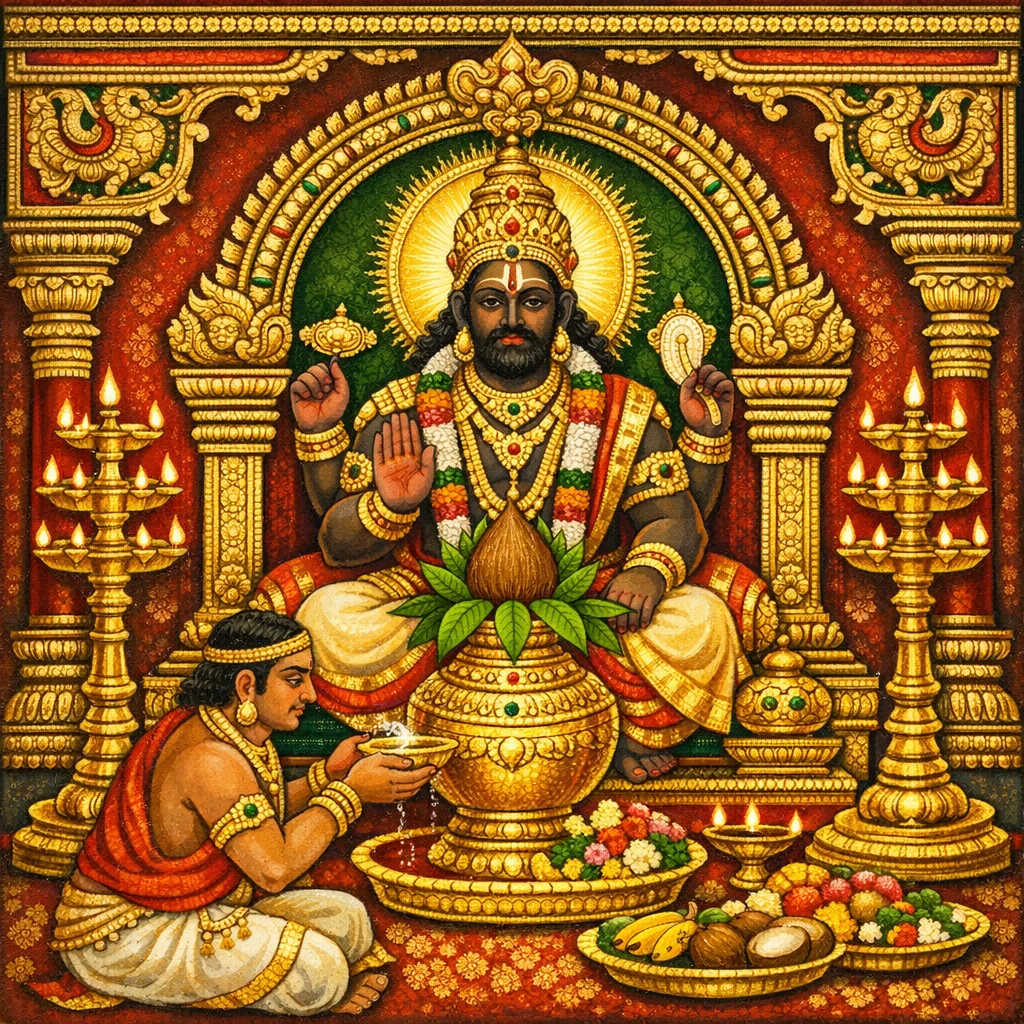
ಈ ಅಧ್ಯಾಯದಲ್ಲಿ ಭಗವಾನ್ ಅಗ್ನಿ ಅಗಸ್ತ್ಯರನ್ನು ವಿಷ್ಣುಸ್ವರೂಪನೆಂದು ಸ್ಪಷ್ಟವಾಗಿ ಹೇಳಿ, ಅಗಸ್ತ್ಯಕೇಂದ್ರಿತ ವ್ರತಪೂಜೆಯ ವಿಧಿಯನ್ನು ವಿಧಿಸುತ್ತಾನೆ; ಇದರಿಂದ ಹರಿಪ್ರಾಪ್ತಿ ಸಿದ್ಧಿಸುವುದೆಂದು ಸಂಪರ್ಕಿಸುತ್ತಾನೆ. ಮೂರು ದಿನಗಳು ಸೂರ್ಯೋದಯಕ್ಕೂ ಮುನ್ನ ಉಪವಾಸ, ಪೂಜೆ ಮಾಡಿ ಅಗಸ್ತ್ಯರಿಗೆ ಅರ್ಘ್ಯ ಅರ್ಪಿಸಬೇಕು. ಪ್ರದೋಷಕಾಲದಲ್ಲಿ ಕಾಶಪುಷ್ಪಗಳಿಂದ ಮಾಡಿದ ಪ್ರತಿಮೆಯನ್ನು ಜಲಘಟ/ಕುಂಭದಲ್ಲಿ ಪ್ರತಿಷ್ಠಿಸಿ ರಾತ್ರಿಜಾಗರಣೆ (ಪ್ರಜಾಗರ) ಮಾಡಬೇಕು. ನಂತರ ಬೆಳಿಗ್ಗೆ ಜಲಾಶಯದ ಬಳಿ ಅರ್ಘ್ಯ ನೀಡಿ, ಸಮುದ್ರಶೋಷಣೆ ಹಾಗೂ ಆತಾಪಿ–ವಾತಾಪಿ ಸಂಹಾರ ಮೊದಲಾದ ಕೀರ್ತಿಗಳನ್ನು ಸ್ಮರಿಸಿ ಸ್ತೋತ್ರಗಳಿಂದ ಸ್ತುತಿಸಿ ವರಗಳು ಮತ್ತು ಶುಭ ಪರಲೋಕಗತಿಯನ್ನು ಬೇಡಬೇಕು. ಚಂದನ, ಮಾಲೆ, ಧೂಪ, ವಸ್ತ್ರ, ಧಾನ್ಯ/ಅಕ್ಕಿ, ಹಣ್ಣು, ಚಿನ್ನ ಇತ್ಯಾದಿ ದ್ರವ್ಯಗಳು, ಬ್ರಾಹ್ಮಣರಿಗೆ ಘಟದಾನ, ಭೋಜನ ಮತ್ತು ದಕ್ಷಿಣೆ (ಗೋವು, ವಸ್ತ್ರ, ಚಿನ್ನ) ವಿವರಿಸಲಾಗಿದೆ. ಮಂತ್ರಪಾಠದ ಭೇದಗಳೂ ಉಲ್ಲೇಖ; ಮಹಿಳೆಯರು ಮತ್ತು ಶೂದ್ರರು ವೇದಮಂತ್ರವಿಲ್ಲದೆ ಆಚರಿಸಬೇಕೆಂಬ ನಿಯಮ. ಏಳು ವರ್ಷ ಅರ್ಘ್ಯವ್ರತದಿಂದ ಸರ್ವಸಮೃದ್ಧಿ, ಸಂತಾನವಿಲ್ಲದವರಿಗೆ ಪುತ್ರಲಾಭ, ಕನ್ಯೆಗೆ ರಾಜಪತಿ ಲಭಿಸುವ ಫಲಶ್ರುತಿ ಹೇಳಿದೆ.
Shlokas
No shlokas available for this adhyaya yet.
Frequently Asked Questions
Fasting and worship precede the arghya; at pradoṣa a kāśa-flower image is placed in a ghaṭa/kumbha, followed by night vigil; in the morning the arghya is offered near water, then tyāga (grain, fruit, libation) and charitable gifts/feeding of brāhmaṇas conclude the rite.
Sandalwood, garlands, incense, cloth, rice/grains, fruits, gold (and in an expanded description: five gems, gold and silver, seven grains, curd, sandalwood), plus a pot-gift to a brāhmaṇa and dakṣiṇā including cow, garments, and gold.
The rite explicitly aims at attaining Hari through Agastya-worship (mukti-oriented devotion) while also promising dharma-anchored prosperity—health, fortune, desired boons, lineage, and marital success—thus integrating dharma, artha, kāma, and mokṣa.
It states that for women and Śūdras the rite is ‘non-Vedic,’ i.e., performed without Vedic mantras, indicating an inclusive procedural adaptation while preserving the devotional and charitable structure.
By giving the arghya for seven years, ‘all obtain everything’: a childless woman gains sons and good fortune, and a maiden gains a husband of royal birth; the arghya is also described in some readings as imperishable and mind-fulfilling.