Adhyaya 201
Worship of the Nine Vyūhas (Nava-vyūha-arcana)
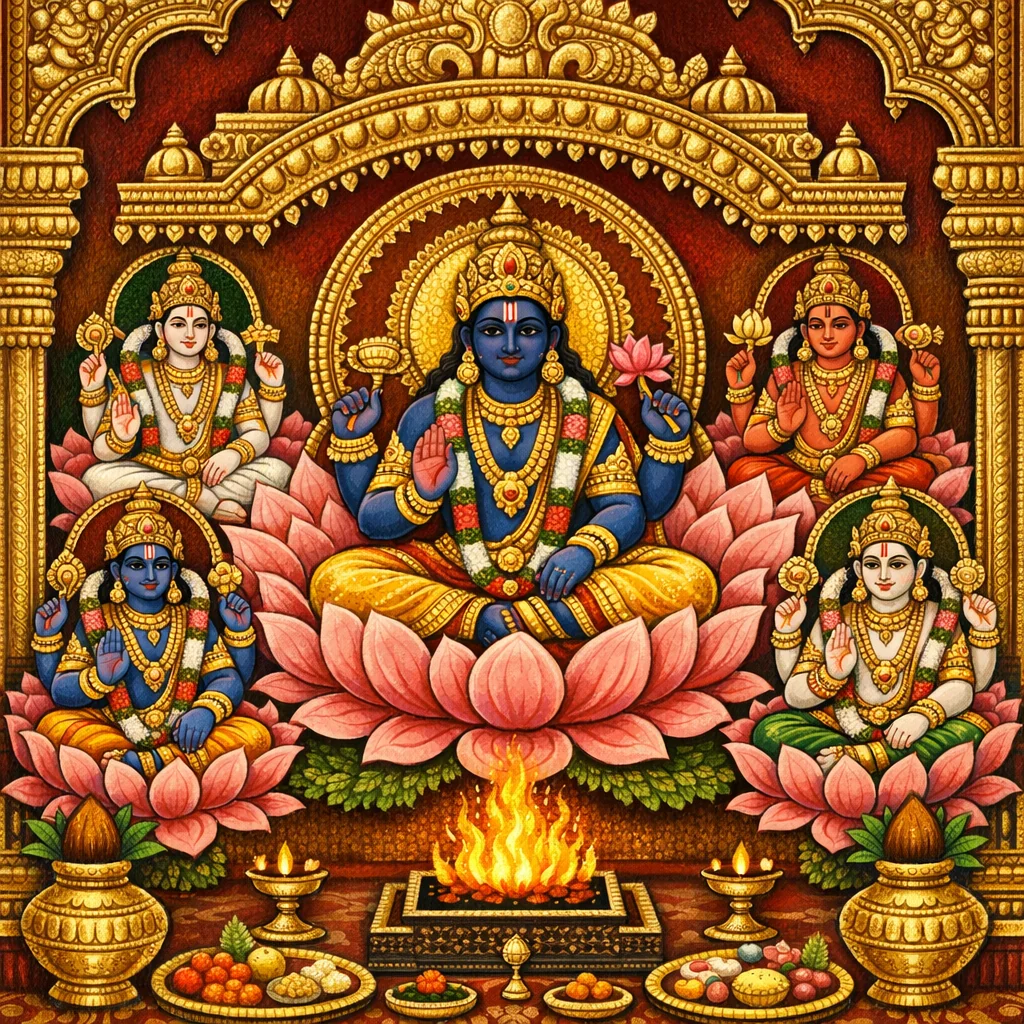
ಈ ಅಧ್ಯಾಯವು ಪೂರ್ವದ ದೀಪದಾನ-ವ್ರತದ ಸಮಾಪ್ತಿಯನ್ನು ಸೂಚಿಸಿ ತಕ್ಷಣವೇ ಹರಿಯಿಂದ ಪ್ರಸಾರವಾದ ನವವ್ಯೂಹ-ಅರ್ಚನೆಯ ತಾಂತ್ರಿಕ ವಿಧಿಗೆ ಪ್ರವೇಶಿಸುತ್ತದೆ. ಅಗ್ನಿ ಕಮಲ-ಮಂಡಲ ವಿನ್ಯಾಸವನ್ನು ಬೋಧಿಸುತ್ತಾನೆ—ಮಧ್ಯದಲ್ಲಿ ವಾಸುದೇವ, ದಿಕ್ಕುಗಳಲ್ಲಿ ಸಂಕರ್ಷಣ, ಪ್ರದ್ಯುಮ್ನ, ಅನಿರುದ್ಧ ಮತ್ತು ನಾರಾಯಣ; ಪ್ರತಿಯೊಂದಕ್ಕೂ ನಿರ್ದಿಷ್ಟ ಬೀಜಾಕ್ಷರಗಳು, ತತ್ತ್ವ/ಕರ್ಮಸ್ಥಾನ ನಿಯೋಜನೆ, ಜಲಸ್ಥಾಪನೆ ಮೊದಲಾದವುಗಳಿವೆ. ಮುಂದಾಗಿ ಸದ್ಬ್ರಹ್ಮಾ, ವಿಷ್ಣು, ನೃಸಿಂಹ, ಭೂರ್ವರಾಹಾದಿ ರೂಪಗಳ ಮಂತ್ರ-ಬೀಜ ವಿನ್ಯಾಸ, ದ್ವಾರಸ್ಥಾನ ಹಾಗೂ ಪಶ್ಚಿಮ ಭಾಗದಲ್ಲಿ ಸಹಾಯಕ ನ್ಯಾಸಗಳು, ಗರುಡ ಮತ್ತು ಗದಾ ಮಂತ್ರಗಳ ವಿಶೇಷ ಕ್ರಮಗಳು ವಿವರವಾಗುತ್ತವೆ. ನಂತರ ಬಾಹ್ಯ ಮಂಡಲದಿಂದ ಆಂತರೀಕರಣ—ದಶಾಂಗ-ಕ್ರಮ ಪೂಜೆ, ದಿಕ್ಪಾಲರಿಗಾಗಿ ಘಟಸ್ಥಾಪನೆ, ತೋರಣ-ವಿತಾನ ಕಲ್ಪನೆ, ಚಂದ್ರಾಮೃತ ಧ್ಯಾನ. ಅಂತಿಮವಾಗಿ ದ್ವಾದಶ ಬೀಜ ನ್ಯಾಸದಿಂದ ‘ದೈವದೇಹ’ ನಿರ್ಮಾಣ, ಪುಷ್ಪಕ್ಷೇಪದಿಂದ ಶಿಷ್ಯ ಗುರುತು, ಶುದ್ಧಿಗಾಗಿ ಹೋಮ ಸಂಖ್ಯೆಗಳು ಮತ್ತು ದೀಕ್ಷಾ ದಕ್ಷಿಣೆ ಹೇಳಿ—ದೀಕ್ಷೆಯನ್ನು ಈ ಕರ್ಮಶಾಸ್ತ್ರದ ಸಾಮಾಜಿಕ-ಆಧ್ಯಾತ್ಮಿಕ ಮುದ್ರೆಯಾಗಿ ಸ್ಥಾಪಿಸುತ್ತದೆ।
Shlokas
No shlokas available for this adhyaya yet.
Frequently Asked Questions
A lotus-maṇḍala Navavyūha worship beginning with Vāsudeva at the center, followed by directional deity placements with specific bīja-syllables, then internalization through visualization, daśāṅga-krama, and nyāsa culminating in dīkṣā.
After mandala and mantra placements, it shifts to subtle-body contemplation (lunar nectar), self-identification with Viṣṇu, and nyāsa that produces a “divine body,” explicitly valuing heart-worship of Hari (anirmālyā) as the inner completion of the rite.
Disciples are seated to the left, identify a chosen form by blind flower-casting, perform homa with 108 and then 1000 oblations for purification, and receive dīkṣā after payment of prescribed fees honoring the guru.