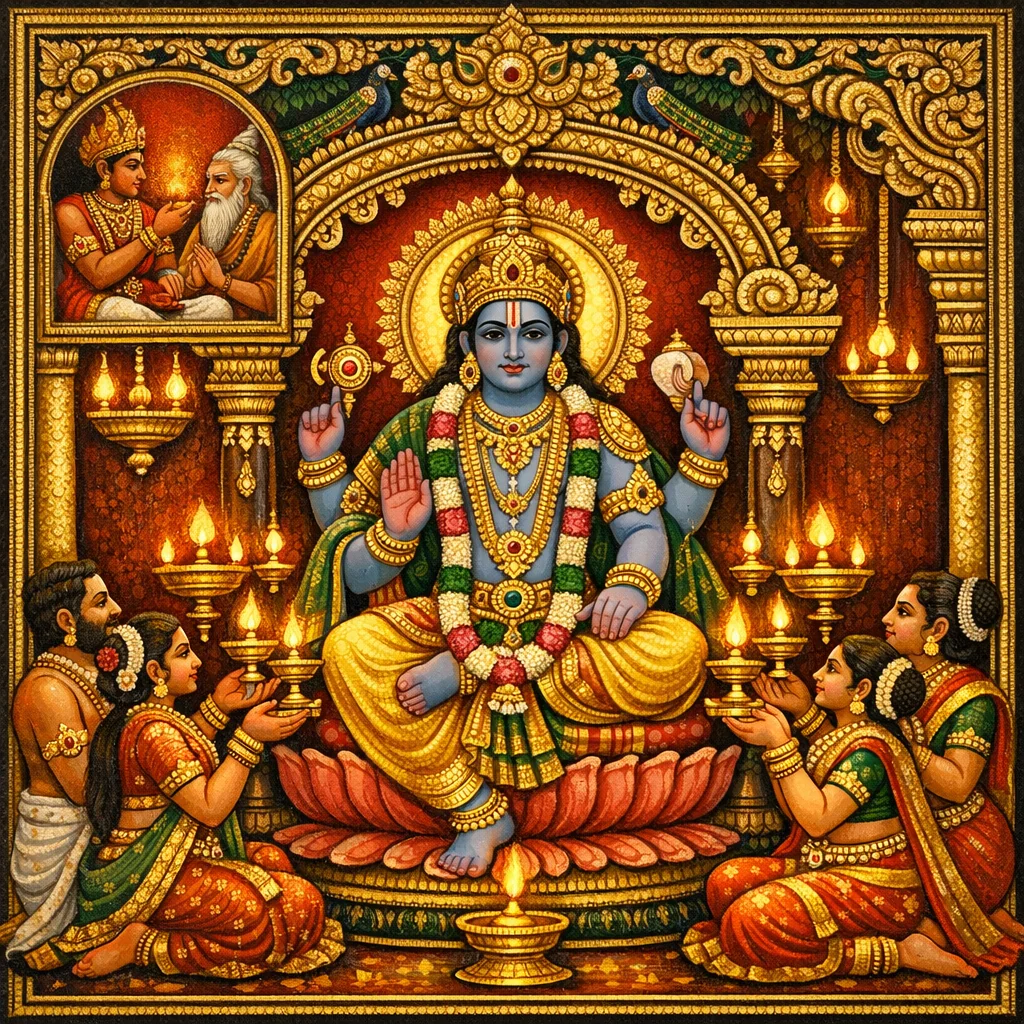
Adhyaya 200
Dīpadāna-vrata (The Vow of Offering Lamps)
ಭಗವಾನ್ ಅಗ್ನಿ ದೀಪದಾನವ್ರತವನ್ನು ಭುಕ್ತಿ–ಮುಕ್ತಿ ಫಲಪ್ರದವೆಂದು ಉಪದೇಶಿಸುತ್ತಾನೆ. ದೇವಾಲಯದಲ್ಲಾಗಲಿ ಬ್ರಾಹ್ಮಣನ ಮನೆಯಲ್ಲಿ ಆಗಲಿ ಒಂದು ವರ್ಷ ದೀಪವನ್ನು ಅರ್ಪಿಸಿ ಬೆಳಗಿಸಿದರೆ ಸಮಗ್ರ ಸಮೃದ್ಧಿ ದೊರೆಯುತ್ತದೆ; ವಿಶೇಷವಾಗಿ ಚಾತುರ್ಮಾಸ್ಯ ಮತ್ತು ಕಾರ್ತಿಕದಲ್ಲಿ ಇದರ ಪುಣ್ಯ ಅಪ್ರತಿಮ, ವಿಷ್ಣುಲೋಕಪ್ರಾಪ್ತಿ ಹಾಗೂ ಸ್ವರ್ಗಭೋಗಗಳನ್ನು ನೀಡುತ್ತದೆ. ನಂತರ ಲಲಿತೆಯ ಕಥೆಯಲ್ಲಿ ವಿಷ್ಣುಮಂದಿರದ ದೀಪಕ್ಕೆ ಸಂಬಂಧಿಸಿದ ಉದ್ದೇಶವಿಲ್ಲದ ಕೃತ್ಯವೂ ಮಹಾಫಲ ನೀಡಿದ್ದು, ಆಕೆ ರಾಜಕುಲದಲ್ಲಿ ಪುನರ್ಜನ್ಮ ಪಡೆದು ದಾಂಪತ್ಯಸಮೃದ್ಧಿಯನ್ನು ಹೊಂದಿದಳು. ದೀಪಚೌರ್ಯವನ್ನು ಕಠಿಣವಾಗಿ ಖಂಡಿಸಲಾಗಿದೆ—ಮೂಕ/ಜಡ ಜನ್ಮ ಮತ್ತು ಅಂಧಕಾರ-ನರಕಪಾತದ ಫಲ. ಇಂದ್ರಿಯಾಸಕ್ತಿ, ದುಷ್ಟಕಾಮ, ಪರಸ್ತ್ರೀಗಮನವನ್ನು ತ್ಯಜಿಸಿ ಹರಿನಾಮಜಪ ಮತ್ತು ಸರಳ ಅರ್ಪಣವಾಗಿ ದೀಪದಾನವನ್ನು ಆಚರಿಸಬೇಕೆಂದು ಬೋಧಿಸುತ್ತದೆ. ಅಂತ್ಯದಲ್ಲಿ ದೀಪದಾನವು ಎಲ್ಲ ವ್ರತಗಳ ಫಲವನ್ನು ವೃದ್ಧಿಸುತ್ತದೆ; ಈ ಉಪದೇಶವನ್ನು ಕೇಳಿ ಅನುಸರಿಸಿದರೆ ಉನ್ನತಗತಿ ಸಿದ್ಧವೆಂದು ದೃಢಪಡಿಸುತ್ತದೆ.
Shlokas
No shlokas available for this adhyaya yet.
Frequently Asked Questions
Offer a lamp—ideally sustained as a yearly practice—in a deity’s shrine (especially Viṣṇu’s) or a brāhmaṇa’s home; the act is taught as a high-merit vrata granting prosperity, longevity, clarity of sight, and higher worlds, ultimately supporting liberation.
Kārttika is presented as a peak season of ritual potency: lamp-giving then is said to yield exceptional heavenly results, surpassing ordinary times and amplifying vrata-fruit.
It demonstrates that even an unpremeditated or indirect contribution to a lamp-offering in a Viṣṇu temple can generate powerful puṇya, underscoring the vow’s efficacy and the sacredness of temple-based offerings.
The chapter condemns dīpa-theft with severe karmic outcomes and uses hell imagery to caution against negligence, sense-addiction, and sexual misconduct (adultery), redirecting the practitioner toward dharmic restraint and Hari-nāma.