Adhyaya 189
Śravaṇa Dvādaśī Vrata (श्रवणद्वादशीव्रतम्)
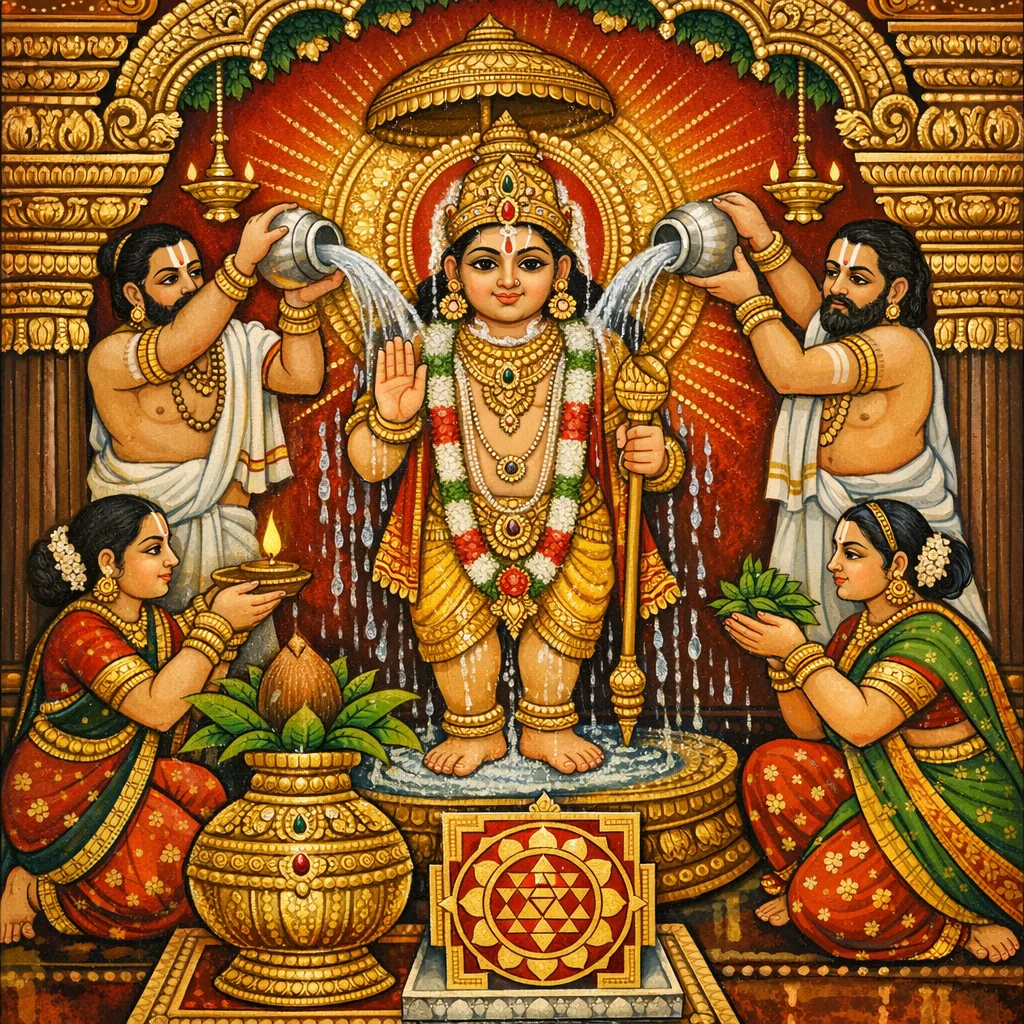
ಭಗವಾನ್ ಅಗ್ನಿ ಋಷಿ ವಸಿಷ್ಠರಿಗೆ ಭಾದ್ರಪದ ಶುಕ್ಲಪಕ್ಷದಲ್ಲಿ ಶ್ರವಣ ನಕ್ಷತ್ರಸಂಯೋಗದ ದ್ವಾದಶಿಯಂದು ಆಚರಿಸಬೇಕಾದ ‘ಶ್ರವಣ ದ್ವಾದಶೀ ವ್ರತ’ವನ್ನು ವಿಧಿಸುತ್ತಾನೆ. ಉಪವಾಸ, ಪವಿತ್ರ ಶ್ರವಣ ಮತ್ತು ಜ್ಞಾನಿಗಳ ಸತ್ಸಂಗದಿಂದ ಇದು ಅತ್ಯಂತ ಮಹಾಫಲಪ್ರದವೆಂದು ಹೇಳಲಾಗಿದೆ. ದ್ವಾದಶಿಯಲ್ಲಿ ನಿರಾಹಾರವಿದ್ದು, ತ್ರಯೋದಶಿಯಲ್ಲಿ ಸಾಮಾನ್ಯ ನಿಷೇಧ ಇದ್ದರೂ ಪಾರಣ ಮಾಡಬೇಕೆಂದು ಆಜ್ಞೆ. ಸ್ವರ್ಣಯಂತ್ರದ ಮೇಲೆ ಸ್ಥಾಪಿಸಿದ ಜಲಕಲಶದಲ್ಲಿ ವಿಷ್ಣು-ವಾಮನನ ಆವಾಹನ ಮಾಡಿ ಪೂಜೆ, ಶುದ್ಧಜಲ ಹಾಗೂ ಪಂಚಾಮೃತದಿಂದ ಅಭಿಷೇಕ, ಶ್ವೇತವಸ್ತ್ರ, ಛತ್ರ, ಪಾದುಕಾ ಮುಂತಾದ ಉಪಚಾರಗಳೊಂದಿಗೆ ನಿಯಮಿತ ಪೂಜಾವಿಧಿ, ಹಾಗೆಯೇ ವಿಷ್ಣುವಿನ ಅಂಗಗಳಿಗೆ ಮಂತ್ರ-ನ್ಯಾಸದ ಕ್ರಮ ವರ್ಣಿತವಾಗಿದೆ. ಘೃತಪಾಕ ಅನ್ನ ನೈವೇದ್ಯ, ದಧಿ-ಭಾತ ಕಲಶದಾನ, ರಾತ್ರಿಜಾಗರಣೆ, ಪ್ರಾತಃ ಸಂಗಮಸ್ನಾನ ಮತ್ತು ಗೋವಿಂದ (ಬುಧಶ್ರವಣ)ನಿಗೆ ಪುಷ್ಪಾಂಜಲಿ ಪ್ರಾರ್ಥನೆ ಮಾಡುತ್ತಾರೆ. ಅಂತ್ಯದಲ್ಲಿ ದಕ್ಷಿಣೆ ಮತ್ತು ಬ್ರಾಹ್ಮಣಭೋಜನ; ವಾಮನನೇ ಅರ್ಪಣದಲ್ಲಿ ವ್ಯಾಪ್ತನಾಗಿ ಅದನ್ನು ಸ್ವೀಕರಿಸಿ ಭುಕ್ತಿ, ಕೀರ್ತಿ, ಸಂತಾನ, ಐಶ್ವರ್ಯ ಮತ್ತು ಮುಕ್ತಿ ನೀಡುತ್ತಾನೆ ಎಂಬ ಉಪಸಂಹಾರ।
Shlokas
No shlokas available for this adhyaya yet.
Frequently Asked Questions
It is prescribed on Dvādaśī in the bright fortnight of Bhādrapada when it is conjoined with the Śravaṇa nakṣatra; the chapter notes manuscript variants about alternative month/nakṣatra readings, but the main instruction emphasizes Bhādrapada-śukla Dvādaśī with Śravaṇa.
The practitioner remains without food on Dvādaśī (nirāhāra) and performs pāraṇa on Trayodaśī, stated as to be done even if it is otherwise considered prohibited—highlighting the vrata’s specific injunction.
Invocation into a water-pot placed on a golden yantra, abhiṣeka with pure water and pañcāmṛta, arghya, fragrant homa with the Vāmana mantra, naivedya cooked in ghee, gifting pots of curd-rice, and concluding with dakṣiṇā and feeding brāhmaṇas.
It explicitly states results such as enjoyment, fame, progeny, and sovereignty (bhukti-oriented aims) while also promising liberation (mukti), presenting disciplined ritual action as a bridge between worldly order and spiritual release.