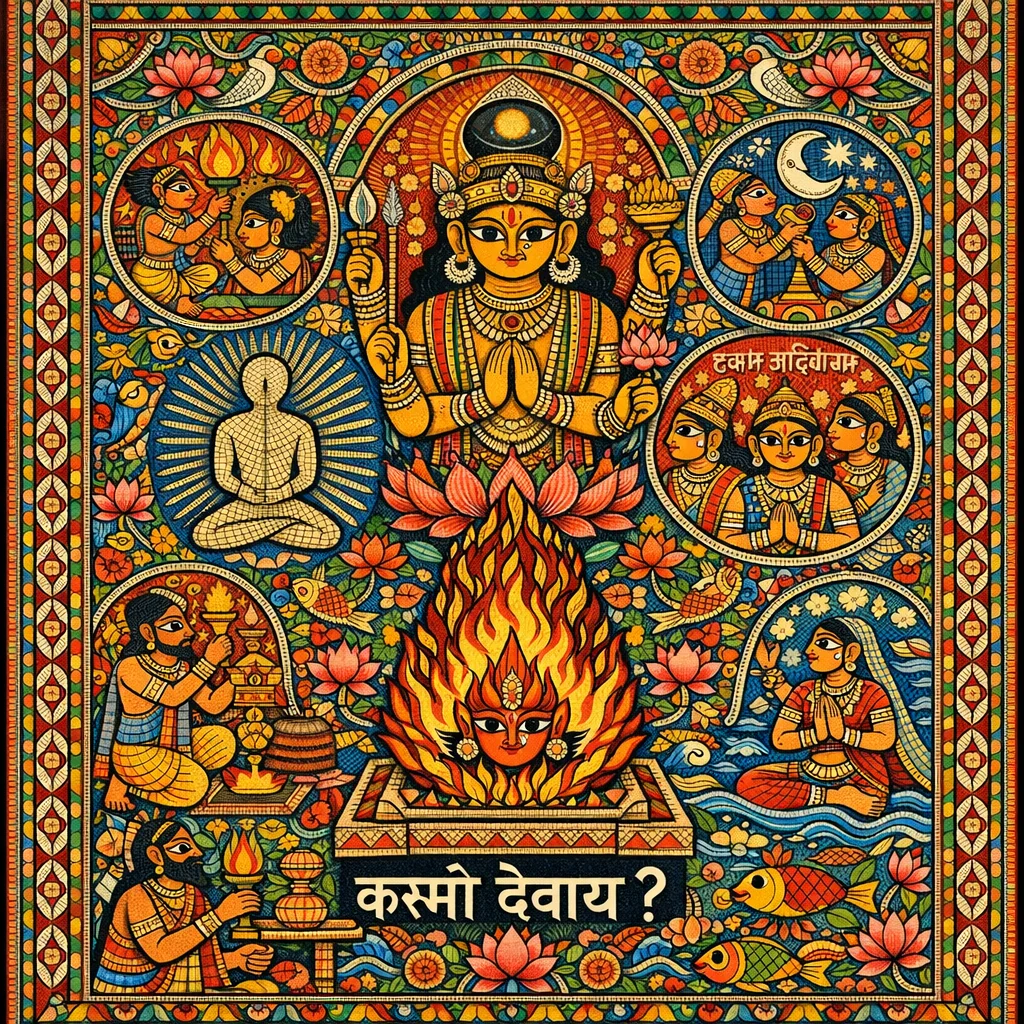
Adhyaya 32
Shivasankalpa and meditation mantras.
Mantras
Mantra 1
तदे॒वाग्निस्तदा॑दि॒त्यस्तद्वा॒युस्तदु॑ च॒न्द्रमा॑: । तदे॒व शु॒क्रं तद्ब्रह्म॒ ता आप॒: स प्र॒जाप॑तिः
That, verily, is Agni; that is Āditya; that is Vāyu; that, indeed, is the Moon. That is the bright (splendour); that is Brahman; those are the Waters: that is Prajāpati.
Mantra 2
सर्वे॑ निमे॒षा ज॑ज्ञिरे वि॒द्युत॒: पुरु॑षा॒दधि॑ । नै॑नमू॒र्ध्वं न ति॒र्यञ्चं॒ न मध्ये॒ परि॑ जग्रभत्
All the instants were born from the lightning, from the Puruṣa. Him none encompassed—neither above, nor across, nor in the midst—so as to seize Him round about.
Mantra 3
न तस्य॑ प्रति॒मा अ॑स्ति॒ यस्य॒ नाम॑ म॒हद्यश॑: । हि॒र॒ण्य॒ग॒र्भ इत्ये॒षः मा मा॑ हिᳪसी॒दित्ये॒षा यस्मा॒न्न जा॒त इत्ये॒ष:
There is no likeness of Him whose name is Great Glory. ‘Hiraṇyagarbha’—this is His (name); ‘Hurt me not’—this is (the prayer); ‘From whom none is born’—this is His (designation).
Mantra 4
ए॒षो ह॑ दे॒वः प्र॒दिशोऽनु॒ सर्वा॒: पूर्वो॑ ह जा॒तः स उ॒ गर्भे॑ अ॒न्तः । स ए॒व जा॒तः स ज॑नि॒ष्यमा॑णः प्र॒त्यङ् जना॑स्तिष्ठति स॒र्वतो॑मुखः
This god, indeed, hath followed all the regions; first, indeed, was He born, and He is within the womb. He, being born, and He being yet to be born, standeth facing men, having His face on every side.
Mantra 5
यस्मा॑ज्जा॒तं न पु॒रा किं चनै॒व य आ॑ब॒भूव॒ भुव॑नानि॒ विश्वा॑ । प्र॒जाप॑तिः प्र॒जया॑ सᳪररा॒णस्त्रीणि॒ ज्योती॑ᳪषि सचते॒ स षो॑ड॒शी
From whom, when born, there was naught before—who afterwards became all these worlds: Prajāpati, rejoicing with his progeny, cleaveth unto the three lights; he is the Sixteenth.
Mantra 6
येन॒ द्यौरु॒ग्रा पृ॑थि॒वी च॑ दृ॒ढा येन॒ स्व॒ स्तभि॒तं येन॒ नाक॑: । यो अ॒न्तरि॑क्षे॒ रज॑सो वि॒मान॒: कस्मै॑ दे॒वाय॑ ह॒विषा॑ विधेम
By whom the mighty heaven and earth were made firm; by whom the upper region was propped, by whom the firmament: who in the mid-air is the measurer of the rajas—unto what god shall we offer worship with oblation?
Mantra 7
यं क्रन्द॑सी॒ अव॑सा तस्तभा॒ने अ॒भ्यैक्षे॑तां॒ मन॑सा॒ रेज॑माने । यत्राधि॒ सूर॒ उदि॑तो वि॒भाति॒ कस्मै॑ दे॒वाय॑ ह॒विषा॑ विधेम । आपो॑ ह॒ यद्बृ॑ह॒तीर्यश्चि॒दाप॑:
Him whom the two roaring ones, with succour, being propped, beheld—trembling in mind; whereon the Sun, when risen, shineth forth: unto what god shall we offer worship with oblation? The Waters indeed—those great ones, yea, whatsoever waters there be—
Mantra 8
वे॒नस्तत्प॑श्य॒न्निहि॑तं॒ गुहा॒ सद्यत्र॒ विश्वं॒ भव॒त्येक॑नीडम् । तस्मि॑न्नि॒दᳪ सं च॒ वि चै॑ति॒ सर्व॒ᳪ स ओत॒: प्रोत॑श्च वि॒भूः प्र॒जासु॑
Vena, beholding that which is hidden, abiding in the cave—wherein the whole becometh of one nest: therein this All both gathereth and again disperseth; he is woven in and woven through, the all-pervading, among creatures.
Mantra 9
प्र तद्वो॑चेद॒मृतं॒ नु वि॒द्वान् ग॑न्ध॒र्वो धाम॒ विभृ॑तं॒ गुहा॒ सत् । त्रीणि॑ प॒दानि॒ निहि॑ता॒ गुहा॑स्य॒ यस्तानि॒ वेद॒ स पि॒तुः पि॒ताऽस॑त्
Let him, the knower, proclaim that immortal thing: the Gandharva, abiding in the cave, beareth the ordinance/abode distributed. Three steps are hidden in the cave; whoso knoweth them, he becometh the father of the father.
Mantra 10
स नो॒ बन्धु॑र्जनि॒ता स वि॑धा॒ता धामा॑नि वेद॒ भुव॑नानि॒ विश्वा॑ । यत्र॑ दे॒वा अ॒मृत॑मानशा॒नास्तृ॒तीये॒ धाम॑न्न॒ध्यैर॑यन्त
He is our kinsman, our begetter, he the disposer; he knoweth the abodes, all the worlds,—where the Gods, having won immortality, in the third abode set (the rite) on its course.
Mantra 11
प॒रीत्य॑ भू॒तानि॑ प॒रीत्य॑ लो॒कान् प॒रीत्य॒ सर्वा॑: प्र॒दिशो॒ दिश॑श्च । उ॒प॒स्थाय॑ प्रथम॒जामृ॒तस्या॒त्मना॒ऽऽत्मान॑म॒भि सं वि॑वेश
Having encompassed beings, having encompassed the worlds, having encompassed all the intermediate regions and the quarters, having approached the first-born of immortality, with his own self he entered into himself completely.
Mantra 12
परि॒ द्यावा॑पृथि॒वी स॒द्य इ॒त्वा परि॑ लो॒कान् परि॒ दिश॒: परि॒ स्व॒: । ऋ॒तस्य॒ तन्तुं॒ वित॑तं वि॒चृत्य॒ तद॑पश्य॒त्तद॑भव॒त्तदा॑सीत्
Having straightway encompassed heaven and earth, having encompassed the worlds, the quarters, and the heaven, having traced out the thread of Ṛta, stretched forth,—that he beheld; that he became; that verily it was.
Mantra 13
सद॑स॒स्पति॒मद्भु॑तं प्रि॒यमिन्द्र॑स्य॒ काम्य॑म् । स॒निं मे॒धाम॑यासिष॒ᳪस्वाहा॑
The Lord of the Sadas, wondrous, dear, desirable unto Indra,—gain and intelligence I have besought: Svāhā!
Mantra 14
यां मे॒धां दे॑वग॒णाः पि॒तर॑श्चो॒पास॑ते । तया॒ माम॒द्य मे॒धयाऽग्ने॑ मे॒धावि॑नं कुरु॒ स्वाहा॑
That Medhā which the companies of the Gods and the Fathers do worship,—with that Medhā, even to-day, O Agni, make me possessed of Medhā: Svāhā!
Mantra 15
मे॒धां मे॒ वरु॑णो ददातु मे॒धाम॒ग्निः प्र॒जाप॑तिः । मे॒धामिन्द्र॑श्च वा॒युश्च॑ मे॒धां धा॒ता द॑दातु मे॒ स्वाहा॑
May Varuṇa bestow on me understanding; may Agni, even Prajāpati, bestow understanding. May Indra and Vāyu bestow understanding; may Dhātṛ bestow understanding on me: Svāhā!
Mantra 16
इ॒दं मे॒ ब्रह्म॑ च क्ष॒त्रं चो॒भे श्रिय॑मश्नुताम् । मयि॑ दे॒वा द॑धतु॒ श्रिय॒मुत्त॑मां॒ तस्यै॑ ते॒ स्वाहा॑
May this my priestly power and my royal power—both—attain prosperity. In me may the gods establish the highest prosperity: to her be thine offering-call, Svāhā!
Frequently Asked Questions
It presents the many deities of ritual as expressions of one incomparable, imageless Supreme (Prajāpati/Hiraṇyagarbha/Puruṣa) who pervades all worlds and directions, and it aligns sacrifice with that single Reality.
To prevent limiting the Supreme to any measurable likeness and to ground worship in apophatic reverence—affirming that the ultimate source cannot be captured by form, comparison, or spatial direction.
Concise yajus formulas for medhā (intelligence and retention), a svāhā offering to Sadasaspati (Lord of the ritual assembly), and a prayer that brahman and kṣatra prosper together in harmony.