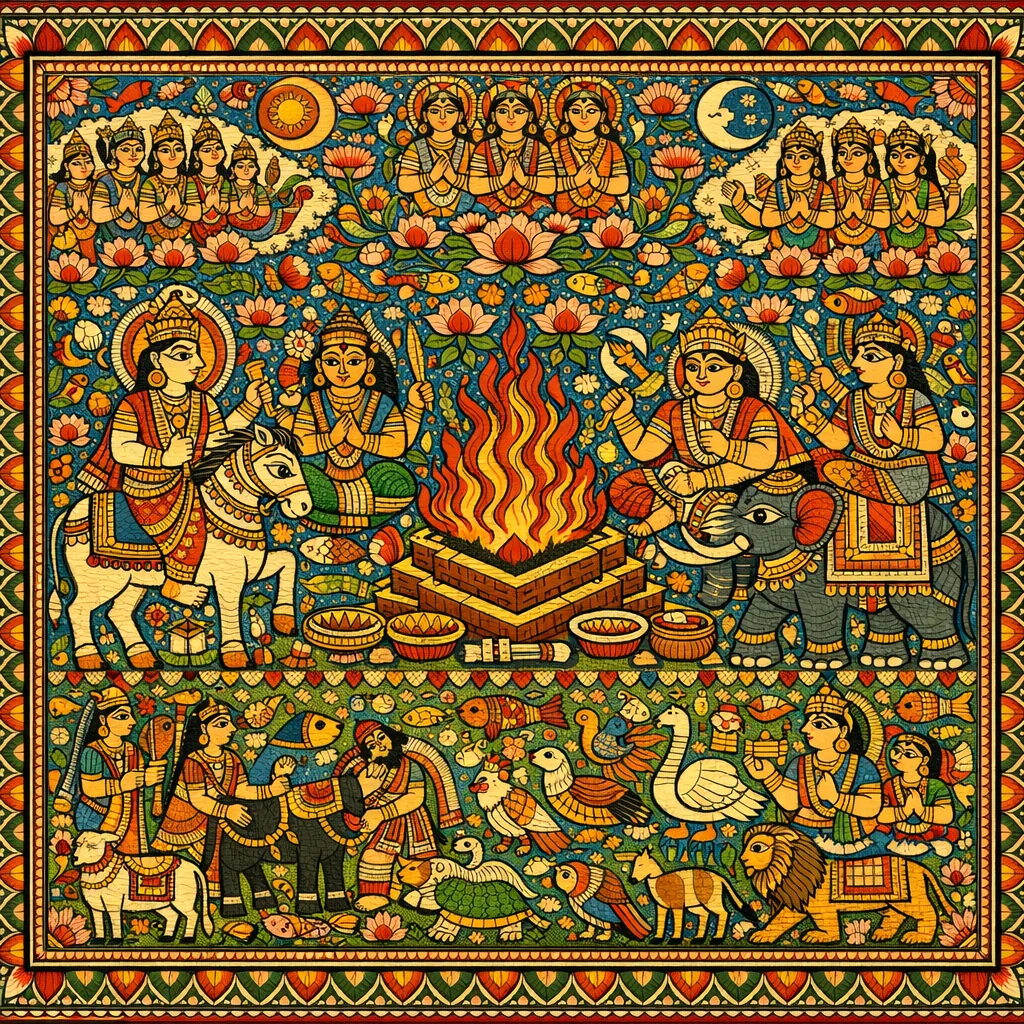
Adhyaya 24
Purushamedha and victim lists.
Mantras
Mantra 1
अश्व॑स्तूप॒रो गो॑मृ॒गस्ते प्रा॑जाप॒त्याः कृ॒ष्णग्री॑व आग्ने॒यो र॒राटे॑ पु॒रस्ता॑त्सारस्व॒ती मे॒ष्यधस्ता॒द्धन्वो॑राश्वि॒नाव॒धोरा॑मौ बा॒ह्वोः सौ॑मापौ॒ष्णः श्या॒मो नाभ्या॑ᳪ सौर्यया॒मौ श्वे॒तश्च॑ कृ॒ष्णश्च॑ पा॒र्श्वयो॑स्त्वा॒ष्ट्रौ लो॑म॒शस॑क्थौ स॒क्थ्योर्वा॑य॒व्य॒: श्वे॒तः पुच्छ॒ इन्द्रा॑य स्वप॒स्या॒य वे॒हद्वै॑ष्ण॒वो वा॑म॒नः
A horse, hump-backed, of cow-antelope hue—thine are the portions of Prajāpati. Black-necked, Agni’s, in the forehead in front; Sarasvatī’s is the ewe beneath at the jaws; the Aśvins’ are the two lower rams at the arms; Soma-and-Pūṣan’s is the dark one at the navel; the two solar ones, the white and the black, are at the flanks; Tvaṣṭṛ’s are the shaggy-thighed pair at the thighs; Vāyu’s is the white one at the tail; for Indra, for skilful work, is the vehaḍ; and Viṣṇu’s is the dwarf.
Mantra 2
रोहि॑तो धू॒म्ररो॑हितः क॒र्कन्धु॑रोहित॒स्ते सौ॒म्या ब॒भ्रुर॑रु॒णब॑भ्रु॒: शुक॑बभ्रु॒स्ते वा॑रु॒णाः शि॑ति॒रन्ध्रो॒ऽन्यत॑: शितिरन्ध्रः सम॒न्तशि॑तिरन्ध्र॒स्ते सा॑वि॒त्राः शि॑तिबा॒हुर॒न्यत॑: शितिबाहु सम॒न्तशि॑तिबाहु॒स्ते बा॑र्हस्प॒त्याः पृष॑ती क्षु॒द्रपृ॑षती स्थू॒लपृ॑षती॒ ता मै॑त्रावरु॒ण्य॒:
The ruddy one, the smoke-ruddy, the jujube-ruddy—these are Soma’s. The brown, the ruddy-brown, the parrot-brown—these are Varuṇa’s. The white-holed on one side, the white-holed on the other, the white-holed all round—these are Savitṛ’s. The white-armed on one side, the white-armed on the other, the white-armed all round—these are Bṛhaspati’s. The speckled, the small-speckled, the large-speckled—these belong to Mitra-and-Varuṇa.
Mantra 3
शु॒द्धवा॑लः स॒र्वशु॑द्धवालो मणि॒वाल॒स्त आ॑श्वि॒नाः श्येत॑: श्येता॒क्षो॒ऽरु॒णस्ते रु॒द्राय॑ पशु॒पत॑ये क॒र्णा या॒मा अ॑वलि॒प्ता रौ॒द्रा नभो॑रूपाः पार्ज॒न्याः
The pure-tailed, the wholly pure-tailed, the jewel-tailed—these are the Aśvins’. The white one, the white-eyed, the ruddy—these are for Rudra, the Lord of beasts. The ear-marked, the yāma-marked, the smeared—these are Rudra’s; the sky-formed are Parjanya’s.
Mantra 4
पृश्नि॑स्तिर॒श्चीन॑पृश्निरू॒र्ध्वपृ॑श्नि॒स्ते मा॑रु॒ताः फ॒ल्गूर्लो॑हितो॒र्णी प॑ल॒क्षी ताः सा॑रस्व॒त्य॒: प्लीहा॒कर्ण॑: शुण्ठा॒कर्णो॑ऽध्यालोह॒कर्ण॒स्ते त्वा॒ष्ट्राः कृ॒ष्णग्री॑वः शिति॒कक्षो॑ऽञ्जिस॒क्थस्त ऐ॑न्द्रा॒ग्नाः कृ॒ष्णाञ्जि॒रल्पा॑ञ्जिर्म॒हाञ्जि॒स्त उ॑ष॒स्या॑:
The speckled, the cross-speckled, the upward-speckled—these are the Maruts’. The pale one, the red-woolled, the dappled—these are Sarasvatī’s. The spleen-eared, the lopped-eared, the over-red-eared—these are Tvaṣṭṛ’s. The black-necked, the white-shouldered, the bright-thighed—these are Indra-and-Agni’s. The black-bright, the little-bright, the great-bright—these are Dawn’s.
Mantra 5
शि॒ल्पा वै॑श्वदे॒व्यो रोहि॑ण्य॒स्त्र्यव॑यो वा॒चेऽवि॑ज्ञाता॒ अदि॑त्यै॒ सरू॑पा धा॒त्रे व॑त्सत॒र्यो दे॒वानां॒ पत्नी॑भ्यः
The well-formed ones are for the All-gods; the ruddy ones; the threefold-limbed ones. The unrecognised are for Speech; the like-formed for Aditi; the cow-with-calf (or calf-bearing) for Dhātṛ; the cow-kind for the Wives of the gods.
Mantra 6
कृ॒ष्णग्री॑वा आग्ने॒याः शि॑ति॒भ्रवो॒ वसू॑ना॒ᳪ रोहि॑ता रु॒द्राणा॑ᳪ श्वे॒ता अ॑वरो॒किण॑ आदि॒त्यानां॒ नभो॑रूपाः पार्ज॒न्याः
Black-necked are those belonging to Agni; bright-browed those of the Vasus; ruddy those of the Rudras; white, with the lower streak, those of the Ādityas; and those of Parjanya are of the form of the sky.
Mantra 7
उ॒न्न॒त ऋ॑ष॒भो वा॑म॒नस्त ऐ॑न्द्रवैष्ण॒वा उ॑न्न॒तः शि॑तिबा॒हुः शि॑तिपृ॒ष्ठस्त ऐ॑न्द्राबार्हस्प॒त्याः शुक॑रूपा वाजि॒नाः क॒ल्माषा॑ आग्निमारु॒ताः श्या॒माः पौ॒ष्णा:
Raised, a bull, and dwarf—these belong to Indra and Viṣṇu; raised, white-armed, white-backed—these belong to Indra and Bṛhaspati; boar-formed are the vigorous; dappled belong to Agni and the Maruts; dark are those of Pūṣan.
Mantra 8
एता॑ ऐन्द्रा॒ग्ना द्वि॑रू॒पा अ॑ग्नीषो॒मीया॑ वाम॒ना अ॑न॒ड्वाह॑ आग्नावैष्ण॒वा व॒शा मै॑त्रावरु॒ण्योऽन्यत॑एन्यो मै॒त्र्य॒:
These, belonging to Indra and Agni, are of two forms; those belonging to Agni and Soma are dwarfish; the draught-ox belongs to Agni and Viṣṇu; the barren cow is for Mitra and Varuṇa; and the ‘other-formed’ is for Mitra.
Mantra 9
कृ॒ष्णग्री॑वा आग्ने॒या ब॒भ्रव॑: सौ॒म्याः श्वे॒ता वा॑य॒व्या अवि॑ज्ञाता॒ अदि॑त्यै॒ सरू॑पा धा॒त्रे व॑त्सत॒र्यो॒ दे॒वानां॒ पत्नी॑भ्यः
Black-necked belong to Agni; brown belong to Soma; white belong to Vāyu; those unrecognised are for Aditi; those of like form are for Dhātṛ; and the calf-bearing (females) are for the Wives of the gods.
Mantra 10
कृ॒ष्णा भौ॒मा धू॒म्रा आ॑न्तरि॒क्षा बृ॒हन्तो॑ दि॒व्याः श॒बला॑ वैद्यु॒ताः सि॒ध्मास्ता॑र॒काः
Black are the earthly; smoky are those of the mid-air; great are the heavenly; pied are those of the lightning; and speckled are the starry.
Mantra 11
धू॒म्रान्व॑स॒न्तायाल॑भते श्वे॒तान्ग्री॒ष्माय॑ कृ॒ष्णान्व॒र्षाभ्यो॑ऽरु॒णाञ्छ॒रदे॒ पृष॑तो हेम॒न्ताय॑ पि॒शङ्गा॒ञ्छिशि॑राय
Smoke-coloured (victims) he takes for Spring; white for Summer; black for the Rains; ruddy for Autumn; speckled for Winter; tawny for the Dewy season.
Mantra 12
त्र्यव॑यो गाय॒त्र्यै पञ्चा॑वयस्त्रि॒ष्टुभे॑ दित्य॒वाहो॒ जग॑त्यै त्रिव॒त्सा अ॑नु॒ष्टुभे॑ तुर्य॒वाह॑ उ॒ष्णिहे॑
Threefold (victims) for Gāyatrī; fivefold for Triṣṭubh; (such as are) ‘day-bearers’ for Jagatī; three-yearlings for Anuṣṭubh; ‘fourth-bearers’ for Uṣṇih.
Mantra 13
प॒ष्ठ॒वाहो॒ वि॒राज॑ उ॒क्षाणो॑ बृह॒त्या ऋ॑ष॒भाः क॒कुभे॑ऽन॒ड्वाह॑: प॒ङ्क्त्यै धे॒नवो॑ऽतिच्छन्दसे
‘Back-bearers’ for Virāj; bulls for Bṛhatī; herd-lords for Kakubh; draught-oxen for Paṅkti; milch-cows for Aticchandas.
Mantra 15
कृ॒ष्णग्री॑वा आग्ने॒या ब॒भ्रव॑: सौ॒म्या उ॑पध्व॒स्ताः सा॑वि॒त्रा व॑त्सत॒र्य॒: सारस्व॒त्य॒: श्या॒माः पौ॒ष्णाः पृश्न॑यो मारु॒ता ब॑हुरू॒पा वै॑श्वदे॒वा व॒शा द्या॑वापृथि॒वीया॑: ।। १ ४ ।। उ॒क्ताः स॑ञ्च॒रा एता॑ ऐन्द्रा॒ग्नाः कृ॒ष्णाः वा॑रु॒णाः पृश्न॑यो मारु॒ताः का॒यास्तू॑प॒राः
Black-necked (victims) are for Agni; brown are for Soma; the ‘upadhvasta’ are for Savitṛ; the ‘vatsatarya’ for Sarasvatī; the dark-coloured for Pūṣan; the speckled for the Maruts; the many-coloured for the All-gods; the barren cow for Heaven and Earth. These are declared to be the ‘roaming’ (classes): for Indra-and-Agni the black; for Varuṇa (a class so named); for the Maruts the speckled; the kāyā; the stūpara.
Mantra 17
अ॒ग्नयेऽनी॑कवते प्रथम॒जानाल॑भते म॒रुद्भ्य॑: सान्तप॒नेभ्य॑: सवा॒त्यान्म॒रुद्भ्यो॑ गृहमे॒धिभ्यो॒ बष्कि॑हान्म॒रुद्भ्य॑: क्री॒डिभ्य॑: सᳪसृ॒ष्टान्म॒रुद्भ्य॒: स्वत॑वद्भ्योऽनुसृ॒ष्टान् ।। १ ६ ।। उ॒क्ताः स॑ञ्च॒रा एता॑ ऐन्द्रा॒ग्नाः प्रा॑शृ॒ङ्गा मा॑हे॒न्द्रा ब॑हुरू॒पा वै॑श्वकर्म॒णाः
For Agni, the Foremost, he takes the first-born (victims); for the Maruts, the Scorching, the ‘savātya’; for the Maruts, the House-furthering, the ‘baṣkihā’; for the Maruts, the Sportive, the ‘combined’; for the Maruts, the Self-strong, the ‘following-combined’. These are declared to be the ‘roaming’ (classes): for Indra-and-Agni the forward-horned; for Great Indra the many-coloured; for Viśvakarman (those so designated).
Mantra 18
धू॒म्रा ब॒भ्रुनी॑काशाः पितॄ॒णाᳪ सोम॑वतां ब॒भ्रवो॑ धू॒म्रनी॑काशाः पितॄ॒णां ब॑र्हि॒षदां॑ कृ॒ष्णा ब॒भ्रुनी॑काशाः पितॄ॒णाम॑ग्निष्वा॒त्तानां॑ कृ॒ष्णाः पृष॑न्तस्त्रैयम्ब॒काः
Smoke-hued, of tawny sheen, are the Fathers that have Soma; tawny, of smoke-like sheen, are the Fathers that sit upon the Barhiṣ; black, of tawny sheen, are the Fathers, the Agniṣvāttas; black, speckled, are the Traiyambakas.
Mantra 19
उ॒क्ताः स॑ञ्च॒रा एता॑: शुनासी॒रीया॑: श्वे॒ता वा॑य॒व्या॒: श्वे॒ताः सौ॒र्याः
These, as declared, are the ranging ones: the Śunāsīrīyas; white are those of Vāyu; white are those of Sūrya.
Mantra 20
व॒स॒न्ताय॑ क॒पिञ्ज॑ला॒नाल॑भते ग्री॒ष्माय॑ कल॒विङ्का॑न्व॒र्षाभ्य॑स्ति॒त्तिरी॑ञ्छ॒रदे॒ वर्ति॑का हेम॒न्ताय॒ कक॑रा॒ञ्छिशि॑राय॒ विक॑करान्
For Spring he lays hold of the kapiñjala birds; for Summer the kalaviṅkas; for the Rains the tittiris; for Autumn the quails; for Winter the kakaras; for the Cool season the vikakaras.
Mantra 21
स॒मु॒द्राय॑ शिशु॒मारा॒नाल॑भते प॒र्जन्या॑य म॒ण्डूका॑न॒द्भ्यो मत्स्या॑न्मि॒त्राय॑ कुली॒पया॒न्वरु॑णाय ना॒क्रान्
For the Ocean he lays hold of the śiśumāras; for Parjanya the frogs; for the Waters the fishes; for Mitra the kulīpayas; for Varuṇa the crocodiles.
Mantra 22
सोमा॑य ह॒ᳪसानाल॑भते वा॒यवे॑ ब॒लाका॑ इन्द्रा॒ग्निभ्यां॒ क्रुञ्चा॑न्मि॒त्राय॑ म॒द्गून्वरु॑णाय चक्रवा॒कान्
For Soma he lays hold of the haṃsas; for Vāyu the balākās; for Indra and Agni the kruñcas; for Mitra the madgūs; for Varuṇa the cakravākas.
Mantra 23
अ॒ग्नये॑ कु॒टरू॒नाल॑भते॒ वन॒स्पति॑भ्य॒ उलू॑कान॒ग्नीषोमा॑भ्यां॒ चाषा॑न॒श्विभ्यां॑ म॒यूरा॑न्मि॒त्रावरु॑णाभ्यां क॒पोता॑न्
For Agni he lays hold of the Kuṭarū-creatures; for the Lords of the Forest, the owls; for Agni and Soma, the Cāṣa-birds; for the Aśvins, the peacocks; for Mitra and Varuṇa, the pigeons.
Mantra 24
सोमा॑य ल॒बानाल॑भते॒ त्वष्ट्रे॑ कौली॒कान्गो॑षा॒दीर्दे॒वानां॒ पत्नी॑भ्यः कु॒लीका॑ देवजा॒मिभ्यो॒ऽग्नये॑ गृ॒हप॑तये पारु॒ष्णान्
For Soma he lays hold of the Labā-creatures; for Tvaṣṭṛ, the Kaulīka; the Goṣādī for the Wives of the Gods; the Kulīkā for the divine Kindred; and for Agni, the Lord of the House, the Pāruṣṇa.
Mantra 25
अह्ने॑ पा॒राव॑ता॒नाल॑भते॒ रात्र्यै॑ सीचा॒पूर॑होरा॒त्रयो॑: स॒न्धिभ्यो॑ ज॒तूर्मासे॑भ्यो दात्यौ॒हान्त्सं॑वत्स॒राय॑ मह॒तः सु॑प॒र्णान्
For Day he lays hold of the Pārāvata-birds; for Night, the Sīcāpūra; for the junctions of Day and Night, the Cāturmāsya-powers, the Dātyauhā; and for the Year, the great fair-winged birds.
Mantra 26
भूम्या॑ आ॒खूनाल॑भते॒ऽन्तरि॑क्षाय पा॒ङ्क्त्रान्दि॒वे कशा॑न्दि॒ग्भ्यो न॑कु॒लान्बभ्रु॑कानवान्तरदि॒शाभ्य॑:
For Earth he lays hold of the mice; for the Mid-air, the Pāṅktra; for Heaven, the Kaśa; for the Directions, the mongooses; and for the intermediate directions, the Babhruka.
Mantra 27
वसु॑भ्य॒ ऋश्या॒नाल॑भते रु॒द्रेभ्यो॒ रुरू॑नादि॒त्येभ्यो॒ न्यङ्कू॒॒न्विश्वे॑भ्यो दे॒वेभ्य॑: पृष॒तान्त्सा॒ध्येभ्य॑: कुलु॒ङ्गान्
For the Vasus he lays hold of the Ṛśya; for the Rudras, the Ruru; for the Ādityas, the Nyaṅku; for the All-gods, the spotted victims; and for the Sādhyas, the Kuluṅga.
Mantra 28
ईशा॑नाय॒ पर॑स्वत॒ आल॑भते मि॒त्राय॑ गौ॒रान्वरु॑णाय महि॒षान्बृह॒स्पत॑ये गव॒याँस्त्वष्ट्र॒ उष्ट्रा॑न्
For Īśāna he lays hold of (victims); for Parāsvat (also); for Mitra, the pale (gaura) beasts; for Varuṇa, buffaloes; for Bṛhaspati, wild oxen (gavaya); for Tvaṣṭṛ, camels.
Mantra 29
प्र॒जाप॑तये॒ पुरु॑षान्ह॒स्तिन॒ आल॑भते वा॒चे प्लुषीँ॒श्चक्षु॑षे म॒शका॒ञ्छ्रोत्रा॑य॒ भृङ्गा॑:
For Prajāpati he lays hold of men and elephants; for Speech, the pluṣī-creatures; for the Eye, mosquitoes; for the Ear, bees.
Mantra 30
प्र॒जाप॑तये च वा॒यवे॑ च गोमृ॒गो वरु॑णायार॒ण्यो मे॒षो य॒माय॒ कृष्णो॑ मनुष्यरा॒जाय॑ म॒र्कट॑: शार्दू॒लाय॑ रो॒हिदृ॑ष॒भाय॑ गव॒यी क्षि॑प्रश्ये॒नाय॒ वर्ति॑का॒ नील॑ङ्गो॒: कृमि॑: समु॒द्राय॑ शिशु॒मारो॑ हि॒मव॑ते ह॒स्ती
For Prajāpati and for Vāyu, the gomṛga; for Varuṇa, a wild ram; for Yama, a black (victim); for the King of men, a monkey; for the Tiger, (a victim); for the ruddy bull, a gavayī; for the swift hawk, a quail; for the blue-limbed one, a worm; for the Sea, a śiśumāra; for Himavat, an elephant.
Mantra 31
म॒युः प्रा॑जाप॒त्य उ॒लो ह॒लिक्ष्णो॑ वृषद॒ᳪशस्ते धा॒त्रे दि॒शां क॒ङ्को धुङ्क्षा॑ग्ने॒यी क॑ल॒विङ्को॑ लोहिता॒हिः पु॑ष्करसा॒दस्ते त्वा॒ष्ट्रा वा॒चे क्रुञ्च॑:
A peacock, Prajāpati’s; an owl; a halikṣṇa; a vṛṣadaṃśa—these for Dhātṛ; for the Directions, a kaṅka; an Agneyī-dhuṅkṣā; a kalaviṅka; a red serpent; a lotus-dweller—these are Tvaṣṭṛ’s; for Speech, a kruñc (crane).
Mantra 32
सोमा॑य कुलु॒ङ्ग आ॑र॒ण्योऽजो न॑कु॒लः शका॒ ते पौ॒ष्णाः क्रो॒ष्टा मा॒योरिन्द्र॑स्य गौरमृ॒गः पि॒द्वो न्यङ्कु॑: कक्क॒टस्तेऽनु॑मत्यै प्रति॒श्रुत्का॑यै चक्रवा॒कः
For Soma, a kuluṅga; a wild goat; a mongoose; a śakā—these are Pūṣan’s; a jackal; for Māyu, Indra’s gaura-antelope; a pidva; a nyaṅku; a crab—these; for Anumati and for Pratiśrutkā, a cakravāka (ruddy goose).
Mantra 33
सौ॒री ब॒लाका॑ शा॒र्गः सृ॑ज॒यः श॒याण्ड॑क॒स्ते मै॒त्राः सर॑स्वत्यै॒ शारि॑ः पुरुष॒वाक् श्वा॒विद्भौ॒मी शा॑र्दू॒लो वृक॒ः पृदा॑कु॒स्ते म॒न्यवे॒ सर॑स्वते॒ शुक॑ः पुरुष॒वाक्
The Solar (bird), the crane, the śārga, the sṛjaya, the ‘nesting-egg’—these are Maitra (victims), for Sarasvatī. The śāri, the man-speaking (bird); the porcupine, the terrestrial (creature); the tiger, the wolf, the spotted beast—these are for Manyu and for Sarasvat. The parrot, the man-speaking (bird).
Mantra 34
सु॒प॒र्णः पा॑र्ज॒न्य आ॒तिर्वा॑ह॒सो दर्वि॑दा॒ ते वा॒यवे॒ बृह॒स्पत॑ये वा॒चस्पत॑ये पैङ्गरा॒जो॒ऽल॒ज आ॑न्तरि॒क्षः प्ल॒वो म॒द्गुर्मत्स्य॒स्ते न॑दीप॒त॑ये द्यावापृथि॒वीय॑ः कू॒र्मः
The fair-winged (bird), the Parjanya-one, the āti, the bearer, the wood-splitter—these are for Vāyu, for Bṛhaspati, for Vācaspati. The paiṅgarāja, the alaja, the aerial (creature); the floater, the diver, the fish—these are for the Lord of rivers. The Heaven-and-Earth one: the tortoise.
Mantra 35
पु॒रु॒ष॒मृ॒गश्च॒न्द्रम॑सो गो॒धा काल॑का दार्वाघा॒टस्ते वन॒स्पती॑नां कृक॒वाकु॑ः सावि॒त्रो ह॒ᳪसो वात॑स्य ना॒क्रो मक॑रः कुली॒पय॒स्तेऽकू॑पारस्य ह्रि॒यै शल्य॑कः
The man-beast is of the Moon; the iguana, the kālaka, the wood-striker—these are of the Lords of the forest. The kṛkavāku is Savitṛ’s; the goose is of Wind. The crocodile, the makara, the kulīpaya—these are of Akūpāra; for Hri (Modesty/Grace) is the śalyaka.
Mantra 36
ए॒ण्यह्नो॑ म॒ण्डूको॒ मूषि॑का ति॒त्तिरि॒स्ते स॒र्पाणां॑ लोपा॒श आ॑श्वि॒नः कृष्णो॒ रात्र्या॒ ऋक्षो॑ ज॒तूः सु॑षि॒लीका॒ त इ॑तरज॒नानां॒ जह॑का वैष्ण॒वी
Of Eṇyahna are the frog, the mouse, the partridge. These are of the serpents: the lopāśa. Aśvin is the kṛṣṇa; of Night are the bear, the jatū, the suṣilīkā. These are of the ‘other folk’: the jahakā, (and) the Vaiṣṇavī.
Mantra 37
अ॒न्य॒वा॒पो॒ऽर्धमा॒साना॒मृश्यो॑ म॒यूर॑ः सुप॒र्णस्ते ग॑न्ध॒र्वाणा॑म॒पामु॒द्रो मा॒सां क॒श्यपो॑ रो॒हित्कु॑ण्डृ॒णाची॑ गो॒लत्ति॑का॒ ते॑ऽप्स॒रसां॑ मृ॒त्यवे॑ऽसि॒तः
The anyavāpa is of the half-months; the ṛśya, the peacock, the fair-winged (bird)—these are of the Gandharvas. The apāmudra is of the months: Kaśyapa, Rohit, Kuṇḍṛṇācī, Golattikā—these are of the Apsarases. For Death is the black (victim).
Mantra 38
व॒र्षा॒हूरृ॒तू॒ना॑मा॒खुः कशो॑ मान्था॒लस्ते पि॑तॄ॒णां बला॑याजग॒रो वसू॑नां क॒पिञ्ज॑लः क॒पोत॒ उलू॑कः श॒शस्ते निरृ॑त्यै॒ वरु॑णायार॒ण्यो मे॒षः
The Rain-caller is for the Seasons; the Mouse—(and) the Kaśa; the Mānthāla is for the Fathers; the Python for strength; the Francolin for the Vasus; the Pigeon, the Owl, the Hare are for Nirṛti; for Varuṇa is the wild Ram.
Mantra 39
श्वि॒त्र आ॑दि॒त्याना॒मुष्ट्रो॒ घृणी॑वान्वार्ध्रीन॒सस्ते म॒त्या अर॑ण्याय सृम॒रो रुरू॑ रौ॒द्रः क्वयि॑: कु॒टरु॑र्दात्यौ॒हस्ते वा॒जिनां॒ कामा॑य पि॒कः
The Śvitra is for the Ādityas; the Camel, radiant, (and) the Vārdhrīna; for mortals (are these); for the Wilderness the Sṛmara; the Ruru; the Rudra-like (beast); the Kvayi; the Kuṭaru; the Dātyauha; for the swift ones; for Desire the Cuckoo.
Mantra 40
ख॒ङ्गो वै॑श्वदे॒वः श्वा कृ॒ष्णः क॒र्णो ग॑र्द॒भस्त॒रक्षु॒स्ते रक्ष॑सा॒मिन्द्रा॑य सूक॒रः सि॒ᳪहो मा॑रु॒त: कृ॑कला॒सः पिप्प॑का श॒कुनि॒स्ते श॑र॒व्या॒यै॒ विश्वे॑षां दे॒वानां॑ पृष॒तः
The Khaṅga is for the All-gods; the black Dog, the Karṇa, the Ass, the Hyena are for the Rākṣasas; to Indra belongs the Boar; the Lion is Marutian; the Lizard, the Pippakā, the Bird are for Śaravyā; for all the gods is the Spotted (victim).
Frequently Asked Questions
It centers on Ashvamedha procedures, especially ālambhana—ritually selecting/seizing specific animals and birds—and dedicating each to the correct deity, season, direction, or cosmic region.
Because visible marks function as ritual identifiers: they ensure the victim matches the intended devatā and cosmic function, preventing misdedication and preserving ṛta (right order) within the sacrifice.
Through assignments that ‘take hold’ of representatives for earth/mid-air/heaven, directions and intermediate directions, waters and rain, and also for seasons, day/night, twilights, Cāturmāsya, and the year—making yajña a complete cosmogram.