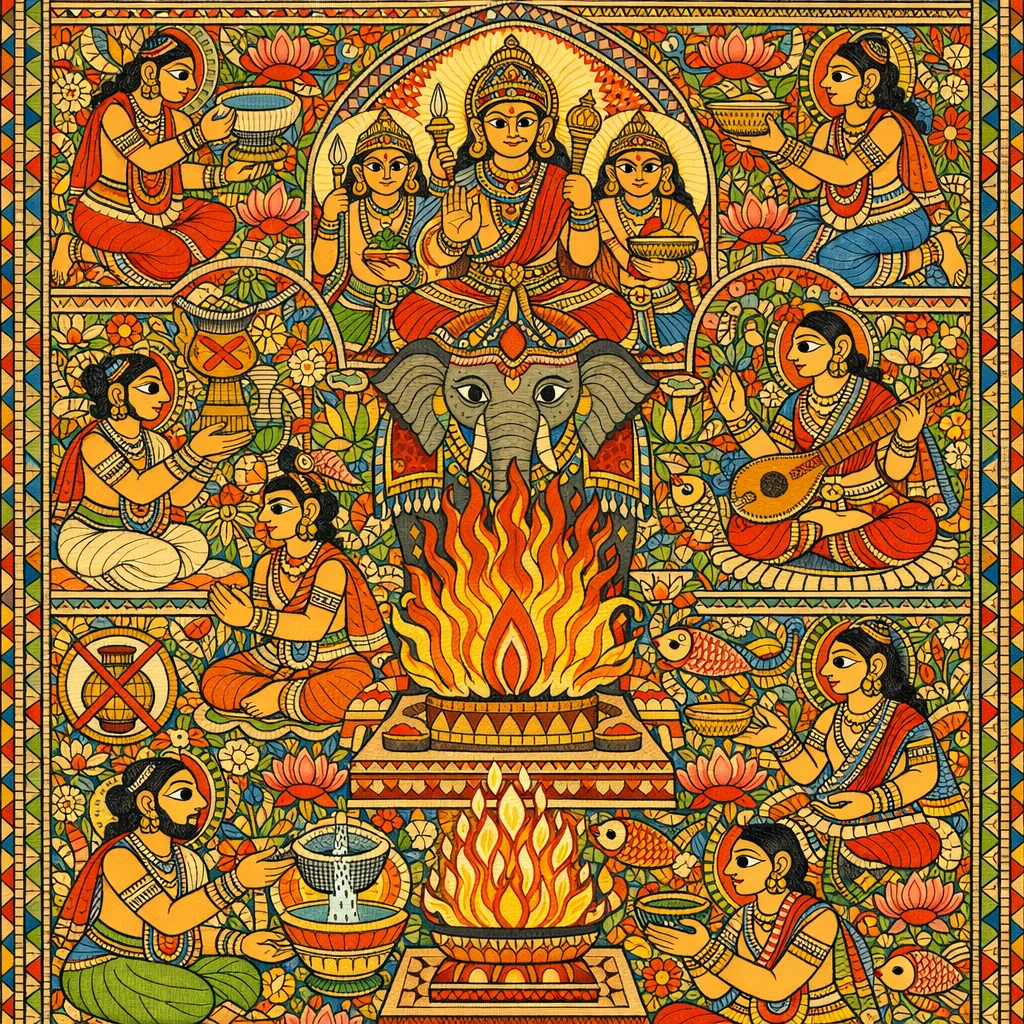
Adhyaya 19
Sautramani and additional formulas.
Mantras
Mantra 1
स्वा॒द्वीं त्वा॑ स्वा॒दुना॑ ती॒व्रां ती॒व्रेणा॒मृता॑म॒मृते॑न । मधु॑मतीं॒ मधु॑मता सृ॒जामि॒ सᳪ सोमे॑न । सोमो॑ऽस्य॒श्विभ्यां॑ पच्यस्व॒ सर॑स्वत्यै पच्य॒स्वेन्द्रा॑य सु॒त्राम्णे॑ पच्यस्व
Sweet do I make thee with the sweet; keen with the keen; immortal with the immortal. Honeyed do I send thee forth with the honeyed, together with Soma. Thou art Soma: be thou cooked for the Aśvins; be thou cooked for Sarasvatī; be thou cooked for Indra the good protector.
Mantra 2
परी॒तो षि॑ञ्च॒ता सु॒तᳪ सोमो॒ य उ॑त्त॒मᳪ ह॒विः । द॒ध॒न्वा यो नर्यो॑ अ॒प्स्वन्तरा सु॒षाव॒ सोम॒मद्रि॑भिः
Pour ye it round about—the pressed Soma, which is the highest oblation; he who, bestowing (strength), the manly one, within the waters, hath pressed the Soma with the stones.
Mantra 3
वा॒योः पू॒तः प॒वित्रे॑ण प्र॒त्यङ्क्सोमो॒ अति॑द्रुतः । इन्द्र॑स्य॒ युज्य॒: सखा॑
Purified by Vāyu, by the strainer, Soma hath run through, turned hitherward; Indra’s meet companion, his friend (for yoking unto might).
Mantra 4
पु॒नाति॑ ते परि॒स्रुत॒ᳪ सोम॒ᳪ सूर्य॑स्य दुहि॒ता । वारे॑ण॒ शश्व॑ता॒ तना॑
The Daughter of Sūrya purifieth thee, the Soma that hath flowed through, with water, with body everlasting and unceasing.
Mantra 5
ब्रह्म॑ क्ष॒त्रं प॑वते॒ तेज॑ इन्द्रि॒यᳪ सुर॑या॒ सोम॑: सु॒त आसु॑तो॒ मदा॑य । शु॒क्रेण॑ देव दे॒वता॑: पिपृग्धि॒ रसे॒नान्नं॒ यज॑मानाय धेहि
Brahman and Kṣatra he clarifieth—splendour and lordly might: Soma, pressed and well-pressed, with Surā, for exhilaration. With the bright (draught), O God, satisfy the Gods; with sap bestow thou food upon the Sacrificer.
Mantra 6
कु॒विद॒ङ्ग यव॑मन्तो॒ यवं॑ चि॒द्यथा॒ दान्त्य॑नुपू॒र्वं वि॒यूय॑ । इ॒हेहै॑षां कृणुहि॒ भोज॑नानि॒ ये ब॒र्हिषो॒ नम॑ उक्तिं॒ यज॑न्ति । उ॒प॒या॒मगृ॑हीतोऽस्य॒श्विभ्यां॑ त्वा॒ सर॑स्वत्यै॒ त्वेन्द्रा॑य त्वा सु॒त्राम्ण॑ ए॒ष ते॒ योनि॒स्तेज॑से त्वा वी॒र्या॒य त्वा॒ बला॑य त्वा
May they, forsooth, that are rich in barley, even as they give barley, distributing it in due order, bestow (on us) here, even here, provisions—those who with the Barhis worship the utterance of homage. Taken with the Upayāma art thou: for the Aśvins thee, for Sarasvatī thee, for Indra thee the good protector. This is thy womb: for splendour thee, for vigour thee, for strength thee.
Mantra 7
नाना॒ हि वां॑ दे॒वहि॑त॒ᳪ सद॑स्कृ॒तं मा सᳪ सृ॑क्षाथां पर॒मे व्यो॑मन् । सुरा॒ त्वमसि॑ शु॒ष्मिणी॒ सोम॑ ए॒ष मा मा॑ हिᳪसी॒: स्वां योनि॑मावि॒शन्ती॑
Separate indeed is that of you twain which is god-appointed, prepared for the Sadas: mingle ye not together in the highest heaven. Thou art Surā, O forceful one; this is Soma: harm me not, as thou enterest thine own womb.
Mantra 8
उ॒प॒या॒मगृ॑हीतो॒ऽस्याश्वि॑नं॒ तेज॑: सारस्व॒तं वी॒र्य॒मै॒न्द्रं बल॑म् । ए॒ष ते॒ योनि॒र्मोदा॑य त्वा ऽऽन॒न्दाय॑ त्वा॒ मह॑से त्वा
Taken with the Upayāma (formula) art thou: Aśvins’ splendour, Sarasvatī’s inspiration, Indra’s manly vigour and strength. This is thy womb: for joy thee, for delight thee, for greatness thee.
Mantra 9
तेजो॑ऽसि॒ तेजो॒ मयि॑ धेहि वी॒र्य॒मसि वी॒र्यं मयि॑ धेहि बल॑मसि॒ बलं॒ मयि॑ धे॒ह्योजो॒ऽस्योजो॒ मयि॑ धेहि म॒न्युर॑सि म॒न्युं मयि॑ धेहि॒ सहो॑ऽसि॒ सहो॒ मयि॑ धेहि
Thou art splendour: in me place splendour. Thou art vigour: in me place vigour. Thou art strength: in me place strength. Thou art vital force: in me place vital force. Thou art spirited impulse: in me place that impulse. Thou art conquering might: in me place conquering might.
Mantra 10
या व्या॒घ्रं विषू॑चिकोभौ॒ वृकं॑ च॒ रक्ष॑ति । श्ये॒नं प॑त॒त्रिण॑ᳪ सि॒ᳪहᳪ सेमं पा॒त्वᳪह॑सः
She who from dysentery protecteth both the tiger and the wolf,—the hawk, the winged one, the lion,—may she protect this (man) from distress.
Mantra 11
यदा॑पि॒पेष॑ मा॒तरं॑ पु॒त्रः प्रमु॑दितो॒ धय॑न् । ए॒तत्तद॑ग्ने अनृ॒णो भ॑वा॒म्यह॑तौ पि॒तरौ॒ मया॑ । स॒म्पृच॑ स्थ॒ सं मा॑ भ॒द्रेण॑ पृङ्क्त वि॒पृच॑ स्थ॒ वि मा॑ पा॒प्मना॑ पृङ्क्त
When the son, rejoicing, hath pressed his mother, sucking (her milk),—even so, O Agni, thereby I become debtless, my parents by me unharmed. Mix ye (me) with the good; with the good do ye unite me. Unmix ye (me) from evil; from evil do ye disjoin me.
Mantra 12
दे॒वा य॒ज्ञम॑तन्वत भेष॒जं भि॒षजा॒ऽश्विना॑ । वा॒चा सर॑स्वती भि॒षगिन्द्रा॑येन्द्रि॒याणि॒ दध॑तः
The gods stretched forth the sacrifice as a remedy, with the Aśvins as physicians; with speech Sarasvatī as healer; they bestowed upon Indra the powers of lordship.
Mantra 13
दी॒क्षायै॑ रू॒पᳪ शष्पा॑णि प्राय॒णीय॑स्य॒ तोक्मा॑नि । क्र॒यस्य॑ रू॒पᳪ सोम॑स्य ला॒जाः सो॑मा॒ᳪशवो॒ मधु॑
The grass-shoots are the form of Consecration; the grains are the form of the Prāyaṇīya. The parched grains are the form of the purchase; the Soma-stalks are Soma’s form—sweetness (honey) indeed.
Mantra 14
आ॒ति॒थ्य॒रू॒पं मास॑रं महावी॒रस्य॑ न॒ग्नहु॑: । रू॒पमु॑प॒सदा॑मे॒तत्ति॒स्रो रात्री॒: सुराऽऽसु॑ता
The bean-preparation is the form of the Atithya; of the Mahāvīra they call it ‘Nagnahu’. This is the form of the Upasads: the three nights—(as) liquor brewed.
Mantra 15
सोम॑स्य रू॒पं क्री॒तस्य॑ परि॒स्रुत्परि॑ षिच्यते । अ॒श्विभ्यां॑ दु॒ग्धं भे॑ष॒जमिन्द्रा॑यै॒न्द्रᳪ सर॑स्वत्या
The strained out-flow is the form of the purchased Soma: it is poured around. For the Aśvins—milk, a remedy; for Indra—Indra’s own; for Sarasvatī—(her portion).
Mantra 16
आ॒स॒न्दी रू॒पᳪ रा॑जासन्द्यै॒ वेद्यै॑ कु॒म्भी सु॑रा॒धानी॑ । अन्त॑र उत्तरवे॒द्या रू॒पं का॑रोत॒रो भि॒षक्
The bench is the form of the king’s seat; for the altar, the jar—the liquor-holder. Within, the form of the Uttaravedī is the Kārotara, the physician.
Mantra 17
वेद्या॒ वेदि॒: समा॑प्यते ब॒र्हिषा॑ ब॒र्हिरि॑न्द्रि॒यम् । यूपे॑न॒ यूप॑ आप्यते॒ प्रणी॑तो अ॒ग्निर॒ग्निना॑
With the altar the altar is completed; with the barhis the barhis is (made) power. With the yūpa the yūpa is secured; Agni, led forward, is (established) by Agni.
Mantra 18
ह॒वि॒र्धानं॒ यद॒श्विनाऽऽग्नी॑ध्रं॒ यत्सर॑स्वती । इन्द्रा॑यै॒न्द्रᳪ सद॑स्कृ॒तं प॑त्नी॒शालं॒ गार्ह॑पत्यः
The Havirdhāna is for the Aśvins; the Āgnīdhra is for Sarasvatī; the Sadas, duly fashioned, is Indra’s; and the Patnīśālā belongs to the Gārhapatya.
Mantra 19
प्रै॒षेभि॑: प्रै॒षाना॑प्नोत्या॒प्रीभि॑रा॒प्रीर्य॒ज्ञस्य॑ । प्र॒या॒जेभि॑रनुया॒जान् व॑षट्का॒रेभि॒राहु॑तीः
By the preṣa-injunctions he obtains the preṣas; by the Āprī-formulas the Āprīs of the sacrifice; by the prayājas the anuyājas; and by the vaṣaṭ-calls the oblations.
Mantra 20
प॒शुभि॑: प॒शूना॑प्नोति पुरो॒डाशै॑र्ह॒वीᳪष्या । छन्दो॑भिः सामिधे॒नीर्या॒ज्या॒भिर्वषट्का॒रान्
By animals he obtains animals; by puroḍāśa-cakes the oblation-materials; by metres the sāmidhēnī-verses; and by yājyā-formulas the vaṣaṭ-calls.
Mantra 21
धा॒नाः क॑र॒म्भः सक्त॑वः परीवा॒पः पयो॒ दधि॑ । सोम॑स्य रू॒पᳪ ह॒विष॑ आ॒मिक्षा॒ वाजि॑नं॒ मधु॑
Parched grain, karambha, meal, and parīvāpa; milk and curds—these are the form of Soma as oblation: āmikṣā, invigorating honey-sweet.
Mantra 22
धा॒नाना॑ᳪ रू॒पं कुव॑लं परीवा॒पस्य॑ गो॒धूमा॑: । सक्तू॑नाᳪ रू॒पं बद॑रमुप॒वाका॑: कर॒म्भस्य॑
The ‘form’ of the dhānās is the kuvala; of the parīvāpa, wheat; the ‘form’ of the saktus is the badara; and of the karambha, the upavākas.
Mantra 23
पय॑सो रू॒पं यद्यवा॑ द॒ध्नो रू॒पं क॒र्कन्धू॑नि । सोम॑स्य रू॒पं वाजि॑नᳪ सौ॒म्यस्य॑ रू॒पमा॒मिक्षा॑
Barley-grains are the form of milk; jujubes are the form of curds. The vājín is the form of Soma; and āmikṣā is the form of that which pertains to Soma.
Mantra 24
आ श्रा॑व॒येति॑ स्तो॒त्रिया॑: प्रत्याश्रा॒वो अनु॑रूपः । यजेति॑ धाय्यारू॒पं प्र॑गा॒था ये॑यजाम॒हाः
‘Cause (him) to hear!’—this is of the stotra; the counter-cry is in due correspondence. ‘Sacrifice!’—this has the form of the dhāyyā; the pragāthas are those whereby we perform the sacrifice.
Mantra 25
अ॒र्ध॒ – ऋ॒चैरु॒क्थाना॑ᳪ रू॒पं प॒दैरा॑प्नोति नि॒विद॑: । प्र॒ण॒वै: श॒स्त्राणा॑ᳪ रू॒पं पय॑सा॒ सोम॑ आप्यते
By half-verses he attains the form of the ukthas; by words he attains the nivids. By praṇavas he attains the form of the śastras; by milk Soma is filled to completeness.
Mantra 26
अ॒श्विभ्यां॑ प्रातः सव॒नमिन्द्रे॑णै॒न्द्रं माध्यं॑न्दिनम् । वै॒श्व॒दे॒वᳪ सर॑स्वत्या तृ॒तीय॑मा॒प्तᳪ सव॑नम्
With the Aśvins (is) the morning pressing; with Indra the Indra-pressing at midday. With the All-gods, with Sarasvatī, the third pressing is duly attained.
Mantra 27
वा॒य॒व्यै॒र्वाय॒व्या॒न्याप्नोति॒ सते॑न द्रोणकल॒शम् । कु॒म्भीभ्या॑मम्भृ॒णौ सु॒ते स्था॒लीभि॑ स्था॒लीरा॑प्नोति
By the Vāyavya (implements/offerings) he obtains what pertains to Vāyu; by the ‘sat’ he obtains the Droṇa-kalaśa. By the two kumbhīs (he obtains) the two ambhṛṇas when Soma is pressed; by the sthālīs he obtains the sthālīs.
Mantra 28
यजु॑र्भिराप्यन्ते॒ ग्रहा॒ ग्रहै॒ स्तोमा॑श्च॒ विष्टु॑तीः । छन्दो॑भिरुक्थाश॒स्त्राणि॒ साम्ना॑वभृ॒थ आ॑प्यते
By Yajus-formulas the Grahas are attained—Graha by Graha; and the Stomas and the Vistutis. By the metres the Ukthas and Śastras are attained; by the Sāman the Avabhṛtha is attained.
Mantra 29
इडा॑भिर्भ॒क्षाना॑प्नोति सूक्तवा॒केना॒शिष॑: । शं॒युना॑ पत्नीसंया॒जान्त्स॑मिष्टय॒जुषा॑ स॒ᳪस्थाम्
By the Iḍās he obtains the eatable portions; by the Sūkta-vāka the blessings. By the Śaṃyu he obtains the Patnī-saṃyājas; by the Sam-iṣṭa-yajus the completion of the sacrifice.
Mantra 30
व्र॒तेन॑ दी॒क्षामा॑प्नोति दी॒क्षया॑ऽऽप्नोति॒ दक्षि॑णाम् । दक्षि॑णा श्र॒द्धामा॑प्नोति श्र॒द्धया॑ स॒त्यमा॑प्यते
By the vow he obtains consecration; by consecration he obtains the priestly fee. The fee obtains faith; by faith truth is attained.
Mantra 31
ए॒ताव॑द्रू॒पं य॒ज्ञस्य॒ यद्दे॒वैर्ब्रह्म॑णा कृ॒तम् । तदे॒तत्सर्व॑माप्नोति य॒ज्ञे सौ॑त्राम॒णी सु॒ते
Such is the form of the sacrifice as made by the gods with holy power. All this he obtains in the sacrifice, when the Sautrāmaṇī is performed with Soma pressed.
Mantra 32
सुरा॑वन्तं बर्हि॒षद॑ᳪ सु॒वीरं॑ य॒ज्ञᳪ हि॑न्वन्ति महि॒षा नमो॑भिः । दधा॑ना॒: सोमं॑ दि॒वि दे॒वता॑सु॒ मदे॒मेन्द्रँ॒ यज॑मानाः स्व॒र्काः
The mighty ones, with reverent homage, quicken the sacrifice—surā-endowed, seated on the barhis, rich in heroes. Bearing Soma among the deities in heaven, may we, the sacrificers, heaven-winning, rejoice in Indra.
Mantra 33
यस्ते॒ रस॒: सम्भृ॑त॒ ओष॑धीषु॒ सोम॑स्य॒ शुष्म॒: सुर॑या सु॒तस्य॑ । तेन॑ जिन्व॒ यज॑मानं॒ मदे॑न॒ सर॑स्वतीम॒श्विना॒विन्द्र॑म॒ग्निम्
That sap of thine which is gathered in the plants, and the vigour of Soma when pressed with Surā,—therewith, by the rapture thereof, do thou quicken the Sacrificer, (and quicken) Sarasvatī, the Aśvins, Indra, and Agni.
Mantra 34
यम॒श्विना॒ नमु॑चेरासु॒रादधि॒ सर॑स्व॒त्यसु॑नोदिन्द्रि॒याय॑ । इ॒मं तᳪ शु॒क्रं मधु॑मन्त॒मिन्दु॒ᳪ सोम॒ᳪ राजा॑नमि॒ह भ॑क्षयामि
Him whom the Aśvins, from Namuci the Asura, and Sarasvatī pressed forth for (winning) lordly power,—that bright, honeyed drop, King Soma, even him do I here partake of.
Mantra 35
यदत्र॑ रि॒प्तᳪ र॒सिन॑: सु॒तस्य॒ यदिन्द्रो॒ अपि॑ब॒च्छची॑भिः । अ॒हं तद॑स्य॒ मन॑सा शि॒वेन॒ सोम॒ᳪ राजा॑नमि॒ह भ॑क्षयामि
What here is left of the sap of the pressed (Soma), what Indra drank with his mighty powers,—that very portion of him, with auspicious mind, King Soma, do I here partake of.
Mantra 36
पि॒तृभ्य॑: स्वधा॒यिभ्य॑: स्व॒धा नम॑: पिताम॒हेभ्य॑: स्वधा॒यिभ्य॑: स्व॒धा नम॒: प्रपि॑तामहेभ्यः स्वधा॒यिभ्य॑: स्व॒धा नम॑: । अक्ष॑न् पि॒तरो ऽमी॑मदन्त पि॒तरो ऽती॑तृपन्त पि॒तर॒: पित॑र॒: शुन्ध॑ध्वम्
To the Fathers, the Svadhā-eaters, Svadhā! obeisance! To the Grandfathers, the Svadhā-eaters, Svadhā! obeisance! To the Great-grandfathers, the Svadhā-eaters, Svadhā! obeisance! The Fathers have eaten; the Fathers have rejoiced; the Fathers have been fully satisfied. Fathers, Fathers, purify yourselves!
Mantra 37
पु॒नन्तु॑ मा पि॒तर॑: सो॒म्यास॑: पु॒नन्तु॑ मा पिताम॒हाः पु॒नन्तु॒ प्रपि॑तामहाः । प॒वित्रे॑ण श॒तायु॑षा । पु॒नन्तु॑ मा पिताम॒हाः पु॒नन्तु॒ प्रपि॑तामहाः । प॒वित्रे॑ण श॒तायु॑षा॒ विश्व॒मायु॒र्व्य॒श्नवै
May the Fathers, the Soma-kin, purify me; may the Grandfathers purify me; may the Great-grandfathers purify (me),—with the purifier, with the hundredfold life. May the Grandfathers purify me; may the Great-grandfathers purify (me),—with the purifier, with the hundredfold life; that I may attain unto the whole of life.
Mantra 38
अग्न॒ आयू॑ँषि पवस॒ आ सु॒वोर्ज॒मिषं॑ च नः । आ॒रे बा॑धस्व दु॒च्छुना॑म्
O Agni, as thou purifiest, bring unto us life’s powers, and bring the heavenly world, and strength, and sustenance; drive thou far away all evil hap.
Mantra 39
पु॒नन्तु॑ मा देवज॒ना॑: पु॒नन्तु॒ मन॑सा॒ धिय॑: । पु॒नन्तु॒ विश्वा॑ भू॒तानि॒ जात॑वेदः पुनी॒हि मा॑
May the divine folk purify me; may my thoughts with mind purify me; may all beings purify me: O Jātavedas, do thou purify me.
Mantra 40
प॒वित्रे॑ण पुनीहि मा शु॒क्रेण॑ देव॒ दीद्य॑त् । अग्ने॒ क्रत्वा॒ क्रतूँ॒१ रनु॑
With the purifier purify me, with the bright one, O god, as thou shinest forth; O Agni, by thy sacred power, in accordance with the sacred ordinances.
Mantra 41
यत्ते॑ प॒वित्र॑म॒र्चिष्यग्ने॒ वित॑तमन्त॒रा । ब्रह्म॒ तेन॑ पुनातु मा
That purifier of thine, O Agni, which is stretched within thy flame,—with that let the holy power purify me.
Mantra 42
पव॑मान॒: सो अ॒द्य न॑: प॒वित्रे॑ण॒ विच॑र्षणिः । यः पोता॒ स पु॑नातु मा
May the Pavamāna, widely shining, even to-day, with the purifier, be ours; he who is the Purifier (Pota), let him purify me.
Mantra 43
उ॒भाभ्यां॑ देव सवितः प॒वित्रे॑ण स॒वेन॑ च । मां पु॑नीहि वि॒श्वत॑ः ॥
With both, O god Savitar,—with the strainer and with the impulsion,—do thou purify me on every side.
Mantra 44
वै॒श्व॒दे॒वी पु॑न॒ती दे॒व्यागा॒द्यस्या॑मि॒मा ब॒ह्व्य॒स्त॒न्वो॑ वी॒तपृ॑ष्ठाः । तया॒ मद॑न्तः सध॒मादे॑षु व॒यᳪ स्या॑म॒ पत॑यो रयी॒णाम् ॥
The All-gods’ purifying Goddess hath come,—she whose many bodies are broad-backed and far-extended. Rejoicing with her in the common feasts, may we become lords of riches.
Mantra 45
ये स॑मा॒नाः सम॑नसः पि॒तरो॑ यम॒राज्ये॑ । तेषाँ॑ल्लो॒कः स्व॒धा नमो॑ य॒ज्ञो दे॒वेषु॑ कल्पताम् ॥
Ye Fathers, equal and of one mind, in the kingdom of Yama,—to them be world and Svadhā: obeisance! May the sacrifice be duly ordered among the gods.
Mantra 46
ये स॑मा॒नाः सम॑नसो जी॒वा जी॒वेषु॑ माम॒काः । तेषा॒ᳪ श्रीर्मयि॑ कल्पताम॒स्मिँल्लो॒के श॒तᳪ समा॑ः ॥
Ye living, equal and of one mind, my own among the living,—may their prosperity be established in me, in this world, for a hundred years.
Mantra 47
द्वे सृ॒ती अ॑शृणवं पितॄ॒णाम॒हं दे॒वाना॑मु॒त मर्त्या॑नाम् । ताभ्या॑मि॒दं विश्व॒मेज॒त्समे॑ति॒ यद॑न्त॒रा पि॒तरं॑ मा॒तरं॑ च ॥
Two courses have I learnt,—of the Fathers, of the gods, and of mortals. By those two this whole moving world comes together,—that which is between the father and the mother.
Mantra 48
इ॒दᳪ ह॒विः प्र॒जन॑नं मे अस्तु॒ दश॑वीर॒ᳪ सर्व॑गणᳪ स्व॒स्तये॑ । आ॒त्म॒सनि॑ प्रजा॒सनि॑ पशु॒सनि॑ लोक॒सन्य॑भय॒सनि॑ । अ॒ग्निः प्र॒जां ब॑हु॒लां मे॑ करो॒त्वन्नं॒ पयो॒ रेतो॑ अ॒स्मासु॑ धत्त
May this oblation be unto me a begetting of offspring—rich in valiant sons, complete in all its companies, for welfare; a winning of self, a winning of progeny, a winning of cattle, a winning of a world, a winning of fearlessness. May Agni make for me abundant offspring; and may he bestow within us food, milk, and seed.
Mantra 49
उदी॑रता॒मव॑र॒ उत्परा॑स॒ उन्म॑ध्य॒माः पि॒तर॑: सो॒म्यास॑: । असुं॒ य ई॒युर॑वृ॒का ऋ॑त॒ज्ञास्ते नो॑ऽवन्तु पि॒तरो॒ हवे॑षु
Let the Fathers bestir themselves—the lower, the higher, the middle—Soma-worthy. Those who have gone forth unto life (the vital breath), harmless, knowing the Order: may those Fathers aid us at our invocations.
Mantra 50
अङ्गि॑रसो नः पि॒तरो॒ नव॑ग्वा॒ अथ॑र्वाणो॒ भृग॑वः सो॒म्यास॑: । तेषां॑ व॒यᳪ सु॑म॒तौ य॒ज्ञिया॑ना॒मपि॑ भ॒द्रे सौ॑मन॒से स्या॑म
The Aṅgirases, our Fathers, the Navagvas, the Atharvans, the Bhṛgus, Soma-worthy—may we be in the good favour of those worshipful ones; yea, may we abide in blessed concord and gracious-mindedness.
Mantra 51
ये न॒: पूर्वे॑ पि॒तर॑: सो॒म्यासो॑ऽनूहि॒रे सो॑मपी॒थं वसि॑ष्ठाः । तेभि॑र्य॒मः स॑ररा॒णो ह॒वीᳪष्यु॒शन्नु॒शद्भि॑: प्रतिका॒मम॑त्तु
Those former Fathers of ours, Soma-worthy, who followed after the Soma-drinking—the Vasiṣṭhas—together with them may Yama, moving onward, gladly enjoy the oblations, with the glad ones, according to each desire.
Mantra 52
त्वᳪ सो॑म॒ प्र चि॑कितो मनी॒षा त्वᳪ रजि॑ष्ठ॒मनु॑ नेषि॒ पन्था॑म् । तव॒ प्रणी॑ती पि॒तरो॑ न इन्दो दे॒वेषु॒ रत्न॑मभजन्त॒ धीरा॑:
Thou, O Soma, discernest with inspired thought; thou leadest along the straightest path. Under thy guidance, O Indu, our Fathers—the wise—won for themselves the treasure among the Gods.
Mantra 53
त्वया॒ हि न॑: पि॒तर॑: सोम॒ पूर्वे॒ कर्मा॑णि च॒क्रुः प॑वमान॒ धीरा॑: । व॒न्वन्नवा॑तः परि॒धीँ१ रपो॑र्णु वी॒रेभि॒रश्वै॑र्म॒घवा॑ भवा नः
For by thee, O Soma, did our Fathers of old, the wise, accomplish their works, O Pavamāna. Driving away the wind, do thou with the enclosing-sticks wrap up and ward off harm; with heroes and with steeds be thou bountiful unto us.
Mantra 54
त्वᳪ सो॑म पि॒तृभि॑: संविदा॒नोऽनु॒ द्यावा॑पृथि॒वी आ त॑तन्थ । तस्मै॑ त इन्दो ह॒विषा॑ विधेम व॒यᳪ स्या॑म॒ पत॑यो रयी॒णाम्
Thou, O Soma, being in concord with the Fathers, hast stretched forth along Heaven and Earth. To that bright Indu of thine would we with oblation do due service; may we become lords of riches.
Mantra 55
बर्हि॑षदः पितर ऊ॒त्य र्वागि॒मा वो॑ ह॒व्या च॑कृमा जु॒षध्व॑म् । त आ ग॒ताव॑सा॒ शन्त॑मे॒नाथा॑ न॒: शं योर॑र॒पो द॑धात
Ye Fathers, seated on the sacred grass, for our aid come hitherward: these oblations have we prepared for you—accept them graciously. Come ye with help, with help most kindly; and then bestow on us welfare, prosperity, and freedom from hurt.
Mantra 56
आऽहं पि॒तॄन्त्सु॑वि॒दत्राँ॑२ अवित्सि॒ नपा॑तं च वि॒क्रम॑णं च॒ विष्णो॑: । ब॒र्हि॒षदो॒ ये स्व॒धया॑ सु॒तस्य॒ भज॑न्त पि॒त्वस्त इ॒हाग॑मिष्ठाः
I have found the Fathers, the good bestowers; and I have found the Offspring, and the Striding of Viṣṇu. Ye Barhiṣad Fathers who with Svadhā partake of the pressed (Soma) as drink—come ye hither with all readiness.
Mantra 57
उप॑हूताः पि॒तर॑: सो॒म्यासो॑ बर्हि॒ष्ये॒षु नि॒धिषु॑ प्रि॒येषु॑ । त आ ग॑मन्तु॒ त इ॒ह श्रु॑व॒न्त्वधि॑ ब्रुवन्तु॒ ते॑ऽवन्त्व॒स्मान्
Invited are the Fathers, Soma-loving, in the dear deposits, upon the barhis-seats. Let them come hither; let them here hear (our words); let them speak over us with authority; let them protect us.
Mantra 58
आ य॑न्तु नः पि॒तर॑: सो॒म्यासो॑ऽग्निष्वा॒त्ताः प॒थिभि॑र्देव॒यानै॑: । अ॒स्मिन् य॒ज्ञे स्व॒धया॒ मद॒न्तोऽधि॑ ब्रुवन्तु॒ ते॒ऽवन्त्व॒स्मान्
Let our Fathers, the Soma-worthy, the Agni-tasted, come hither by the god-going paths. Rejoicing in this sacrifice by Svadhā, let them speak blessing over us; let them succour us.
Mantra 59
अग्नि॑ष्वात्ताः पितर॒ एह ग॑च्छत॒ सद॑: – सदः सदत सुप्रणीतयः । अ॒त्ता ह॒वीᳪषि॒ प्रय॑तानि ब॒र्हिष्यथा॑ र॒यिᳪ सर्व॑वीरं दधातन
Ye Agni-tasted Fathers, come ye hither; unto the seat—unto the seat sit ye down, ye that are well-conducted. Partake of the duly-prepared oblations upon the Barhis; and then bestow upon us wealth rich in all manly offspring.
Mantra 60
ये अ॑ग्निष्वा॒त्ता ये अन॑ग्निष्वात्ता॒ मध्ये॑ दि॒वः स्व॒धया॑ मा॒दय॑न्ते । तेभ्य॑: स्व॒राडसु॑नीतिमे॒तां य॑थाव॒शं त॒न्वं॒ कल्पयाति
Whether Agni-tasted or not Agni-tasted, those who in mid-heaven rejoice by Svadhā—to them the Self-ruling One appointeth this guidance of life-breath, and, according to their several will, he fashioneth their bodily form.
Mantra 61
अ॒ग्नि॒ष्वा॒त्तानृ॑तु॒मतो॑ हवामहे नाराश॒ᳪसे सो॑मपी॒थं य आ॒शुः । ते नो॒ विप्रा॑सः सु॒हवा॑ भवन्तु व॒यᳪ स्या॑म॒ पत॑यो रयी॒णाम्
We call the Agni-tasted Fathers, the season-ordered, in Nārāśaṃsa—him who is the swift Soma-draught. May those inspired ones be easy to invoke for us; may we become lords of riches.
Mantra 62
आच्या॒ जानु॑ दक्षिण॒तो नि॒षद्ये॒मं य॒ज्ञम॒भि गृ॑णीत॒ विश्वे॑ । मा हि॑ᳪसिष्ट पितर॒: केन॑ चिन्नो॒ यद्व॒ आग॑: पुरु॒षता॒ करा॑म
Draw near; sitting down on the southern side, approve ye all this sacrifice. Harm us not, O Fathers, in any wise, for whatever offence against you we, through human frailty, may have committed.
Mantra 63
आसी॑नासो अरु॒णीना॑मु॒पस्थे॑ र॒यिं ध॑त्त दा॒शुषे॒ मर्त्या॑य । पु॒त्रेभ्य॑ः पितर॒स्तस्य॒ वस्व॒ः प्र य॑च्छत॒ त इ॒होर्जं॑ दधात
Seated in the bosom of the ruddy (regions), bestow ye wealth upon the mortal who hath duly offered. And, O Fathers, of his riches grant a portion unto his sons; and here bestow ye nourishment and vigour.
Mantra 64
यम॑ग्ने कव्यवाहन॒ त्वं चि॒न्मन्य॑से र॒यिम् । तन्नो॑ गी॒र्भिः श्र॒वाय्यं॑ देव॒त्रा प॑नया॒ युज॑म्
What wealth thou deemest meet, O Agni, carrier of the ancestral offering,—that, famed and well-yoked, do thou win for us by our hymns, in god-ward wise and with gracious favour.
Mantra 65
यो अ॒ग्निः क॑व्य॒वाह॑नः पि॒तॄन् यक्ष॑दृता॒वृध॑: । प्रेदु॑ ह॒व्यानि॑ वोचति दे॒वेभ्य॑श्च पि॒तृभ्य॒ आ
May Agni, the carrier of the ancestral offering, who increaseth the Order, duly worship the Fathers; and forthwith may he proclaim the oblations—unto the Gods and unto the Fathers—hitherward.
Mantra 66
त्वम॑ग्न ईडि॒तः क॑व्यवाह॒नावा॑ड्ढ॒व्यानि॑ सुर॒भीणि॑ कृ॒त्वी । प्रादा॑ः पि॒तृभ्य॑ः स्व॒धया॒ ते अ॑क्षन्न॒द्धि त्वं दे॑व॒ प्रय॑ता ह॒वीᳪषि॑
Thou, O Agni, praised and carrier of the ancestral offering, hast borne the oblations, making them fragrant. Thou hast given them unto the Fathers with Svadhā; they have eaten: do thou also, O god, eat the duly presented offerings.
Mantra 67
ये चे॒ह पि॒तरो॒ ये च॒ नेह याँश्च॑ वि॒द्म याँ२ उ॑ च॒ न प्र॑वि॒द्म । त्वं वे॑त्थ॒ यति॒ ते जा॑तवेदः स्व॒धाभि॑र्य॒ज्ञँ सुकृ॑तं जुषस्व
Ye Fathers who are here, and ye who are not here; those whom we know, and those again whom we know not distinctly,—thou knowest whither they have gone, O Jātavedas: with Svadhās do thou graciously accept the sacrifice, well-performed.
Mantra 68
इ॒दं पि॒तृभ्यो॒ नमो॑ अस्त्व॒द्य ये पूर्वा॑सो॒ य उप॑रास ई॒युः । ये पार्थि॑वे॒ रज॒स्या निष॑त्ता॒ ये वा॑ नू॒नᳪ सु॑वृ॒जना॑सु वि॒क्षु
Let this day’s homage be unto the Fathers,—unto those of old, and unto those that have departed later; unto those that are seated in the earthly region, and unto those that now abide among the well-ordered clans.
Mantra 69
अधा॒ यथा॑ नः पि॒तर॒: परा॑सः प्र॒त्नासो॑ अग्न ऋ॒तमा॑शुषा॒णाः । शुचीद॑य॒न् दीधि॑तिमुक्थ॒शास॒: क्षामा॑ भि॒न्दन्तो॑ अरु॒णीरप॑ व्रन्
So, even as our Fathers, the far-removed, the men of old, O Agni, hasting unto Order, made pure the radiance, hymn-uttering, cleaving the earth, and drave away the ruddy hindrances,—so may it be with us.
Mantra 70
उ॒शन्त॑स्त्वा॒ नि धी॑मह्यु॒शन्त॒: समि॑धीमहि । उ॒शन्नु॑श॒त आ व॑ह पि॒तॄन् ह॒विषे॒ अत्त॑वे
Willingly we set thee down; willingly we kindle thee. Willing, bring hither the willing Fathers, that they may eat of the oblation.
Mantra 71
अ॒पां फेने॑न॒ नमु॑चे॒: शिर॑ इ॒न्द्रोद॑वर्तयः । विश्वा॒ यदज॑य॒ स्पृध॑:
With the foam of waters thou, O Indra, didst turn off the head of Namuci, when thou didst conquer all hostile rivalries.
Mantra 72
सोमो॒ राजा॒मृत॑ᳪ सु॒त ऋ॑जी॒षेणा॑जहान्मृ॒त्युम् । ऋ॒तेन॑ स॒त्यमि॑न्द्रि॒यं वि॒पान॑ᳪ शु॒क्रमन्ध॑स॒ इन्द्र॑स्येन्द्रि॒यमि॒दं पयो॒ऽमृतं॒ मधु॑
Soma, the King, pressed forth as immortality, by the pressing-fibre cast off death. By Order he established Truth—vigour, the thrilling draught, the bright juice: Indra’s very puissance is this essence, this milk, immortal, honey-sweet.
Mantra 73
अ॒द्भ्यः क्षी॒रं व्य॑पिब॒त् क्रुङ्ङा॑ङ्गिर॒सो धि॒या । ऋ॒तेन॑ स॒त्यमि॑न्द्रि॒यं वि॒पान॑ᳪ शु॒क्रमन्ध॑स॒ इन्द्र॑स्येन्द्रि॒यमि॒दं पयो॒ऽमृतं॒ मधु॑
From the Waters Krung Āṅgirasa, by sacred insight, drank forth the milk. By Ṛta—by Truth—(he won) Indra’s vigour: the draught, the bright essence of the plant; this is Indra’s very might—this milk, immortal, honey-sweet.
Mantra 74
सोम॑म॒द्भ्यो व्य॑पिब॒च्छन्द॑सा ह॒ᳪसः शु॑चि॒षत् । ऋ॒तेन॑ स॒त्यमि॑न्द्रि॒यं वि॒पान॑ᳪ शु॒क्रमन्ध॑स॒ इन्द्र॑स्येन्द्रि॒यमि॒दं पयो॒ऽमृतं॒ मधु॑
Soma from the Waters the bright Swan drank forth, by Metre’s power. By Ṛta—by Truth—(he won) Indra’s vigour: the draught, the bright essence of the plant; this is Indra’s very might—this milk, immortal, honey-sweet.
Mantra 75
अन्ना॑त्परि॒स्रुतो॒ रसं॒ ब्रह्म॑णा॒ व्य॑पिबत् क्ष॒त्रं पय॒: सोमं॑ प्र॒जाप॑तिः । ऋ॒तेन॑ स॒त्यमि॑न्द्रि॒यं वि॒पान॑ᳪ शु॒क्रमन्ध॑स॒ इन्द्र॑स्येन्द्रि॒यमि॒दं पयो॒ऽमृतं॒ मधु॑
From food, as strained essence, Prajāpati by the power of Brahman drank the sap—(even) kṣatra, milk, Soma. By Ṛta—by Truth—(he won) Indra’s vigour: the draught, the bright essence of the plant; this is Indra’s very might—this milk, immortal, honey-sweet.
Mantra 76
रेतो॒ मूत्रं॒ वि ज॑हाति॒ योनिं॑ प्रवि॒शदि॑न्द्र॒यिम् । गर्भो॑ ज॒रायु॒णाऽऽवृ॑त॒ उल्बं॑ जहाति॒ जन्म॑ना । ऋ॒तेन॑ स॒त्यमि॑न्द्रि॒यं वि॒पान॑ᳪ शु॒क्रमन्ध॑स॒ इन्द्र॑स्येन्द्रि॒यमि॒दं पयो॒ऽमृतं॒ मधु॑
The seed leaves off the urine; it enters the womb, endowed with Indra-power. The embryo, wrapped in the afterbirth, at birth casts off the envelope. By Ṛta—by Truth—(is won) Indra’s vigour: the draught, the bright essence of the plant; this is Indra’s very might—this milk, immortal, honey-sweet.
Mantra 77
दृ॒ष्ट्वा रू॒पे व्याक॑रोत् सत्यानृ॒ते प्र॒जाप॑तिः । अश्र॑द्धा॒मनृ॒तेऽद॑धाच्छ्र॒द्धाᳪ स॒त्ये प्र॒जाप॑तिः । ऋ॒तेन॑ स॒त्यमि॑न्द्रि॒यं वि॒पान॑ᳪ शु॒क्रमन्ध॑स॒ इन्द्र॑स्येन्द्रि॒यमि॒दं पयो॒ऽमृतं॒ मधु॑
Having beheld the two forms, Prajāpati distinguished Truth from Untruth. Unfaith he placed in Untruth; Faith he set in Truth—Prajāpati. By Ṛta—by Truth—(is won) Indra’s vigour: the draught, the bright essence of the plant; this is Indra’s very might—this milk, immortal, honey-sweet.
Mantra 78
वेदे॑न रू॒पे व्य॑पिबत् सुतासु॒तौ प्र॒जाप॑तिः । ऋ॒तेन॑ स॒त्यमि॑न्द्रि॒यं वि॒पान॑ᳪ शु॒क्रमन्ध॑स॒ इन्द्र॑स्येन्द्रि॒यमि॒दं पयो॒ऽमृतं॒ मधु॑
By sacred knowledge, in (its) proper form, Prajāpati drank up the pressed and the unpressed. By Ṛta (he won) Truth—Indra’s vigour: the draught to be drunk, the bright essence of the Soma-juice; this is Indra’s vigour—milk, immortal, honey.
Mantra 79
दृ॒ष्ट्वा प॑रि॒स्रुतो॒ रस॑ᳪ शु॒क्रेण॑ शु॒क्रं व्य॑पिबत् पय॒: सोमं॑ प्र॒जाप॑तिः । ऋ॒तेन॑ स॒त्यमि॑न्द्रि॒यं वि॒पान॑ᳪ शु॒क्रमन्ध॑स॒ इन्द्र॑स्येन्द्रि॒यमि॒दं पयो॒ऽमृतं॒ मधु॑
Having beheld the essence that had flowed and run, Prajāpati drank the bright with the bright—(even) milk, Soma. By Ṛta (he won) Truth—Indra’s vigour: the draught to be drunk, the bright essence of the Soma-juice; this is Indra’s vigour—milk, immortal, honey.
Mantra 80
सीसे॑न॒ तन्त्रं॒ मन॑सा मनी॒षिण॑ ऊर्णासू॒त्रेण॑ क॒वयो॑ वयन्ति । अ॒श्विना॑ य॒ज्ञᳪ स॑वि॒ता सर॑स्व॒तीन्द्र॑स्य रू॒पं वरु॑णो भिष॒ज्यन्
With lead (as weight) the wise, with mind, weave the warp; with a woollen thread the seers weave it. The Aśvins (weave) the sacrifice; Savitar, Sarasvatī—(they fashion) Indra’s form; Varuṇa, as healer, (sets it right).
Mantra 81
तद॑स्य रू॒पम॒मृत॒ᳪ शची॑भिस्त॒स्रो द॑धुर्दे॒वता॑: सᳪररा॒णाः । लोमा॑नि॒ शष्पै॑र्बहु॒धा न तोक्म॑भि॒स्त्वग॑स्य मा॒ᳪसम॑भव॒न्न ला॒जाः
That immortal form of his the deities, three in number, in concord, established by their powers. His hairs became in many ways the young grass-shoots, not the seeds; his skin became flesh, as it were parched grains.
Mantra 82
तद॒श्विना॑ भि॒षजा॑ रु॒द्रव॑र्तनी॒ सर॑स्वती वयति॒ पेशो॒ अन्त॑रम् । अस्थि॑ म॒ज्जानं॒ मास॑रैः कारोत॒रेण॒ दध॑तो॒ गवां॑ त्व॒चि
That (form) the two Aśvins, the physicians moving in Rudra’s track, and Sarasvatī weave—the inner fashioned form. Bone and marrow they set with fibres, with the workman’s tool, within the cows’ hide.
Mantra 83
सर॑स्वती॒ मन॑सा पेश॒लं वसु॒ नास॑त्याभ्यां वयति दर्श॒तं वपु॑: । रसं॑ परि॒स्रुता॒ न रोहि॑तं न॒ग्नहु॒र्धीर॒स्तस॑रं॒ न वेम॑
Sarasvatī, with mind, weaveth a comely treasure; with the Nāsatyas she fashioneth a form fair to behold. Like sap that streameth round, like ruddy splendour, the wise perceive it not—like a shuttle in the loom.
Mantra 84
पय॑सा शु॒क्रम॒मृतं॑ ज॒नित्र॒ᳪ सुर॑या॒ मूत्रा॑ज्जनयन्त॒ रेत॑: । अपाम॑तिं दुर्म॒तिं बाध॑माना॒ ऊव॑ध्यं॒ वात॑ᳪ स॒ब्वं तदा॒रात्
With milk they generate the bright immortal begetter; with surā, from urine, they beget the seed. Repelling want of wit and evil purpose, they drive far away the wind, the whole destructive bane.
Mantra 85
इन्द्र॑: सु॒त्रामा॒ हृद॑येन स॒त्यं पु॑रो॒डाशे॑न सवि॒ता ज॑जान । यकृ॑त् क्लो॒मानं॒ वरु॑णो भिष॒ज्यन् मत॑स्ने वाय॒व्यैर्न मि॑नाति पि॒त्तम्
Indra, the good protector, with the heart upholdeth truth; with the puroḍāśa Savitar hath begotten. Varuṇa, healing, setteth right the liver and the lungs; with airy powers, in the cleansing, he injureth not the bile.
Mantra 86
आ॒न्त्राणि॑ स्था॒लीर्मधु॒ पिन्व॑माना॒ गुदा॒: पात्रा॑णि सु॒दुघा॒ न धे॒नुः । श्ये॒नस्य॒ पत्रं॒ न प्ली॒हा शची॑भिरास॒न्दी नाभि॑रु॒दरं॒ न मा॒ता
The intestines are as pots, swelling with sweetness; the lower parts are vessels, like a cow that yieldeth well. The spleen is as the falcon’s wing by mighty powers; the seat is as the navel, the belly as the mother.
Mantra 87
कु॒म्भो व॑नि॒ष्ठुर्ज॑नि॒ता शची॑भि॒र्यस्मि॒न्नग्रे॒ योन्यां॒ गर्भो॑ अ॒न्तः । प्ला॒शिर्व्य॑क्तः श॒तधा॑र॒ उत्सो॑ दु॒हे न कु॒म्भी स्व॒धां पि॒तृभ्य॑:
The jar, the wooden stand, begetter by mighty powers—wherein, at first, within the womb, the embryo is enclosed. The palāśa-ladle, manifest, a hundred-streamed fountain, yieldeth—like a jar that milketh—svadhā for the Fathers.
Mantra 88
मुख॒ᳪ सद॑स्य॒ शिर॒ इत् सते॑न जि॒ह्वा प॒वित्र॑म॒श्विना॒सन्त्सर॑स्वती । चप्पं॒ न पा॒युर्भि॒षग॑स्य॒ वालो॑ व॒स्तिर्न शेपो॒ हर॑सा तर॒स्वी
The mouth is the Sadas’ head indeed; by truth the tongue is the purifier—being the Aśvins, being Sarasvatī. Like a tail is the physician’s guard; like a bladder, like the generative member—strong with impetuous might.
Mantra 89
अ॒श्विभ्यां॒ चक्षु॑र॒मृतं॒ ग्रहा॑भ्यां॒ छागे॑न॒ तेजो॑ ह॒विषा॑ शृ॒तेन॑ । पक्ष्मा॑णि गो॒धूमै॒: कुव॑लैरु॒तानि॒ पेशो॒ न शु॒क्रमसि॑तं वसाते
From the Aśvins is the eye, immortal; from the two grahas. With the goat is splendour, with the oblation duly cooked. The eyelashes are with wheat-grains and with jujubes besides; as an adornment, the bright and the dark are put on.
Mantra 90
अवि॒र्न मे॒षो न॒सि वी॒र्या॒य प्रा॒णस्य॒ पन्था॑ अ॒मृतो॒ ग्रहा॑भ्याम् । सर॑स्वत्युप॒वाकै॑र्व्या॒नं नस्या॑नि ब॒र्हिर्बद॑रैर्जजान
Like a ewe, like a ram art thou for vigour; the path of breath is immortal by the two grahas. Sarasvatī, with her subsidiary utterances, begat the diffused breath; the nostrils, and the barhis with jujubes, she brought forth.
Mantra 91
इन्द्र॑स्य रू॒पमृ॑ष॒भो बला॑य॒ कर्णा॑भ्या॒ᳪ श्रोत्र॑म॒मृतं॒ ग्रहा॑भ्याम् । यवा॒ न ब॒र्हिर्भ्रु॒वि केस॑राणि क॒र्कन्धु॑ जज्ञे॒ मधु॑ सार॒घं मुखा॑त्
Indra’s form is the bull for strength; by the two ears is hearing, immortal, by the two grahas. Like barley is the barhis; in the brow are the hairs: the jujube was born, honey-sweet, sap-laden, from the mouth.
Mantra 92
आ॒त्मन्नु॒पस्थे॒ न वृक॑स्य॒ लोम॒ मुखे॒ श्मश्रू॑णि॒ न व्या॑घ्रलो॒म । केशा॒ न शी॒र्षन्यश॑से श्रियै॒ शिखा॑ सि॒ᳪहस्य॒ लोम॒ त्विषि॑रिन्द्रि॒याणि॑
In the self’s seat is, as it were, the wolf’s hair; on the mouth the beard-hairs, as tiger’s hair. The hairs upon the head are for glory and for fortune; the crest is the lion’s hair: splendour—these are the faculties.
Mantra 93
अङ्गा॑न्या॒त्मन् भि॒षजा॒ तद॒श्विना॒त्मान॒मङ्गै॒: सम॑धा॒त् सर॑स्वती । इन्द्र॑स्य रू॒पᳪ श॒तमा॑न॒मायु॑श्च॒न्द्रेण॒ ज्योति॑र॒मृतं॒ दधा॑नाः
The limbs—O Self—those the Aśvins, the physicians, have restored; Sarasvatī hath set the self together with its members. Bearing Indra’s form, and life of hundredfold full measure, they establish with the Moon the light, the deathless essence.
Mantra 94
सर॑स्वती॒ योन्यां॒ गर्भ॑म॒न्तर॒श्विभ्यां॒ पत्नी॒ सुकृ॑तं बिभर्ति । अ॒पाᳪ रसे॑न॒ वरु॑णो॒ न साम्नेन्द्र॑ᳪ श्रि॒यै ज॒नय॑न्न॒प्सु राजा॑
Sarasvatī, within the womb, beareth the embryo; as consort to the Aśvins she upholdeth the well-wrought work. With the waters’ sap, like Varuṇa with sacred chant, the King in the waters begetteth Indra for splendour.
Mantra 95
तेज॑: पशू॒नाᳪ ह॒विरि॑न्द्रि॒याव॑त् परि॒स्रुता॒ पय॑सा सार॒घं मधु॑ । अ॒श्विभ्यां॑ दु॒ग्धं भि॒षजा॒ सर॑स्वत्या सुतासु॒ताभ्या॑म॒मृत॒: सोम॒ इन्दु॑:
The splendour of the cattle—an oblation rich in Indra-might—well-filtered, with milk, a honeyed draught of essence. Milked forth for the Aśvins, the physicians, with Sarasvatī; by pressed and unpressed, the deathless Soma-drop.
Frequently Asked Questions
It inaugurates the Sautrāmaṇī sequence, emphasizing restoration of strength and well-being through Soma-centered purification, healing invocations (especially of the Aśvins), and Agni’s cleansing agency.
Because each has a distinct, divinely appointed ritual domain; mixing them is treated as a disorder that compromises purity and the intended efficacy of offerings.
Several prepared foods and dairy items are explicitly named as ‘forms of Soma’ when offered as havis, extending Soma’s nourishing-sacral character into accessible, domestic substances.