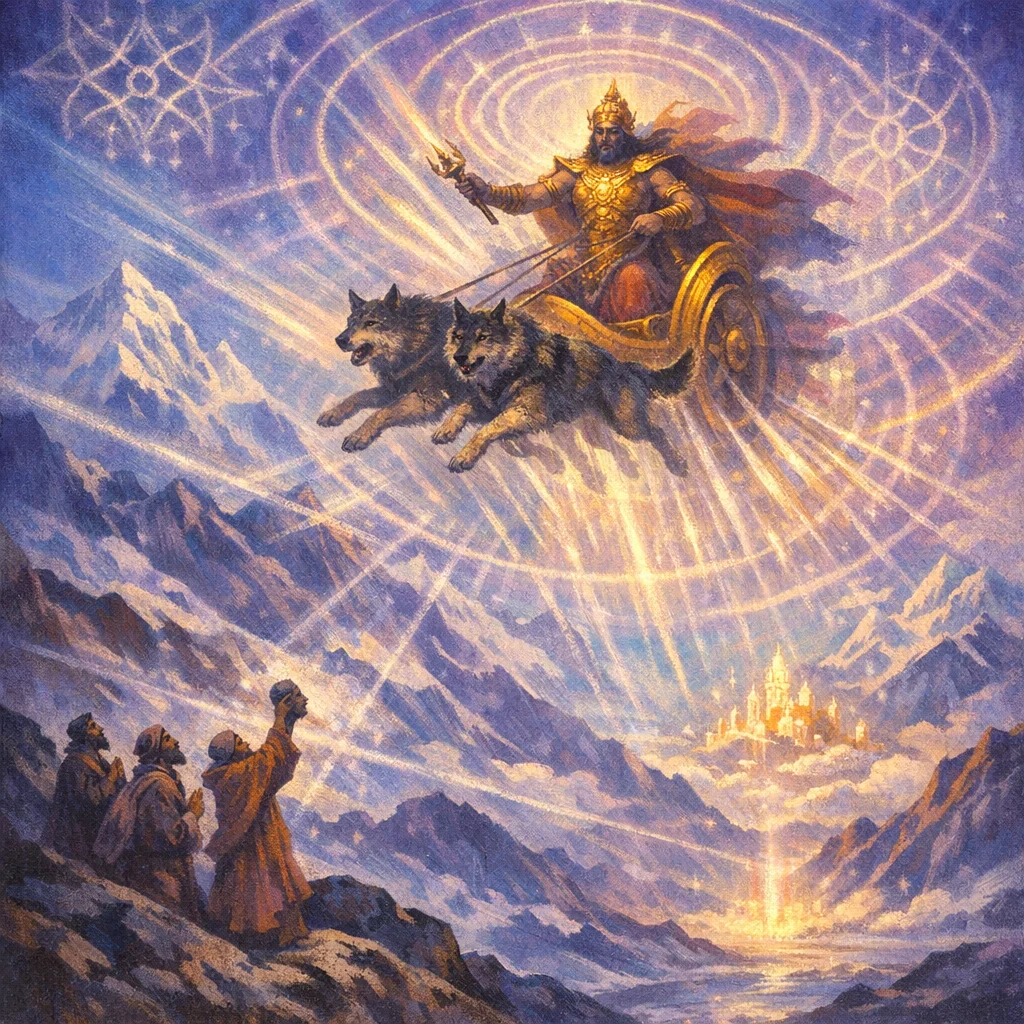
Dashati 16
Āvāhana and rapid approach of Indra to the Kaṇva-stotra, culminating in the boon of svarga (heaven) for the duly directing worshipper
Indra
Summoning and energizing (āhvāna) with martial swiftness and forward drive
Kaṇva
Soma-yajña context implied by explicit grāvā (pressing-stone) and somī; used to call Indra to the pressing and praise.
Mantras
Mantra 1
एन्द्र याहि हरिभिरुप कण्वस्य सुष्टुतिम् दिवो अमुष्य शासतो दिवं यय दिवावसो
Come, Indra, with thy bay steeds, unto the excellent praise of Kaṇva; for the worshipper who duly performs, do thou go to heaven, O giver of celestial good.
Mantra 2
अत्रा वि नेमिरेषामुरां न धूनुते वृकः दिवो अमुष्य शासतो दिवं यय दिवावसो
Here the rim (of thy car) is made manifest; like a wolf he shakes the wide region: for the worshipper who duly performs, do thou go (granting) heaven, O giver of celestial good.
Mantra 3
आ त्वा ग्रावा वदनीह सोमी घोषेण वक्षतु दिवो अमुष्य शासतो दिवं यय दिवावसो
May the Soma-pressing stone, sounding here, bring thee hither with its noise; for the worshipper who duly performs, do thou go (granting) heaven, O giver of celestial good.
Frequently Asked Questions
It repeatedly summons Indra to the Kaṇva praise and Soma-pressing, asking him to validate the rite by granting ‘divam’ (heaven) to the properly conducting worshipper.
Its sounding during Soma-pressing is treated as a ritual summons: the audible act of pressing, together with chant, ‘brings’ Indra to the sacrifice.
It links correct, rule-directed performance (śāsataḥ) with the sacrificial fruit: Indra, ‘giver of celestial good’ (divāvasu), is asked to lead/grant the performer to heaven (divam).