Adhyaya 25
Arjuna’s Northern Conquests: Kimpuruṣa-lands, Hāṭaka, Mānasasaras, and the Harivarṣa Boundary
Upa-parva: Digvijaya (Northern Campaign) — Arjuna’s Uttara-Digvijaya Episode
Vaiśaṃpāyana narrates Arjuna’s northward advance beyond Śvetaparvata into the Kimpuruṣa-associated region guarded by Drumaputra, where Arjuna achieves victory and imposes tribute (kara). He proceeds to a territory named Hāṭaka, described as protected by Guhyakas, and then views the eminent Mānasasaras lake and associated ṛṣi-streams. Near Hāṭaka and the Gandharva-protected zone, Arjuna secures exceptional horses from a Gandharva city. Reaching the northern Harivarṣa region, Arjuna intends to conquer, but powerful gatekeepers warn that entry into the city is impossible for a human body and that one who enters would cease to be human; they commend his achievements and offer compliance. Arjuna states his objective as establishing Yudhiṣṭhira’s paramountcy and requests whatever tribute is feasible. The gatekeepers provide divine garments, ornaments, and special skins as tribute. Arjuna completes extensive northern engagements against kṣatriya and dāsyu groups, collects wealth, gems, and notable horses, and returns with a large fourfold army to Śakraprastha.
Chapter Arc: अर्जुन युधिष्ठिर के सम्मुख अपने सामर्थ्य और उपलब्धियों का निवेदन करता है—धनुष, अस्त्र, बाण, यश और बल जैसे दुर्लभ साधन उसे प्राप्त हो चुके हैं; अब वह राजसूय-यज्ञ के लिए आवश्यक दिग्विजय और कोष-वृद्धि की दिशा में आगे बढ़ने की अनुमति चाहता है। → युधिष्ठिर के राजसूय-संकल्प को सिद्ध करने हेतु व्यावहारिक चुनौती उभरती है—कोष का परिवर्धन, कर-आहार, और चारों दिशाओं में राजाओं को वश में कर समृद्धि तथा अधीनता का प्रमाण जुटाना। आदेश स्पष्ट होता है: ब्राह्मणों से स्वस्तिवाचन कराकर शुभ मुहूर्त में प्रस्थान। → दिग्विजय का निर्णायक विभाजन होता है—अर्जुन उत्तर दिशा की ओर, भीम पूर्व, सहदेव दक्षिण, और नकुल पश्चिम की ओर प्रस्थान करते हैं; धर्मराज द्वारा पूजित होकर चारों भाई विशाल सेनाओं सहित निकल पड़ते हैं, और अर्जुन को विजय का अटल आश्वासन मिलता है। → खाण्डवप्रस्थ में युधिष्ठिर सुहृदों से घिरे राजलक्ष्मी सहित स्थित रहते हैं, जबकि पाण्डव-सेनाएँ दिशाओं में फैलकर अभियान आरम्भ करती हैं—राजसूय के लिए आवश्यक राजनीतिक-आर्थिक आधार तैयार होने लगता है। → चारों दिशाओं में निकल चुकी सेनाओं के सामने कौन-कौन से राजा झुकेंगे, कौन प्रतिरोध करेगा, और किस दिशा में सबसे कठिन संघर्ष आएगा—यह आगे के अध्यायों के लिए खुला रह जाता है।
Shlokas
Verse 1
(दाक्षिणात्य अधिक पाठके २६ श्लोक मिलाकर कुल ८६ श्लोक हैं) है ० बकछ। ] अि्ऑशा:<ह - नरकट बेंतकी तरह पोले डंठलका एक पौधा होता है
វៃសម្បាយនៈបាននិយាយ៖ បន្ទាប់ពីបារថ (អរជុន) ទទួលបានធ្នូដ៏ប្រសើរបំផុត ព្រមទាំងទូណីរធំពីរដែលមិនអស់ សារថរទេះទេវតា ទង់ជ័យ និងសាលាសភាដ៏អស្ចារ្យរួចហើយ គាត់បាននិយាយទៅកាន់យុធិષ્ઠិរៈដូច្នេះ។ ពេលនេះរឿងរ៉ាវបង្វែរពីការទទួលបានអំណោយទេវៈ ទៅកាន់ការប្រើប្រាស់វាដោយធម៌—អរជុនដែលបានបំពាក់ពេញលេញ និយាយជាមួយបងប្រុសធំ ក្នុងបរិបទនៃដំណើរដណ្ដើមទិសទាំងឡាយ ដើម្បីគាំទ្រព្រះរាជពិធី និងអធិបតេយ្យរបស់យុធិષ્ઠិរៈ។
Verse 2
अर्जुन उवाच धनुरस्त्रं शरा वीर्य पक्षो भूमिर्यशों बलम् | प्राप्तमेतन््मया राजन दुष्प्रापं यदभीप्सितम्
អរជុនបាននិយាយ៖ ព្រះរាជា! ខ្ញុំបានទទួលអ្វីដែលពិបាករក និងប្រាថ្នាយូរមកហើយ—ធ្នូ អាវុធ ប្រាំញ់ ពលកម្លាំង វីរភាព មិត្តជួយគាំទ្រដូចព្រះក្រឹស្ណា ដីដ្ឋាន និងបន្ទាយ (រដ្ឋ និងឥន្ទ្រប្រស្ថ) កេរ្តិ៍ឈ្មោះ និងកម្លាំង។ ទាំងនេះសុទ្ធតែជាវត្ថុដ៏កម្រនិងសមតាមបំណង ដែលធ្វើឲ្យការការពាររាជ្យដោយធម៌អាចកើតមាន។
Verse 3
तत्र कृत्यमहं मनन््ये कोशस्य परिवर्धनम् | करमाहारयिष्यामि राज्ञ: सर्वान् नृपोत्तम
អរជុនបាននិយាយ៖ ក្នុងការនេះ ខ្ញុំយល់ថាកិច្ចការចាំបាច់គឺបង្កើនព្រះរាជកោស។ ឱ ព្រះមហាក្សត្រល្អឥតខ្ចោះ ខ្ញុំនឹងចេញទៅឈ្នះស្តេចទាំងអស់ ហើយប្រមូលពន្ធសារពើពីពួកគេ ដើម្បីឲ្យទ្រព្យសម្បត្តិរដ្ឋរឹងមាំ។
Verse 4
विजयाय प्रयास्थामि दिशं धनदपालिताम् । तिथावथ मुहूर्ते च नक्षत्रे चाभिपूजिते,आपकी आज्ञा हो तो उत्तम तिथि, मुहूर्त और नक्षत्रमें कुबेरद्वारा पालित उत्तर दिशाको जीतनेके लिये प्रस्थान करूँ
អរជុនបាននិយាយ៖ ប្រសិនបើព្រះអង្គអនុញ្ញាត ខ្ញុំនឹងចេញដំណើរទៅរកជ័យជម្នះក្នុងទិសខាងជើង—ទិសដែលធនទៈ (គុបេរ) ការពារ—នៅថ្ងៃល្អ ម៉ូហូរតៈល្អ និងនក្ខត្រល្អ ដែលបានគោរពតាមពិធីរួចរាល់។
Verse 5
(एतच्छुत्वा कुरुश्रेष्ठो धर्मराज: सहानुज: । प्रह्दष्टो मन्त्रिभिश्वैव व्यासधौम्यादिभि: सह ।।
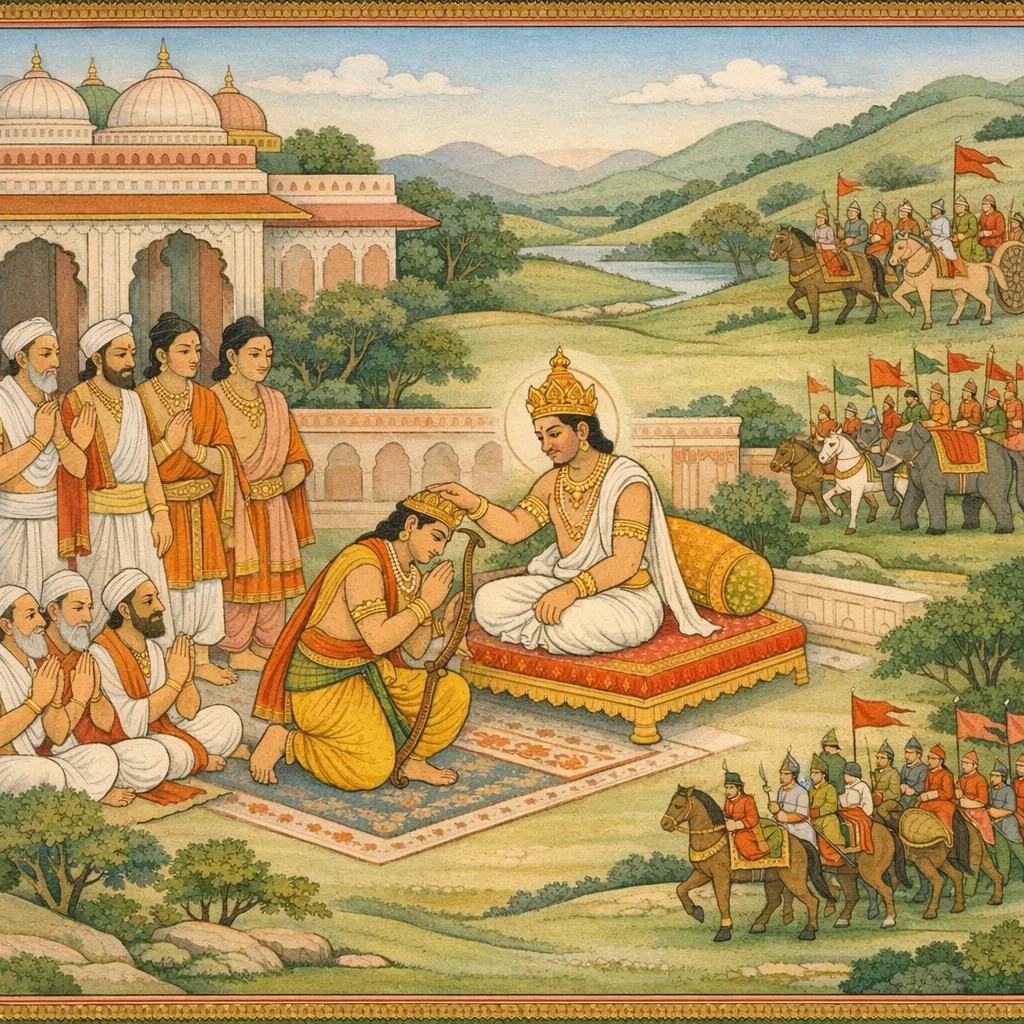
Vaiśaṃpāyana said: Hearing this, the foremost of the Kurus—King Yudhiṣṭhira, the lord of dharma—together with his younger brothers, was filled with joy; and so too were the ministers and the sages such as Vyāsa and Dhaumya. Then the great-minded Vyāsa addressed Arjuna: “Well done, well done, O son of Kuntī! By good fortune your understanding has taken such a form. You have resolved, single-handed, to conquer the whole earth. Blessed is King Pāṇḍu, whose son you are—such as you. Through your valor, the royal son of Dharma, Yudhiṣṭhira, will obtain everything; by your prowess that righteous one will attain universal sovereignty. Relying on the strength of your arms, he will accomplish the Rājasūya. With Vāsudeva’s sound counsel, with the might of Bhīma and Arjuna, and with the heroism of the twins, Dharmarāja will gain all that is sought. Therefore, O Phālguna, go to the northern quarter, guarded by the gods; you are capable, by force of energy, of overcoming even the gods there and bringing back treasures. Let Bhīma, proud of his strength, proceed to the eastern quarter; let the great charioteer Sahadeva go to the southern quarter; and let Nakula go to the western quarter protected by Varuṇa. This is my settled judgment—let it be carried out, O best of the Bharatas.” Vaiśaṃpāyana said: Hearing Vyāsa’s words, the sons of Pāṇḍu, delighted, replied: “So be it, O best of sages; as you command, O lord.” Vaiśaṃpāyana said: Hearing Dhanaṃjaya’s words, King Yudhiṣṭhira, in a voice deep and affectionate, answered him.
Verse 6
स्वस्तिवाच्याहतो विप्रान् प्रयाहि भरतर्षभ । दुर्हदामप्रहर्षाय सुह्ृदां नन्दनाय च
Vaiśaṃpāyana said: “O bull among the Bharatas, have the venerable brāhmaṇas pronounce auspicious blessings and then set forth. May this journey bring no joy to your ill-wishers, and may it increase the delight of your well-wishers.”
Verse 7
इत्युक्त: प्रययौ पार्थ: सैन्येन महता55वृतः
Vaiśaṃpāyana said: Thus instructed, Pārtha (Arjuna) set out, surrounded by a great army. Likewise, all the others too departed with their forces, having been honored by Dharmarāja—an orderly, duty-bound beginning to the campaign undertaken under the king’s sanction and with due respect.
Verse 8
अन्निदत्तेन दिव्येन रथेनाद्भधुतकर्मणा । तथैव भीमसेनो5पि यमौ च पुरुषर्षभौ
Vaiśaṃpāyana said: With the celestial chariot bestowed by Agni—an instrument of wondrous power—so too did Bhīmasena, and the twin sons (Nakula and Sahadeva), those best of men, proceed in like manner. The narration underscores that their strength and readiness are not merely personal prowess but are supported by divinely sanctioned means, suggesting responsibility in the use of extraordinary power.
Verse 9
दिशं धनपतेरिष्टामजयत् पाकशासनि:,राजन! इन्द्रकुमार अर्जुनने कुबेरकी प्रिय उत्तर दिशापर विजय पायी। भीमसेनने पूर्व दिशा, सहदेवने दक्षिण दिशा तथा अस्त्रवेत्ता नकुलने पश्चिम दिशाको जीता
Vaiśaṃpāyana said: O King, Arjuna—the son of Indra, famed as the chastiser of Pāka—conquered the northern quarter dear to Kubera, the Lord of Wealth. Bhīmasena subdued the eastern quarter; Sahadeva, the southern; and Nakula, skilled in weapons, overcame the western quarter. Thus the brothers, acting in concert, brought the regions under control as part of their royal enterprise.
Verse 10
भीमसेनस्तथा प्राचीं सहदेवस्तु दक्षिणाम् । प्रतीचीं नकुलो राजन् दिशं व्यजयतास्त्रवित्
វៃសម្បាយនៈបាននិយាយថា៖ ព្រះរាជា! ភីមសេនបានឈ្នះទិសខាងកើត; សហទេវបានឈ្នះទិសខាងត្បូង; ហើយនកុល—អ្នកជំនាញអាវុធ—បានយកឈ្នះទិសខាងលិច។ បន្ទាប់មក អរជុន ព្រះបុត្ររបស់ឥន្ទ្រ បានទទួលជ័យជម្នះនៅទិសខាងជើង ដែលជាតំបន់ជាទីស្រឡាញ់របស់គុបេរ។
Verse 11
खाण्डवप्रस्थमध्यस्थो धर्मराजो युधिष्ठिर: । आसीत् परमया लक्ष्म्या सुहृदूगणवृत: प्रभु:,केवल धर्मराज युधिष्ठिर सुहृदोंसे घिरे हुए अपनी उत्तम राजलक्ष्मीके साथ खाण्डवप्रस्थमें रह गये थे
វៃសម្បាយនៈបាននិយាយថា៖ យុធិષ્ઠិរ ព្រះរាជាធម៌រាជ អ្នកគាំទ្រធម៌ បានស្នាក់នៅកណ្ដាលខាណ្ឌវប្រស្ថ ដោយមានមិត្តស្មោះ និងអ្នកបម្រើជុំវិញ ហើយរុងរឿងដោយសិរីល្អនៃរាជសម្បត្តិដ៏ប្រសើរ។
Verse 25
इति श्रीमहाभारते सभापर्वणि दिग्विजयपर्वणि दिग्विजयसंक्षेपक थने पज्चविंशो<5 ध्याय:
ដូច្នេះ ក្នុង «មហាភារត» ដ៏បរិសុទ្ធ នៅក្នុង «សភាបរវ» ក្នុងផ្នែក «ទិគ្វិជយ» (យុទ្ធនាការឈ្នះទិសទាំងបួន) ក្នុងអនុផ្នែកសង្ខេបនៃទិគ្វិជយ នេះជាចប់ជំពូកទីម្ភៃប្រាំ។
Verse 66
विजयस्ते ध्रुवं पार्थ प्रियं काममवाप्स्यसि । 'पार्थ! तुम्हारी विजय सुनिश्चित है, तुम अभीष्ट कामनाओंको प्राप्त करोगे”
«ឱ បារថ! ជ័យជម្នះរបស់អ្នកប្រាកដណាស់; អ្នកនឹងសម្រេចបានគោលបំណងដ៏ជាទីស្រឡាញ់ដែលអ្នកប្រាថ្នា»។
Verse 83
ससैन्या: प्रययु: सर्वे धर्मराजेन पूजिता: । उनके इस प्रकार आदेश देनेपर कुन्तीपुत्र अर्जुन विशाल सेनाके साथ अग्निके दिये हुए 3 तकर्मा दिव्य रथद्वारा वहाँसे प्रस्थित हुए। इसी प्रकार भीमसेन तथा नरश्रेष्ठ नकुल- --इन सभी भाइयोंने धर्मराजसे सम्मानित हो सेनाओंके साथ दिग्विजयके लिये प्रस्थान किया
វៃសម្បាយនៈបាននិយាយថា៖ ពួកគេទាំងអស់ បានទទួលកិត្តិយសពីធម៌រាជ ហើយចេញដំណើរជាមួយកងទ័ពរបស់ខ្លួន។ ពេលព្រះអង្គបានប្រកាសបញ្ជាដូច្នោះ កូនកុន្តី អរជុន បានចាកចេញពីទីនោះជាមួយយោធាធំ ដោយឡើងលើរថទេវីបីគ្រឿងអស្ចារ្យ ដែលអគ្គិនីបានប្រទាន។ ដូចគ្នានេះ ភីមសេន និងនកុល—បុរសប្រសើរបំផុត—ពិតជាបងប្អូនទាំងអស់ បានទទួលការគោរពពីធម៌រាជ ហើយដង្ហែយោធាចេញទៅ ដើម្បីទិគ្វិជយៈ ឈ្នះទិសទាំងបួន។
Frequently Asked Questions
Arjuna must choose between demonstrating total conquest by forced entry and honoring a boundary where human entry is framed as impermissible; he resolves this by prioritizing political acknowledgment and tribute over escalation.
Political objectives can be fulfilled through calibrated means: recognition, tribute, and diplomacy may accomplish legitimacy goals more appropriately than maximal territorial penetration when constraints are categorical.
No explicit phalaśruti is stated here; the chapter’s significance is contextual—documenting the rājasūya-enabling digvijaya and illustrating boundary-aware sovereignty within the epic’s cosmographic worldview.