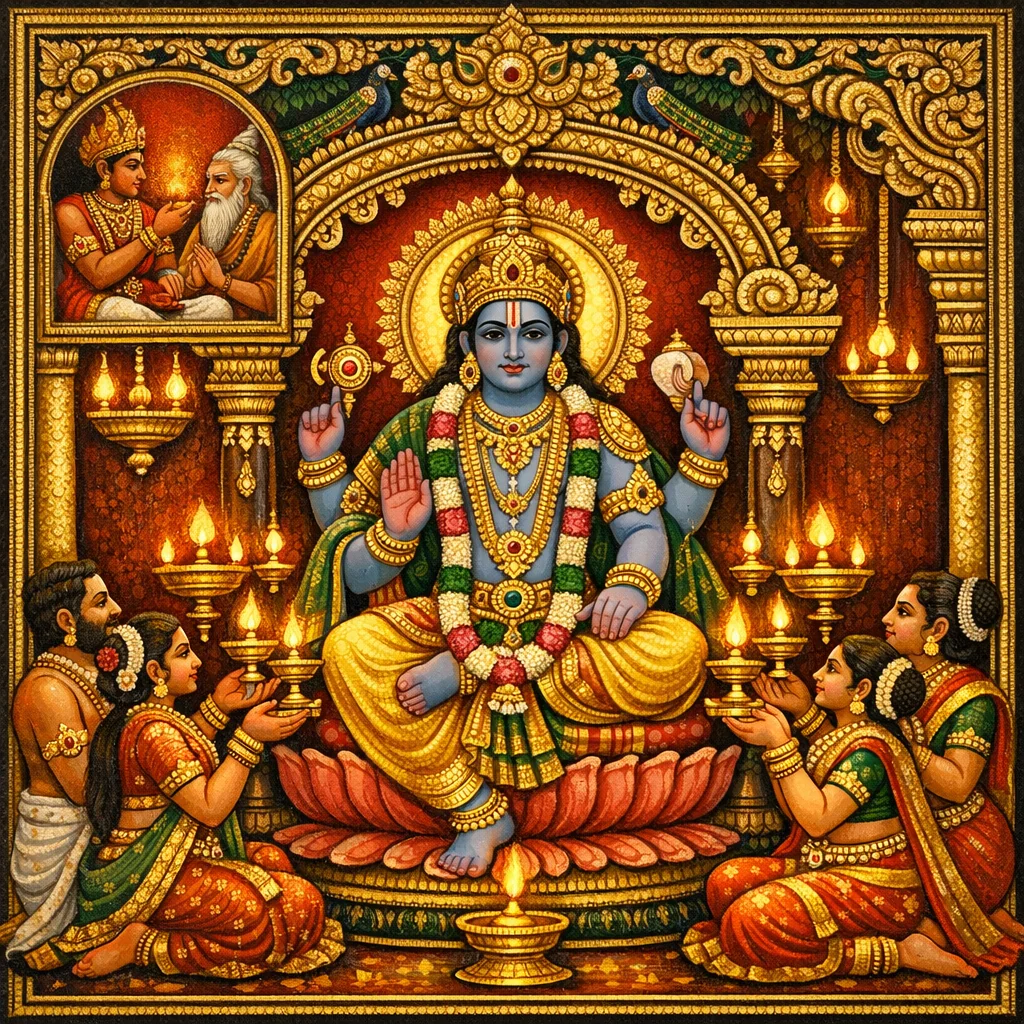
Adhyaya 200
Dīpadāna-vrata (The Vow of Offering Lamps)
ព្រះអគ្គិទេសនាវ្រត «ទានប្រទីប» (Dīpadāna-vrata) ដែលផ្តល់ទាំងភោគសម្បត្តិ និងមុក្កតិ។ ការថ្វាយចង្កៀងមួយឆ្នាំនៅវិហារព្រះ ឬផ្ទះព្រាហ្មណ៍ នាំមកសេចក្តីរុងរឿងគ្រប់ប្រការ។ ទានប្រទីបត្រូវបានលើកតម្កើងថាមានបុណ្យលើសគេ ជាពិសេសក្នុងចាតុರ್ಮាស្យ និងខារតិកា ប្រោសឲ្យទៅដល់លោកវិෂ្ណុ និងសុខសាន្តសួគ៌។ ព្រះអគ្គិប្រាប់រឿងលលិតា៖ សកម្មភាពតូចមួយពាក់ព័ន្ធនឹងចង្កៀងនៅវិហារវិષ្ណុ ទោះមិនមានចេតនាក៏បានផលធំ បណ្តាលឲ្យកើតជារដ្ឋវង្ស និងសម្បត្តិគ្រួសារកើនឡើង។ ការលួចចង្កៀងត្រូវបានហាមឃាត់ ដោយផលកម្មឲ្យកើតជាមនុស្សមិននិយាយ/មិនឆ្លាត និងធ្លាក់ទៅនរកងងឹត។ បន្ទាប់មកមានអធិប្បាយសីលធម៌ បដិសេធការលោភលន់អារម្មណ៍ និងបំណងអសីល (ជាពិសេសអំពើផិតក្បត់) ហើយណែនាំឲ្យសូត្រឈ្មោះហរិ និងថ្វាយចង្កៀងដ៏សាមញ្ញ។ ចុងក្រោយបញ្ជាក់ថាទានប្រទីបបង្កើនផលវ្រតទាំងអស់ ហើយការស្តាប់និងអនុវត្តនាំទៅកាន់គតិខ្ពស់។
Shlokas
No shlokas available for this adhyaya yet.
Frequently Asked Questions
Offer a lamp—ideally sustained as a yearly practice—in a deity’s shrine (especially Viṣṇu’s) or a brāhmaṇa’s home; the act is taught as a high-merit vrata granting prosperity, longevity, clarity of sight, and higher worlds, ultimately supporting liberation.
Kārttika is presented as a peak season of ritual potency: lamp-giving then is said to yield exceptional heavenly results, surpassing ordinary times and amplifying vrata-fruit.
It demonstrates that even an unpremeditated or indirect contribution to a lamp-offering in a Viṣṇu temple can generate powerful puṇya, underscoring the vow’s efficacy and the sacredness of temple-based offerings.
The chapter condemns dīpa-theft with severe karmic outcomes and uses hell imagery to caution against negligence, sense-addiction, and sexual misconduct (adultery), redirecting the practitioner toward dharmic restraint and Hari-nāma.