Adhyaya 190
Chapter 190: Akhaṇḍa-dvādaśī-vrata (The Unbroken Dvādaśī Vow)
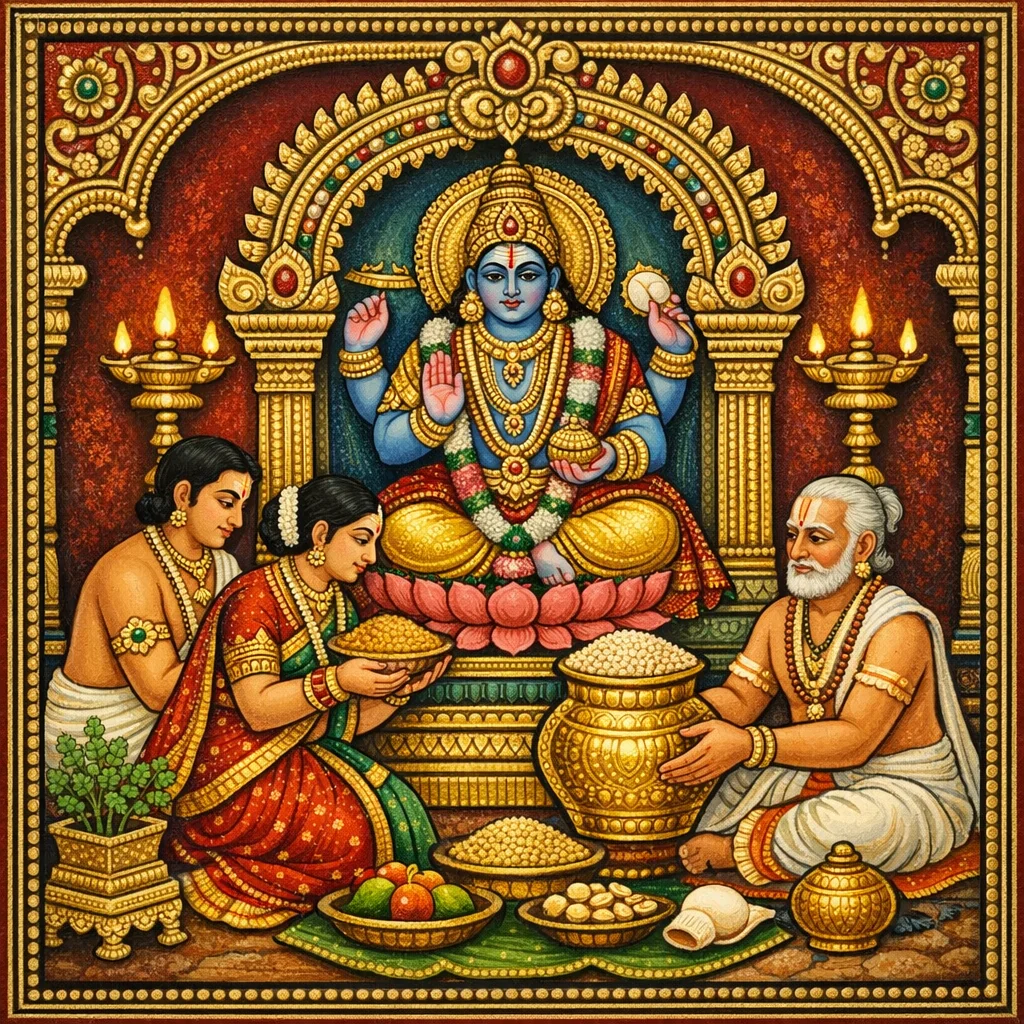
ព្រះអគ្គីបង្រៀនឥសីវសិષ્ઠអំពីវ្រតៈ «អខណ្ឌ-ទ្វាទសី» ដើម្បីធ្វើឲ្យពិធីសច្ចវតៈទាំងឡាយពេញលេញ មិនបាក់បែក។ អ្នកអនុវត្តអត់អាហារនៅទ្វាទសីខាងភ្លឺ ខែមារគសីរ្សៈ ថ្វាយបង្គំវិષ્ણុ បន្ទាប់ពីងូតទឹកបញ្ចកវ្យ និងទទួលសារធាតុបរិសុទ្ធតាមពិធី។ ចំណុចសំខាន់គឺទានៈ នៅថ្ងៃទ្វាទសី ប្រគេនភាជន៍មានស្រូវសាលី និងអង្ករ ដល់ព្រាហ្មណ៍។ បន្ទាប់មកមានសេចក្តីអធិស្ឋាន សូមវិષ્ણុជួសជុលភាពមិនពេញលេញនៃវ្រតៈដែលសន្សំមកពី៧ជាតិ ដោយយោងរូបភាពមេតាភិសិកៈថា ពិភពលោក «មិនបាក់បែក» នៅក្នុងបុរុសោត្តម។ អគ្គីបន្ថែមវិន័យប្រចាំខែ និងចាតុរមាស្យៈ ដោយមានការថ្វាយអំណោយតាមខែ ដូចជា ចានសក្តុ (ម្សៅស្រូវសាលីអាំង)។ ចុងក្រោយ បញ្ជាក់ពេលវេលាត្រឹមត្រូវចាប់ពីស្រាវណៈ ដល់ពារ៉ណៈចុងខែកាត្តិកៈ ព្រមទាំងព្រមានថាកំហុសអាចបន្តឥទ្ធិពល៧ជាតិ ខណៈការអនុវត្តបានល្អនាំឲ្យអាយុវែង សុខភាព សំណាង អធិបតេយ្យ និងសុខសម្បទា។
Shlokas
No shlokas available for this adhyaya yet.
Frequently Asked Questions
It is explicitly framed as a rite for vrata-sampūrṇatā—making vows complete and ‘unbroken,’ including repairing deficiencies believed to persist across seven births through Viṣṇu’s grace.
Fasting on bright Mārgaśīrṣa Dvādaśī for Viṣṇu, bathing in pañcagavya-water and partaking of it, and giving a brāhmaṇa a vessel containing barley and rice on Dvādaśī.
The votary’s prayer links personal vow-completion to the cosmic ‘unbroken wholeness’ of the universe identified with Puruṣottama (Viṣṇu), making ritual integrity a mirror of ontological unity.
The course is described as beginning in Śrāvaṇa and reaching pāraṇa at the end of Kārttika, aligning with the Cāturmāsya-related discipline and its closure.
Long life, freedom from disease, good fortune, sovereignty/kingship, and enjoyments (along with similar prosperities) are stated as outcomes.