Adhyaya 186
Daśamī-vrata (Observance for the Tenth Lunar Day)
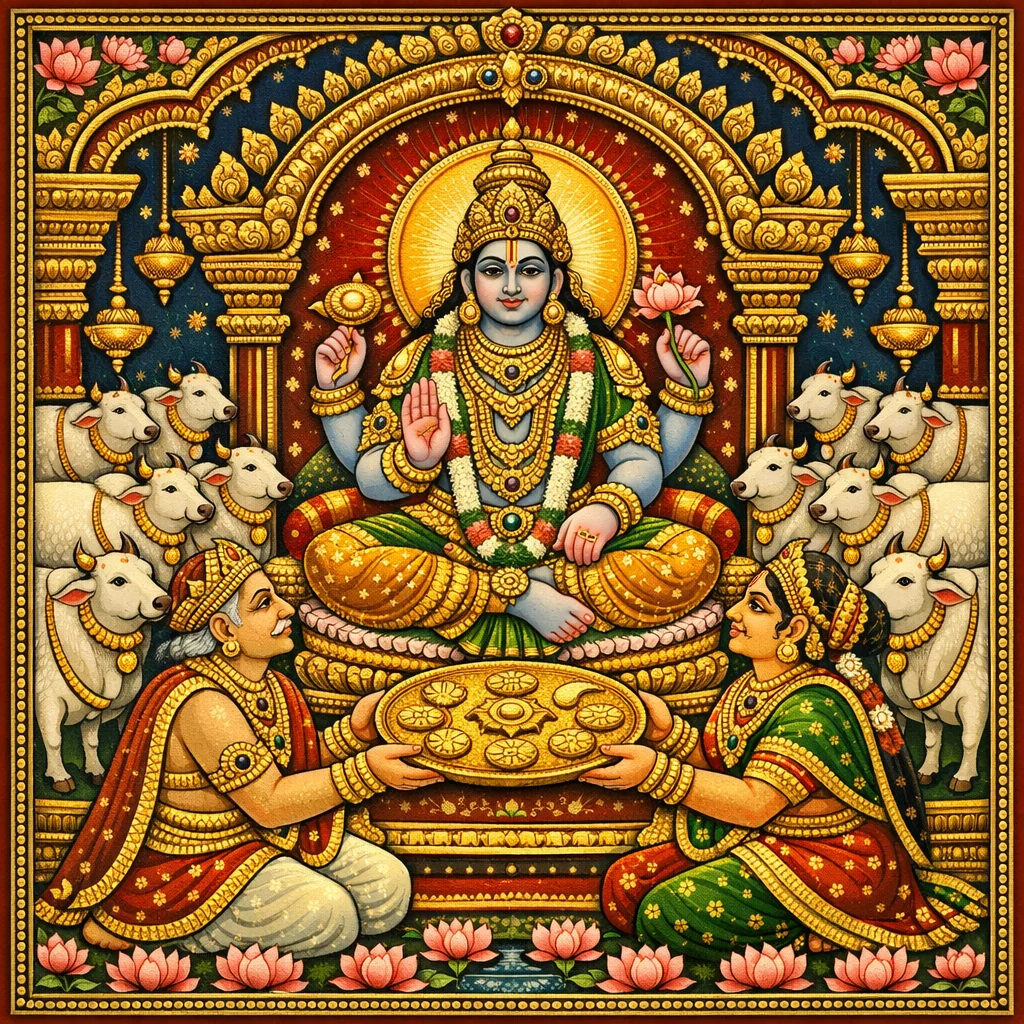
បន្តពីវ្រតនវមី ព្រះអគ្គិពន្យល់វ្រតទសមី ដោយបញ្ជាក់ផលក្នុងភាសាពុរុសារថៈ—ធម៌ កាម និងគោលបំណងពាក់ព័ន្ធ—បង្ហាញថាវិន័យពិធីជាឧបករណ៍ទាំងសេចក្តីគុណធម៌ និងសេចក្តីរុងរឿងលោកីយ៍។ នៅថ្ងៃទសមី គួរធ្វើឯកភក្ត (បរិភោគម្តង) ដើម្បីសម្អាតដោយការគ្រប់គ្រងអាហារ។ វ្រតបញ្ចប់ដោយទាន៖ បរិច្ចាគគោដប់ក្បាល ហើយមានទានកិត្តិយសបន្ថែម គឺបូជាទិសទាំង៨ធ្វើពីមាស ដែលថាធ្វើឲ្យអ្នកឧបត្ថម្ភឡើងដល់ភាពជាម្ចាស់ក្នុងចំណោមព្រាហ្មណ៍។ ដូច្នេះ វិន័យខាងក្នុង ពេលវេលាសក្ការៈតាមតិថិ និងទានខាងក្រៅ ត្រូវបានភ្ជាប់ជាកម្មវិធីធម៌តែមួយ។
Shlokas
No shlokas available for this adhyaya yet.
Frequently Asked Questions
The practitioner observes ekabhakta on Daśamī—taking a single meal—establishing dietary restraint as the vow’s primary discipline.
Upon completion of the vow, one should gift ten cows (daśa-dhenu-dāna), making dana the culminating act that externalizes the merit of the observance.
The text states that gifting the directions (dik) fashioned in gold results in becoming a lord among Brāhmaṇas, indicating social-spiritual elevation linked to high-value symbolic dana.
By combining tithi-discipline (Daśamī), bodily restraint (ekabhakta), and compassionate redistribution (dana), the vrata trains self-control and generosity—core dharmic virtues that support both worldly order and inner purification.