Adhyaya 179
Caturthī-vratāni (Vows of the Fourth Lunar Day)
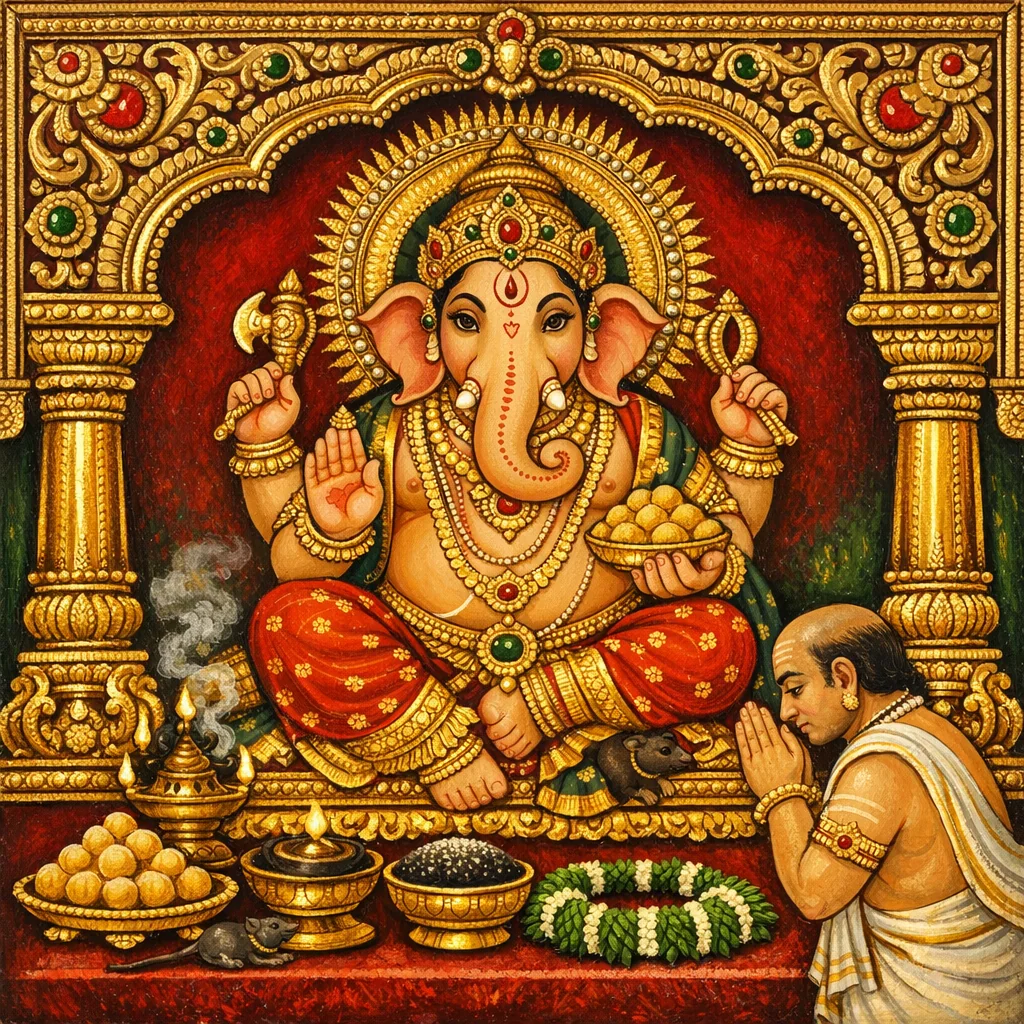
ព្រះអគ្គិចាប់ផ្តើមពន្យល់យ៉ាងមានលំដាប់អំពីវ្រតៈតាមថ្ងៃចតុរថី ដោយបញ្ជាក់ថាជាវិន័យផ្តល់ផលទ្វេ—ភុក្តិ និងមុក្តិ។ ជំពូកបើកដោយកំណត់សម្គាល់ខ្លីអំពីភាពខុសគ្នានៃបឋមបទ/សៀវភៅចម្លង បន្ទាប់មកផ្តល់វិធានតាមខែ និងតិថី។ សម្រាប់ Māgha śukla-caturthī បង្គាប់ឲ្យអត់បាយ និងបូជាដោយផ្តោតលើ ‘Guṇa’ (គុណធម៌/ឧត្តមភាព) ជាគោលបំណងពិធី។ វាធ្វើបន្តដល់ pañcamī ដោយថ្វាយអង្ករលាយល្ង សម្រាប់សុខសាន្តគ្មានឧបសគ្គរយៈពេលមួយឆ្នាំ ហើយណែនាំមន្ត្រមូល “gaṁ svāhā” និងការប្រើក្នុង aṅga-nyāsa (មន្ត្រចាប់ពី “gām” សម្រាប់បេះដូង និងអវយវៈ)។ ជំពូកក៏បញ្ជាក់លំដាប់ពិធី āvāhana និង visarjana ដោយ “āgaccha ulkā” និង “gaccha ulkā” រួមទាំងថ្វាយក្លិនក្រអូប guggulu និងផ្អែម modaka និងមន្ត្របែប Gaṇeśa-gāyatrī មួយទៀត។ ចុងក្រោយ វាបង្ហាញវ្រតៈពិសេសៗ៖ Bhādrapada Caturthī Kṛcchra, ការអត់បាយយប់ Phālguna Caturthī ហៅ Avighnā, និងការបូជា Gaṇa នៅ Caitra Caturthī ដោយ damana/dūrvā ដោយបង្ហាញវ្រតៈជាវិធីបង្កើតមង្គល និងសម្អាតវិញ្ញាណ។
Shlokas
No shlokas available for this adhyaya yet.
Frequently Asked Questions
It specifies mantra-technology and ritual sequencing: the mūla-mantra “gaṁ svāhā,” its gāmādi application as hṛdaya and aṅga-mantras for nyāsa, and the precise āvāhana–visarjana formulas (“āgaccha ulkā” / “gaccha ulkā”) alongside prescribed offerings.
By presenting Caturthī vratas as disciplined, time-bound sādhana that removes obstacles (Avighnā), cultivates restraint (fasting/kṛcchra), and aligns ritual action with inner purification—thereby supporting both worldly stability (Bhukti) and liberation-oriented refinement (Mukti).