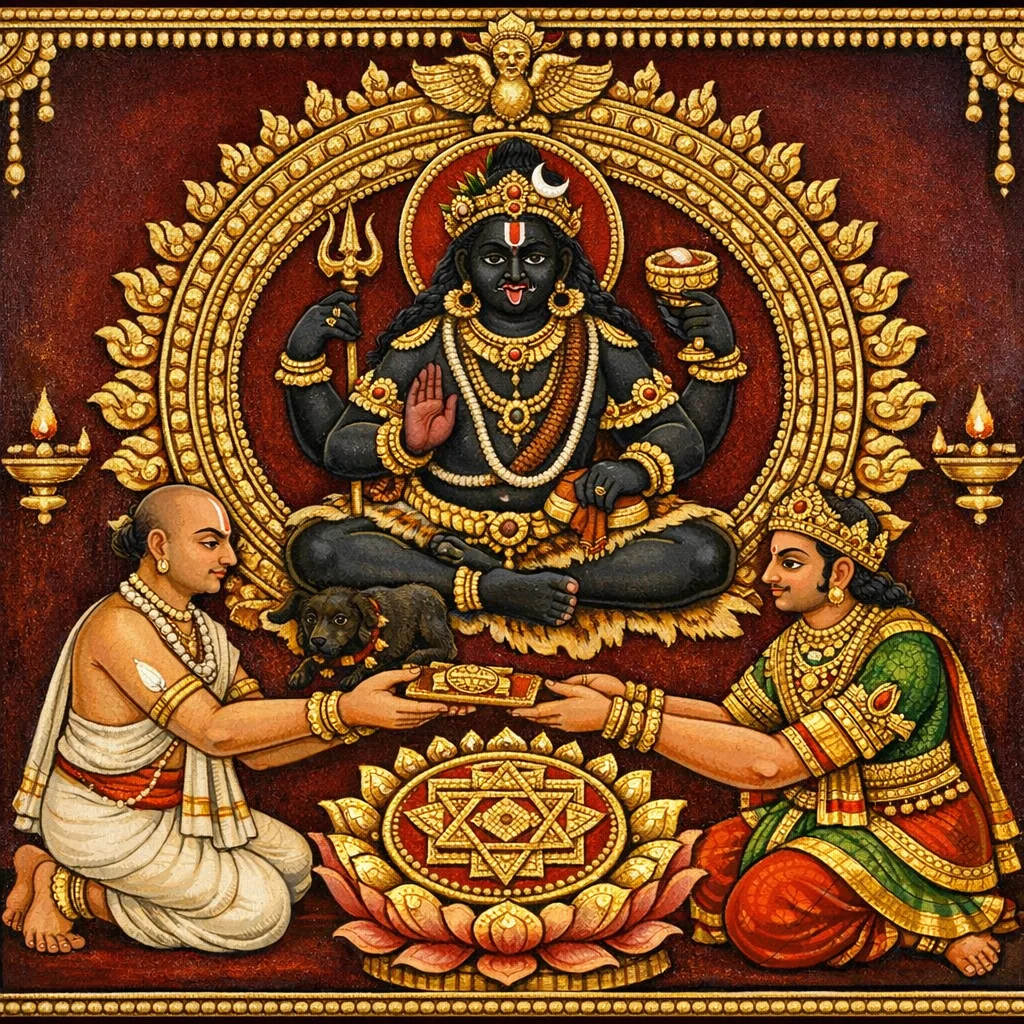
Adhyaya 133
Chapter 133 — Various Strengths (Nānā-balāni) in Jyotiṣa and Battle-Protection Rites
ព្រះអគ្គិ បន្តស្ទ្រីម Yuddhajayārṇava ដោយភ្ជាប់ការវិនិច្ឆ័យ Jyotiṣa ជាមួយប្រសិទ្ធភាពក្នុងសមរភូមិ។ ដំបូងពិពណ៌នារូបលក្ខណៈល្អឥតខ្ចោះរបស់ “ម្ចាស់វាល” (kṣetrādhipa) មានរាងកាយសមតុល្យ និងធម្មជាតិរឹងមាំ ហើយភ្ជាប់ទីតាំងព្រះអាទិត្យ ព្រះចន្ទ អង្គារ ពុធ ព្រហស្បតិ៍ សុក្រ សៅរ៍ ជាមួយចរិត និងសំណាង។ បន្ទាប់រៀបរាប់ផល daśā (ទ្រព្យ ស្រែដី សេចក្តីរុងរឿងរាជ្យ) និងវិធីអាននិមិត្តតាមលំហូរ nāḍī (ដង្ហើមឆ្វេង/ស្តាំ) និងសមភាពព្យាង្គនាម ដើម្បីទស្សន៍ទាយពាណិជ្ជកម្ម និងលទ្ធផលសង្គ្រាម។ បន្ទាប់បម្លែងទៅ Agneya Vidyā ប្រតិបត្តិ៖ មន្តអាវុធផ្អែកលើ Bhairava ជាមួយ nyāsa និង japa ដើម្បីបំបាក់ និងបណ្តេញសត្រូវ; ពិធីបំបែកកងទ័ពដោយវត្ថុពីទីបូជាសព និងសរសេរឈ្មោះលើរូបគំនូរ។ បង្រៀន Garuḍa/Tārkṣya-cakra សម្រាប់ជ័យជម្នះ និងបំបាត់ពុល និងទុក្ខពីភូត-គ្រាហៈ ដោយសមាធិ និងដាក់ព្យាង្គ។ ចុងក្រោយមានពិធី Picchikā (japa ពេលគ្រាស), វិធីបណ្តេញពីចម្ងាយ (bhaṅga), វិទ្យា Mātṛkā សរសេរលើស្លឹក, rakṣā-yantra ដាក់គ្រាប់ពូជក្នុង មានផ្កាឈូក និងអក្សរសំឡេង, ក្បួន Mṛtyuñjaya និងវិទ្យា Bhelakhī ការពារមរណមន្តអាក្រក់ បញ្ចប់ដោយការអះអាងថាមិនអាចឈ្នះបានក្នុងការប្រយុទ្ធដាវ។
Shlokas
No shlokas available for this adhyaya yet.
Frequently Asked Questions
A combined technical stack: (1) Jyotiṣa correlations of graha placements with bodily/psychological traits; (2) daśā-phala enumerations; (3) omen-reading via nāḍī-flow and name-syllable parity; and (4) operational mantra/yantra protocols (nyāsa counts such as 108 japa; ninefold name-inscription; lotus-petal phoneme placements; birch-bark inscription with gorocanā and kuṅkuma).
It frames protection, victory, and harm-aversion as dharmic disciplines: mantra, yantra, visualization, and ritual offerings are treated as revealed means that must be applied with restraint and right orientation, integrating worldly efficacy (bhukti) into a sacral order that supports steadiness, protection of life, and the broader pursuit of Dharma and ultimately mukti.
Bhairava (as the meditational self-form for astramantra practice), Tārkṣya/Garuḍa (as the victory and poison-destroying power), the Mātṛkās with emphasis on Kālarātrī (via caru offerings), and protective forms such as Narasiṁhī, Bhairavī-Śakti, and Gaurī.