Adhyaya 126
Chapter 126 — Nakṣatra-nirṇaya (Determination of the Lunar Mansions) and Rāhu-Based Victory/Defeat Omens
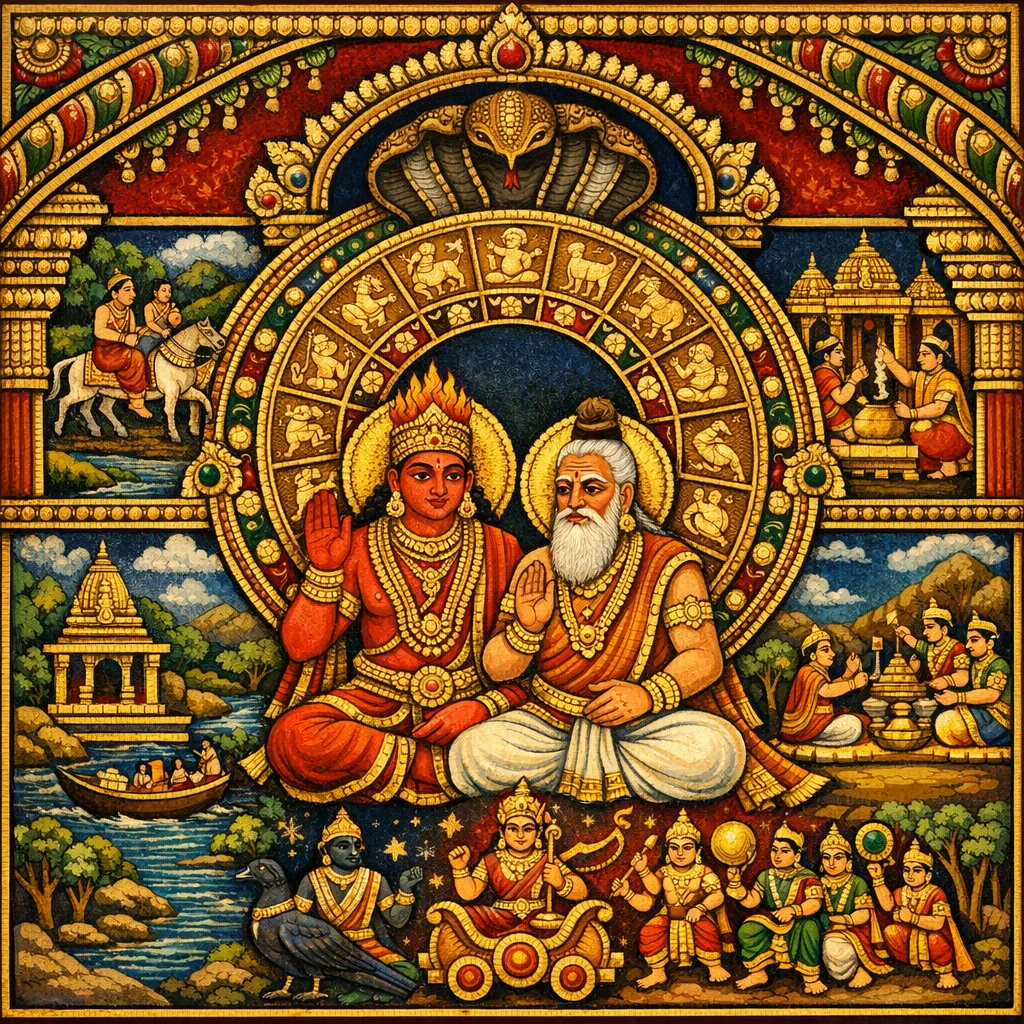
ព្រះឥśvara បង្ហាញគំនូស «ស្វ៊ែរដែលមានរាងកាយនក្សត្រ» ដើម្បីវិនិច្ឆ័យល្អ–អាក្រក់ ដោយផ្គូផ្គងនក្សត្រដែលព្រះអាទិត្យស្ថិតនៅជាមួយផ្នែករាងកាយ (ក្បាល មុខ ភ្នែក បេះដូង អវយវៈ ចង្កេះ កន្ទុយ)។ បន្ទាប់មកមានព្យាករណ៍បែបយុទ្ធជ័យអារណវៈ៖ គំនូស «ក្បាលពស់» សម្រាប់រាហ៊ូ ដោយសរសេរចំណុច ២៨ ហើយរៀប ២៧ នក្សត្រ ចាប់ពីនក្សត្រដែលរាហ៊ូកាន់កាប់; ទីតាំងខ្លះ (ជាពិសេសសញ្ញាទាក់ទងទី៧) ត្រូវអានថាជាសញ្ញាស្លាប់ ឬខូចខាតក្នុងសង្គ្រាម ខណៈទីតាំងផ្សេងទៀតនាំកិត្តិយស ជ័យជម្នះ និងកេរ្តិ៍ឈ្មោះ។ បន្ទាប់មករាយនាមភពជាអធិបតីនៃពាក់កណ្តាលយាមៈ និងច្បាប់យុទ្ធសាស្ត្រ៖ ដាក់សៅរ៍ ព្រះអាទិត្យ និងរាហ៊ូ «នៅខាងក្រោយ» នាំជោគជ័យក្នុងសង្គ្រាម ដំណើរ និងសូម្បីល្បែងភ្នាល់។ បន្តចាត់ថ្នាក់នក្សត្រតាមមុខងារ (ថេរ លឿន ទន់ភ្លន់ កាច; ភ្ជាប់ Pitṛ/Nairṛta) សម្រាប់ជ្រើសមុហូរតៈក្នុងដំណើរ ដំឡើងពិធី សំណង់ ជីក និងព្រះរាជពិធី។ ចុងក្រោយបញ្ជាក់ច្បាប់ «ដុត» នៃទីថិ កំណត់ Tripuṣkara (សំណុំទីថិ–ថ្ងៃ–នក្សត្រ) ដែលបង្កើនផល បញ្ជីសញ្ញាដំណើរ–ត្រឡប់ និងព្រមានអំពី Gaṇḍānta និងចំណុចប្រសព្វគ្រោះថ្នាក់ ដែលពិធីល្អ និងសូម្បីការសម្រាលកូន ត្រូវបាននិយាយថាមានហានិភ័យធ្ងន់។
Shlokas
No shlokas available for this adhyaya yet.
Frequently Asked Questions
It maps the Sun’s current nakṣatra onto a schematic body (head/face/eyes/heart/limbs/waist/tail) and interprets outcomes—e.g., head indicates sovereignty, heart indicates wealth, certain placements indicate theft or death.
A serpent-hood (phani) diagram is formed by dots and lines; the nakṣatra occupied by Rāhu is placed on the hood and the remaining nakṣatras are arranged in order, after which specific positional relations (notably seventh-related) are read as victory, defect, or fatality indicators.
Tripuṣkara is defined through specific sets of tithis, weekdays, and nakṣatras; when present, results—gain, loss, victory, increase, or outcomes regarding birth—are said to become amplified (notably threefold).
The text cautions against the Revatī–Aśvinī and Āśleṣā–Maghā junction zones with specified avoidance measures (nāḍī/ghaṭikā/yāma), and names the Jyeṣṭhā–Mūla junction as a fierce ‘yāmaka’.