Adhyaya 123
युद्धजयार्णवीयनानायोगाः (Various Yogas from the Yuddha-jayārṇava)
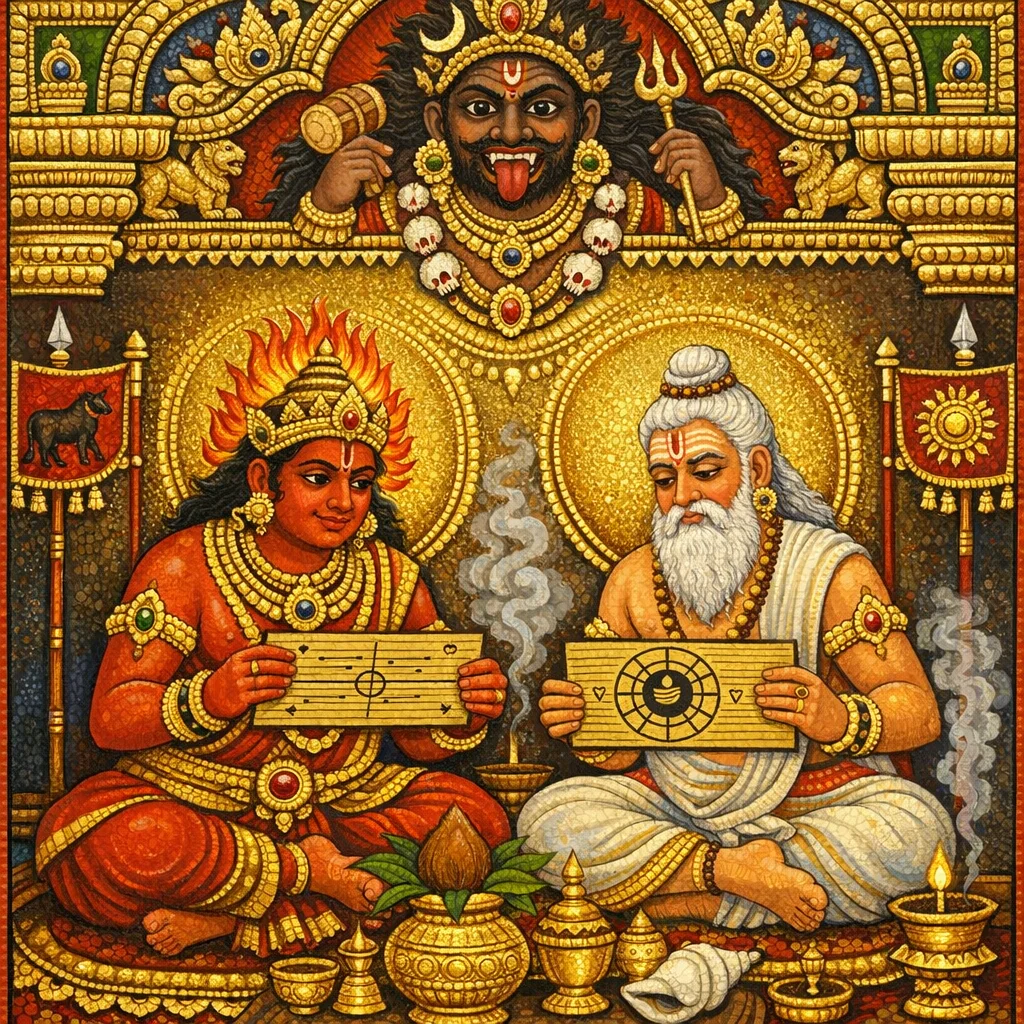
បន្ទាប់ពីបញ្ចប់ការគណនាកាលៈ (kāla-gaṇana) ព្រះអគ្គិចាប់ផ្តើមសេចក្តីសង្ខេបសម្រាប់ជ័យជំនះក្នុងសង្គ្រាម ដកស្រង់ពី Yuddhajayārṇava។ ជំពូកនេះចាត់ថ្នាក់សូរសព្ទ និងទិថិ (tithi) ជាប្រភេទប្រតិបត្តិការ (ចាប់ពី Nandā) ហើយកំណត់ជួរអក្សរឲ្យអធិបតីភព ដើម្បីបង្កើតបណ្តាញទស្សន៍ទាយភាសា-តារាសាស្ត្រ។ វានាំមកនូវវិធីវាស់វែង/វិនិច្ឆ័យ (nāḍī-spandana, ucchvāsa, pala) ភ្ជាប់ចង្វាក់ជីពចរ និងឯកតាពេលវេលា ទៅនឹងការព្យាករណ៍។ បន្ទាប់មកអភិវឌ្ឍហោរាសង្គ្រាមតាមចក្រ—Svarodaya-cakra, Śani-cakra, Kūrma-cakra, Rāhu-cakra—បញ្ជាក់ការបែងចែក ទិសដៅ និងផ្នែកនាំមរណៈ ព្រមទាំងឈ្មោះ nakṣatra/muhūrta សម្រាប់កំណត់អំពើសមស្របតាមកាលៈ។ ចុងក្រោយ វាប្រែទៅកាន់ការការពារ និងវិធីឈ្នះ៖ ការប្រើ Bhairava-mantra (śikhā-bandha, tilaka, añjana, dhūpa-lepana) និងឱសថពាក់ព័ន្ធ/វាសីករណៈ (tilaka, lepa, ប្រេង) ដើម្បីគាំទ្រជ័យជំនះតាមធម៌។
Shlokas
No shlokas available for this adhyaya yet.
Frequently Asked Questions
A war-oriented Jyotiṣa toolkit: tithi and letter-to-graha mappings, multiple prognostic cakras (Svarodaya, Śani, Kūrma, Rāhu), and muhūrta-based prescriptions for what actions to perform or avoid.
They act as diagrammatic decision systems: divisions, directional placements, and specific ‘death-giving’ portions (notably linked with Śani) guide timing and risk assessment for actions related to conflict and protection.
The chapter treats victory as a synthesis of right timing (Jyotiṣa), protective rite (mantra and ritual acts like tilaka/añjana), and supportive materia medica—typical of the Agni Purana’s encyclopedic Agneya-vidyā approach.
Action-appropriateness: Raudra is prescribed for fierce acts, while Śveta is aligned with purification activities like bathing—demonstrating karmic regulation through time-quality.
Yes. Shloka 25 explicitly notes differences between manuscripts (e.g., a line absent in the Gha manuscript and alternate readings in the Kha manuscript), which is valuable for critical study.