Adhyaya 206
Agastyārghyadāna-kathana (On the Giving of the Agastya Honor-Offering)
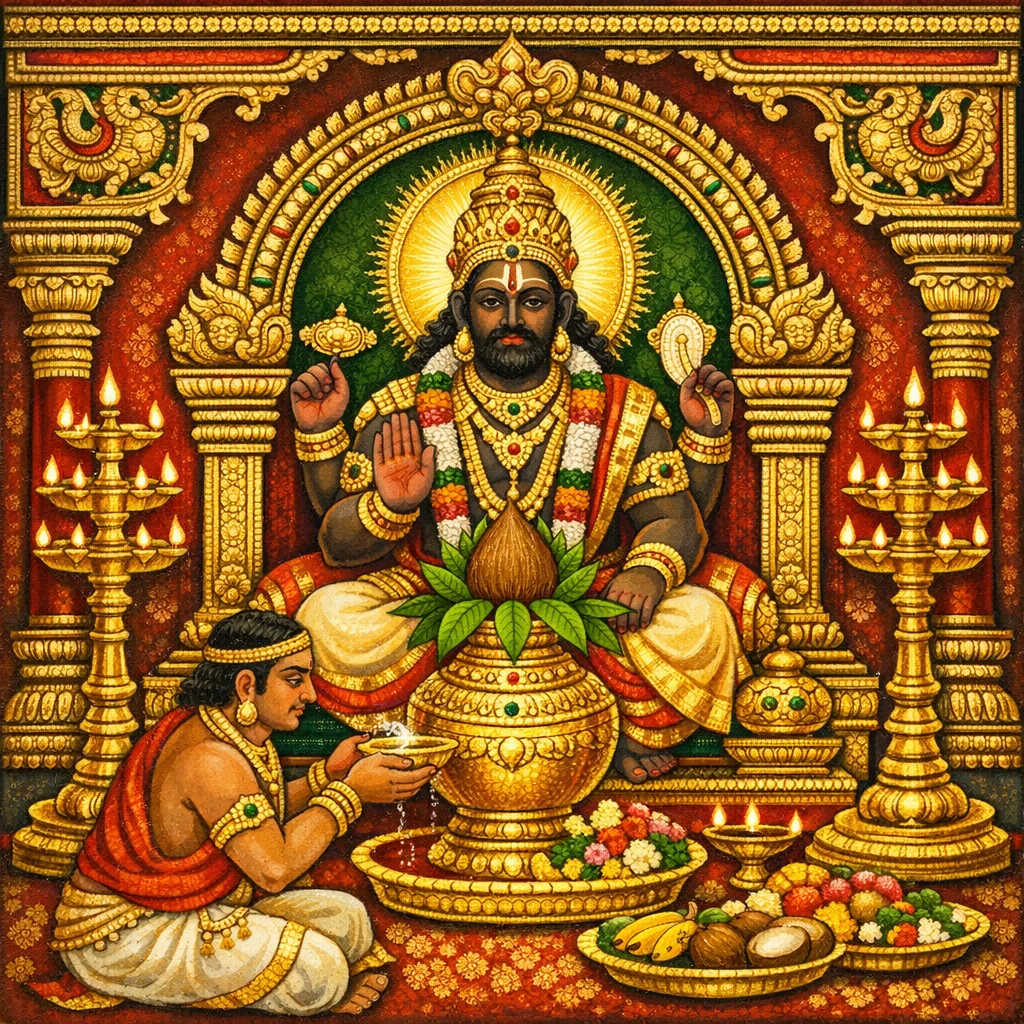
アグニ神は、アガスティヤを中心とするヴラタ(誓戒)式の礼拝を説き、アガスティヤを明確にヴィシュヌと同一視して、聖仙崇敬をヴァイシュナヴァの救済(ハリへの到達)へ結びつける。作法は期限と手順が定まり、三日間、日の出前に斎戒し礼拝してアガスティヤにアルギャ(供水)を捧げる。プラドーシャの時刻には、カーシャ花で作った像を水壺(ガタ/クンバ)に安置し、夜通しの覚醒(プラジャーガラ)を行う。翌朝、水辺の貯水所近くでアルギャを捧げ、海を干上がらせたこと、アーターピ–ヴァーターピを滅したことなどアガスティヤの神話的功業を讃える讃歌を唱え、福徳と吉祥なる来世を祈願する。章は供物と布施の次第として、白檀、花鬘、香、布、米・穀物、果物、黄金、さらに壺の施与を婆羅門に行い、供食とダクシナー(牛・衣・黄金)を添えることを述べる。真言の伝承異同にも触れ、女性とシュードラはヴェーダ真言なしで行うべきという便宜規定を示す。七年間アルギャを捧げ続ける長期の修行は、総合的繁栄—子なき者に子を、処女に王者の夫を—もたらすとされる。
Shlokas
No shlokas available for this adhyaya yet.
Frequently Asked Questions
Fasting and worship precede the arghya; at pradoṣa a kāśa-flower image is placed in a ghaṭa/kumbha, followed by night vigil; in the morning the arghya is offered near water, then tyāga (grain, fruit, libation) and charitable gifts/feeding of brāhmaṇas conclude the rite.
Sandalwood, garlands, incense, cloth, rice/grains, fruits, gold (and in an expanded description: five gems, gold and silver, seven grains, curd, sandalwood), plus a pot-gift to a brāhmaṇa and dakṣiṇā including cow, garments, and gold.
The rite explicitly aims at attaining Hari through Agastya-worship (mukti-oriented devotion) while also promising dharma-anchored prosperity—health, fortune, desired boons, lineage, and marital success—thus integrating dharma, artha, kāma, and mokṣa.
It states that for women and Śūdras the rite is ‘non-Vedic,’ i.e., performed without Vedic mantras, indicating an inclusive procedural adaptation while preserving the devotional and charitable structure.
By giving the arghya for seven years, ‘all obtain everything’: a childless woman gains sons and good fortune, and a maiden gains a husband of royal birth; the arghya is also described in some readings as imperishable and mind-fulfilling.