Adhyaya 202
Puṣpādhyāya-kathana (Account of Flowers in Worship)
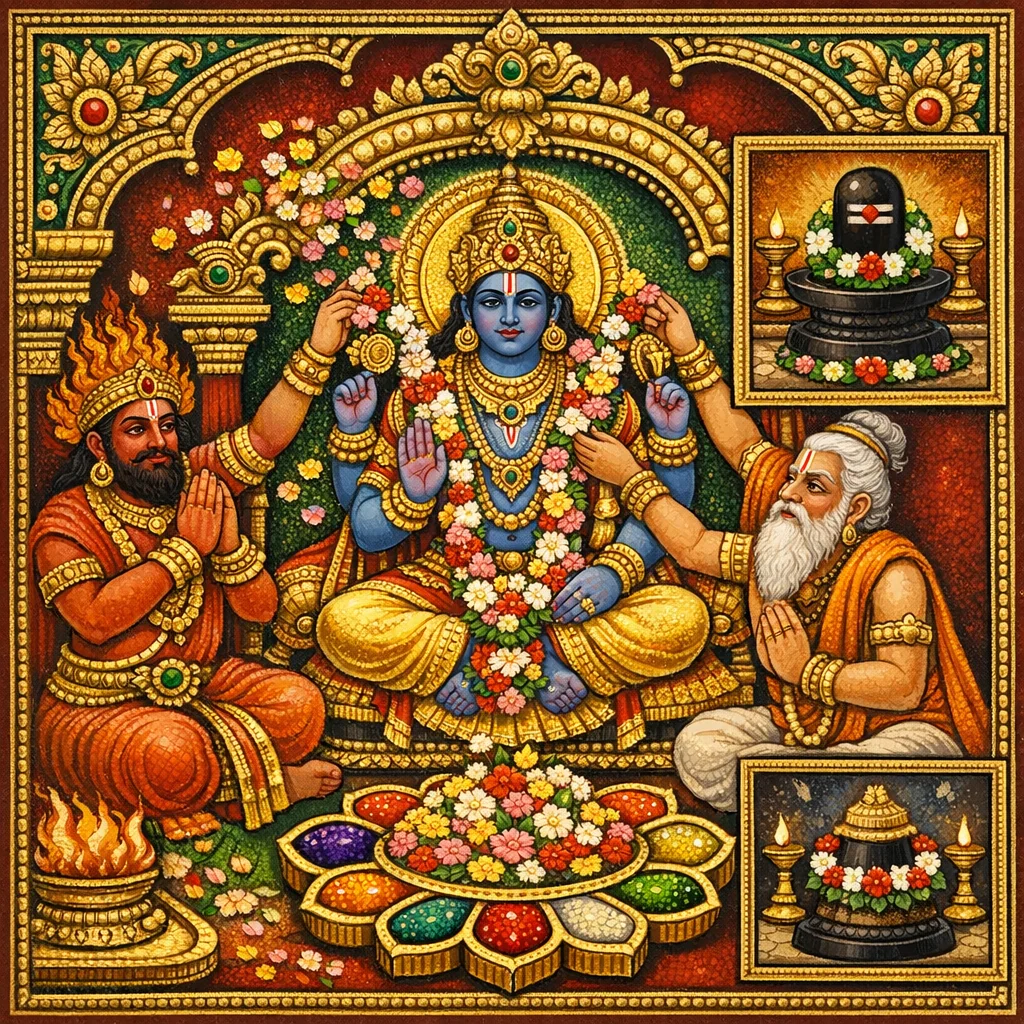
ヴラタ・カーンダの実践的礼拝指導を継ぎ、アグニ神は聖仙ヴァシシュタに、供物—とりわけ花と芳香物—が、ハリ(ヴィシュヌ)を悦ばせる規律あるバクティの媒介であり、罪の減滅(pāpa-hāni)、現世の享受(bhukti)、解脱(mukti)、そしてヴィシュヌローカへの到達という段階的果報をもたらすと説く。本章はまず「神々にふさわしい」(deva-yogya)花と葉を列挙し、多くの供物を特定の霊的成果に結びつけ、次いで枯れたもの・折れたもの・欠陥あるもの・不吉なものを避けよと境界を定める。さらに宗派的区別として、ヴィシュヌに適する花、シヴァに用いる別の花、そしてシヴァに禁じられる供物が示される。教えの要は内面化にあり、最高の「花」とは倫理的・観想的徳—アヒンサー、感官制御(indriya-jaya)、忍耐(kṣānti)、慈悲(dayā)、寂静(śama)、苦行(tapaḥ)、禅定(dhyāna)、真実(satya;写本伝承によっては śraddhā も)—であると明かし、外的儀礼の精密さが内的品性によって完成するという『アグニ・プラーナ』の百科的総合を示す。章末では、供物を整然としたプージャ枠(āsana、mūrti-pañcāṅga、aṣṭa-puṣpikā)と神名の次第(ヴィシュヌは Vāsudeva-ādi、シヴァは Īśāna-ādi)に位置づけて締めくくる。
Shlokas
No shlokas available for this adhyaya yet.
Frequently Asked Questions
Flowers and fragrant substances (gandha, dhūpa, dīpa, naivedya) are emphasized, with extensive lists of specific blossoms, lotuses, aromatic leaves, and also bilva and śamī leaves; the text also highlights that devotion (bhakti) makes all admissible offerings effective.
They are inner virtues presented as worship-offerings—commonly ahiṃsā, indriya-nigraha/jaya, kṣānti, dayā, śama/śānti, tapaḥ, dhyāna, and satya (with manuscript variation also referencing śraddhā). They are central because they complete external pūjā with ethical and contemplative transformation, aligning ritual with mukti.
One should avoid withered/fallen items, broken or damaged materials, and offerings marked by defects (described as “extra limbs/defects”); additionally, certain flowers are disallowed for Śiva, and inauspicious, non-fragrant items (e.g., associated with kuṣmāṇḍa or nimba in the text’s phrasing) are rejected.
It combines (1) catalog-style taxonomies of flowers and offering-types, (2) ritual-legal admissibility rules, (3) deity-specific liturgical distinctions, and (4) a moral psychology of worship via the inner ‘flowers’—integrating technical detail with the spiritual goals of bhukti and mukti.