Adhyaya 191
Trayodaśī-vratāni — Anaṅga-Trayodaśī and Kāma-Trayodaśī (Chapter 191)
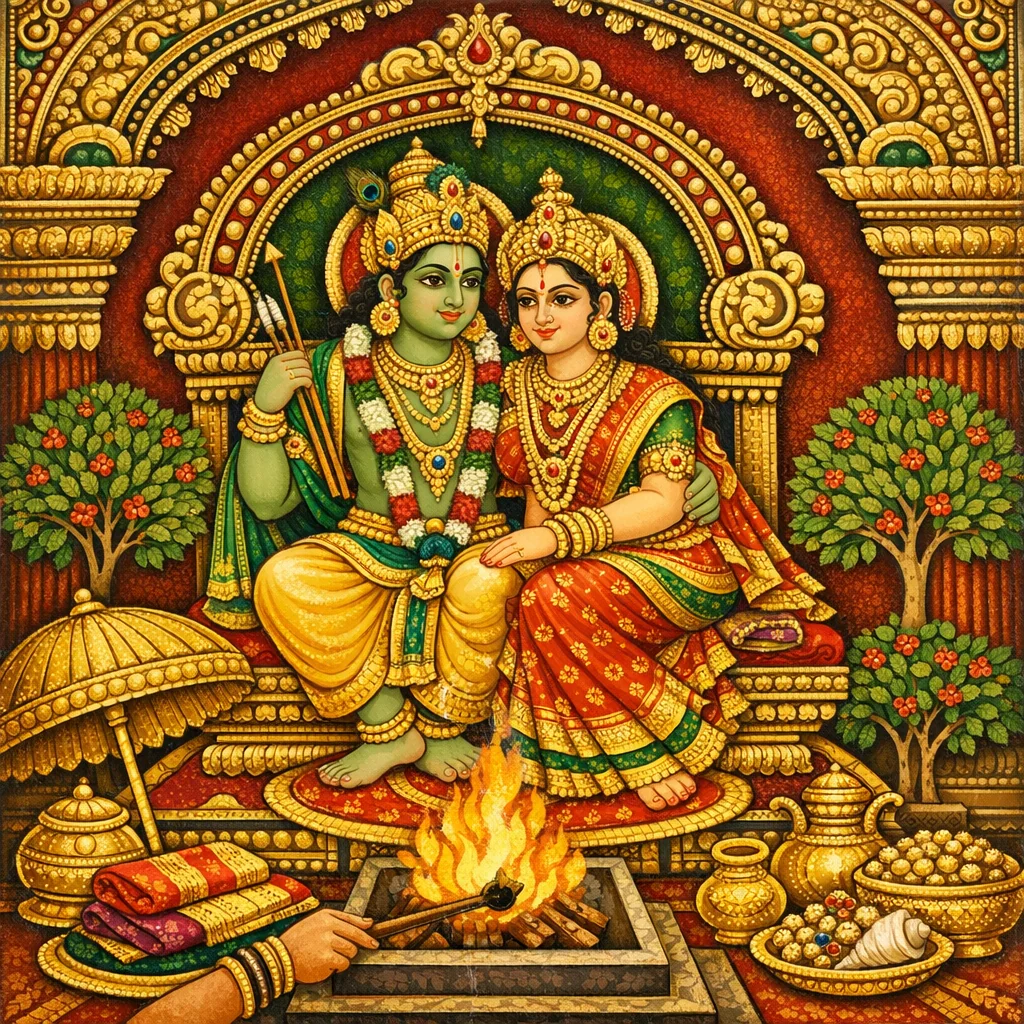
アグニ神は、月の第十三日(Trayodaśī)の誓戒を体系的に説き起こし、まずアナンガ(Anaṅga=カーマ)に結びつく「アナンガ・トラヨーダシー」と、アナンガとハラ(Hara=シヴァ)を対にして礼拝する法を示す。章はマールガシールシャ月(Mārgaśīrṣa)以降、月ごとの修法を配し、神の招請、特定の苦行的食制、夜のホーマ(酥油に胡麻と米を添えて供える)を組み合わせる。結びには布施(dāna)の規定—衣、牛、寝台、傘、壺、履物、座具、器—を明記し、誓戒が社会的かつ聖なる施与によって成就することを示す。さらにチャイトラ月(Caitra)では、ラティとともにカーマを念じ、吉祥の顔料でアショーカ樹を描き、半月(十五日)にわたる礼拝で願望成就を求める。かくして本章は、時間の規律、感官の制御、図像・儀礼行為、布施を一体化したサーダナーとして、繁栄・吉祥・増上の功徳を目指すヴラタ篇のダルマ的技法を示している。
Shlokas
No shlokas available for this adhyaya yet.
Frequently Asked Questions
On Mārgaśīrṣa bright Trayodaśī, worship Anaṅga (Kāma) with Hara (Śiva), take honey at night, and perform a ghṛta-homa using sesame (tila) and unhusked rice (akṣata), then continue with month-wise deity-forms and regulated diets.
A garment first, then gifts to a brāhmaṇa including a cow, bed, umbrella, water-pots (kalaśa), sandals (pādukā), a seat, and a vessel.
In Caitra bright Trayodaśī it prescribes remembering Kāma with Rati and drawing an aśoka tree with vermilion and turmeric—an auspicious fertility/joy symbol—followed by a half-month worship for kāma-siddhi.
Variant readings include “golden vessels” attested in kha/gha/ña manuscripts, and a passage on ‘unbroken Dvādaśī’ to ‘attains royal enjoyments’ absent in the jha manuscript, indicating layered transmission around adjacent vrata material.