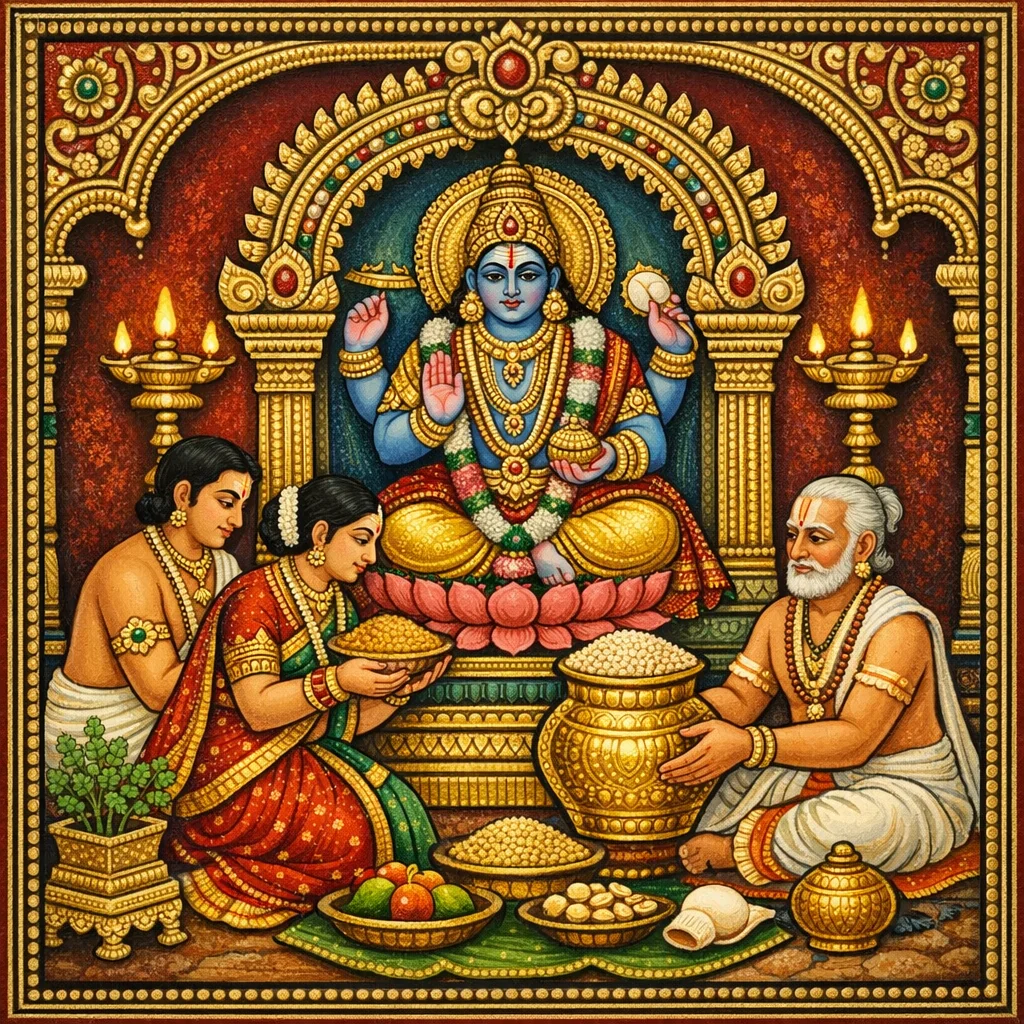
Adhyaya 190
Chapter 190: Akhaṇḍa-dvādaśī-vrata (The Unbroken Dvādaśī Vow)
アグニ神は聖仙ヴァシシュタに、誓願を「断絶なく」全うさせるための儀礼(vrata-sampūrṇatā)として、アカンダ・ドヴァーダシー(Akhaṇḍa-dvādaśī)の行法を説く。修行者はマールガシールシャ月(Mārgaśīrṣa)白分のドヴァーダシーに、ヴィシュヌを礼拝して断食し、パンチャガヴャ(pañcagavya)の水で沐浴したのち、浄化の物質を儀礼的に受用する。要となるのは布施(dāna)で、ドヴァーダシー当日に大麦と米を入れた器をブラーフマナに施す。さらに本章は祈願の枠組みを示し、七生にわたり積み重なった誓願の不完全さをヴィシュヌが修復してくださるよう請い、宇宙がプルショーッタマ(Puruṣottama)において「断たれぬ」ものとして成り立つという形而上の像に根拠づける。アグニはこれを月ごとの遵守やチャートゥルマーシャ(Cāturmāsya)へと拡張し、月別の供物としてシャクトゥ(śaktu:炒った大麦粉)の鉢などを挙げる。最後に、シュラーヴァナ(Śrāvaṇa)からカールッティカ(Kārttika)末のパーラナ(pāraṇa)までの正しい時期を強調し、欠落は七生に響くと戒める一方、成就すれば長寿・健康・福徳・王権・享楽を得ると説く。
Shlokas
No shlokas available for this adhyaya yet.
Frequently Asked Questions
It is explicitly framed as a rite for vrata-sampūrṇatā—making vows complete and ‘unbroken,’ including repairing deficiencies believed to persist across seven births through Viṣṇu’s grace.
Fasting on bright Mārgaśīrṣa Dvādaśī for Viṣṇu, bathing in pañcagavya-water and partaking of it, and giving a brāhmaṇa a vessel containing barley and rice on Dvādaśī.
The votary’s prayer links personal vow-completion to the cosmic ‘unbroken wholeness’ of the universe identified with Puruṣottama (Viṣṇu), making ritual integrity a mirror of ontological unity.
The course is described as beginning in Śrāvaṇa and reaching pāraṇa at the end of Kārttika, aligning with the Cāturmāsya-related discipline and its closure.
Long life, freedom from disease, good fortune, sovereignty/kingship, and enjoyments (along with similar prosperities) are stated as outcomes.