Adhyaya 186
Daśamī-vrata (Observance for the Tenth Lunar Day)
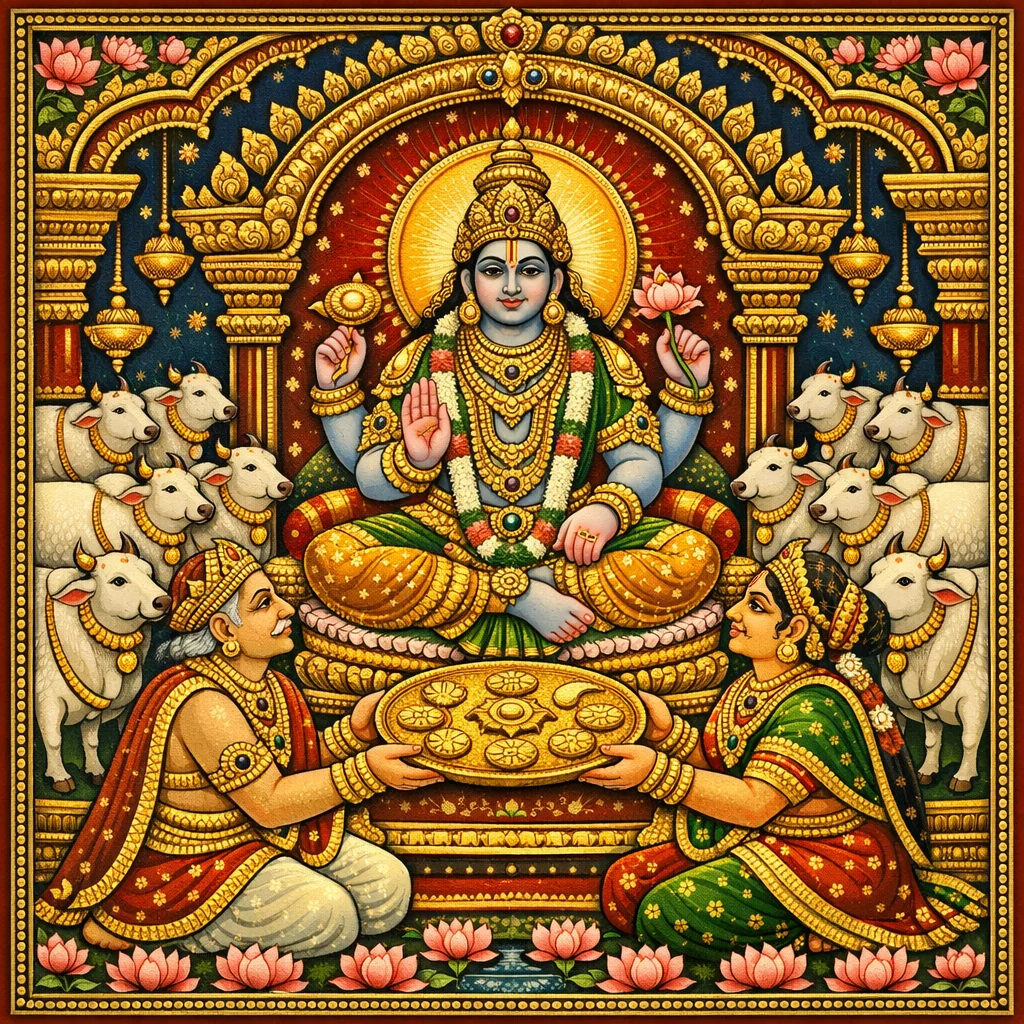
ヴラタ・カンダにおけるティティ(陰暦日)別の誓戒の連続的叙述を受け、ナヴァミーの諸ヴラタを終えた直後に、主アグニはダシャミー・ヴラタを説く。その果報をプルシャールタの語—ダルマ、カーマおよび関連する目的—で示し、儀礼的規律を、倫理的・霊的功徳と秩序ある世俗的繁栄の双方をもたらす手段として位置づける。中心実践は節制であり、ダシャミーの日にはエーカバクタ(食事は一度のみ)を守って、摂取の統制を浄化法として強調する。ヴラタはダーナ(布施)で成就し、社会的意義ある施与として十頭の牛を施すことで、私的苦行を公的善行によって完成させる。さらに威信ある寄進として、黄金で作った八方位(ディク)を供えることが説かれ、これにより施主はブラーフマナの中で主たる地位に高められるという。かくしてアグニの教えは、内なるニヤマ、ティティという聖なる時、そして外なるダーナを一つのダルマの実践体系へと結び合わせる。
Shlokas
No shlokas available for this adhyaya yet.
Frequently Asked Questions
The practitioner observes ekabhakta on Daśamī—taking a single meal—establishing dietary restraint as the vow’s primary discipline.
Upon completion of the vow, one should gift ten cows (daśa-dhenu-dāna), making dana the culminating act that externalizes the merit of the observance.
The text states that gifting the directions (dik) fashioned in gold results in becoming a lord among Brāhmaṇas, indicating social-spiritual elevation linked to high-value symbolic dana.
By combining tithi-discipline (Daśamī), bodily restraint (ekabhakta), and compassionate redistribution (dana), the vrata trains self-control and generosity—core dharmic virtues that support both worldly order and inner purification.