Adhyaya 179
Caturthī-vratāni (Vows of the Fourth Lunar Day)
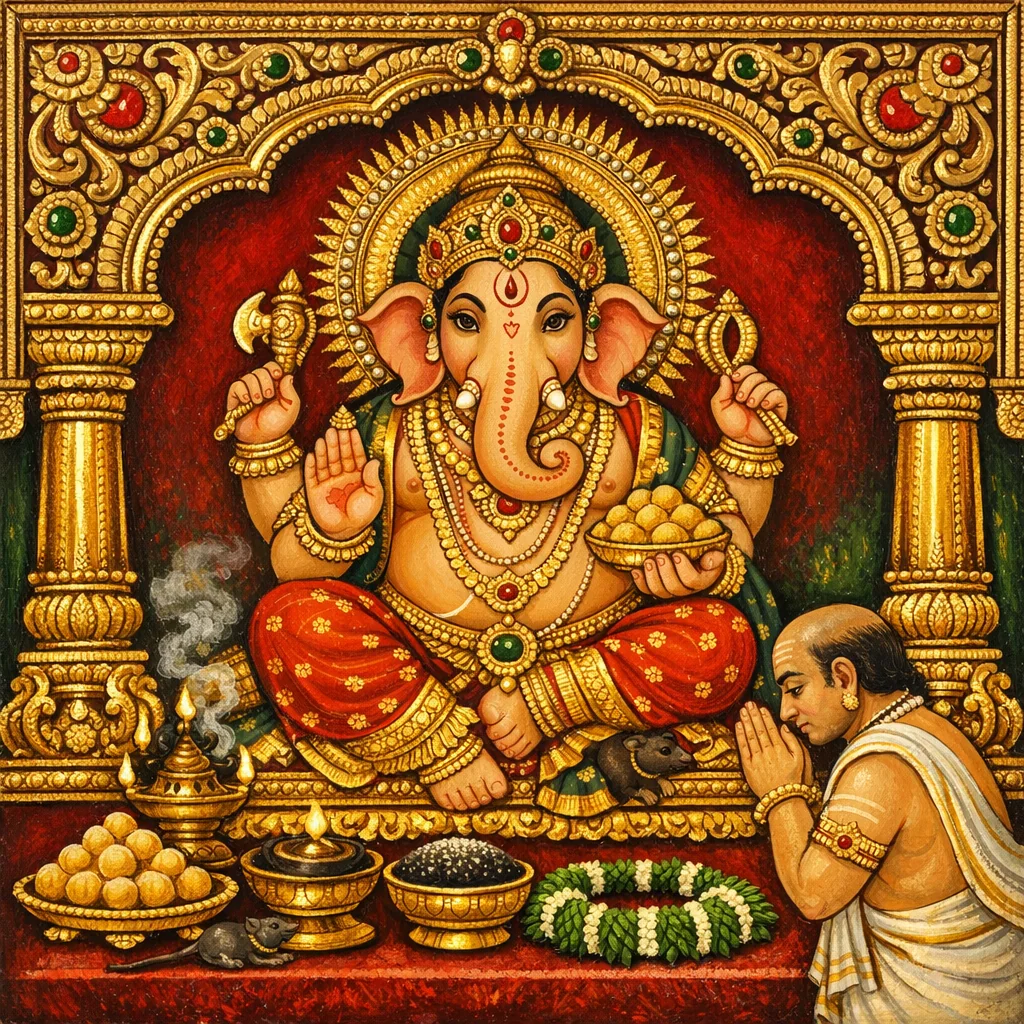
火神アグニは、チャトゥルティー(Caturthī)に基づく諸ヴラタを体系的に説き起こし、これらがブクティ(現世の享受・安寧)とムクティ(解脱)という二重の果を授ける修行であると明言する。章頭では、異本・写本差に関する簡短な注記を置き、ついで月別・ティティ(太陰日)別の規定を示す。Māgha月白分第四日(śukla-caturthī)には断食と礼拝を命じ、儀礼の焦点を「Guṇa」(徳・卓越)に定める。実践は第五日(pañcamī)まで及び、胡麻飯の供物によって一年の無障碍の安泰を祈り、根本真言(mūla-mantra)「gaṁ svāhā」と、aṅga-nyāsa(「gām」に始まる心・肢体への真言安置)の用法を説く。さらに「āgaccha ulkā」「gaccha ulkā」によるāvāhana(勧請)とvisarjana(送神)の次第、guggulu香やmodaka菓子の供献、そしてGaṇeśa-gāyatrī風の追加真言を詳述する。最後に、Bhādrapada月のCaturthī Kṛcchra、Phālguna月Caturthīの夜断食Avighnā、Caitra月Caturthīにdamana/dūrvāでGaṇaを礼拝する法などを配し、ヴラタを吉祥成就と霊的浄化の技法として示す。
Shlokas
No shlokas available for this adhyaya yet.
Frequently Asked Questions
It specifies mantra-technology and ritual sequencing: the mūla-mantra “gaṁ svāhā,” its gāmādi application as hṛdaya and aṅga-mantras for nyāsa, and the precise āvāhana–visarjana formulas (“āgaccha ulkā” / “gaccha ulkā”) alongside prescribed offerings.
By presenting Caturthī vratas as disciplined, time-bound sādhana that removes obstacles (Avighnā), cultivates restraint (fasting/kṛcchra), and aligns ritual action with inner purification—thereby supporting both worldly stability (Bhukti) and liberation-oriented refinement (Mukti).